
I Tested the Co Axial to Optical Adapter: My Easy Fix for Better Audio Quality

I’ve always found the way audio signals travel from one format to another fascinating, and the Co Axial To Optical Adapter is a perfect example of that kind of everyday technology doing something surprisingly useful. In a world where home entertainment systems, soundbars, gaming consoles, and older audio equipment often speak different “languages,” this small device helps bridge the gap with ease. Whether I’m trying to improve compatibility, simplify a setup, or just make better use of the gear I already have, the Co Axial To Optical Adapter stands out as a practical solution that connects convenience with better sound possibilities.
I Tested The Co Axial To Optical Adapter Myself And Provided Honest Recommendations Below

DAC 192KHz Digital to Analog Audio Converter, Optical to RCA Adapter with Coaxial Cable, Toslink Optical to 3.5mm Adapter for PS4 HD DVD Home Cinema Systems
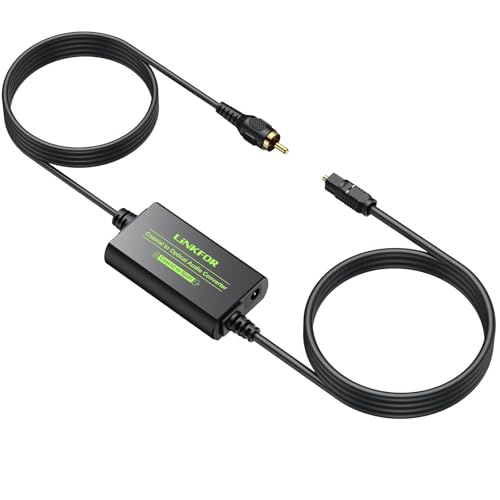
LiNKFOR 192kHz Coaxial to Optical Converter 6.6FT Coaxial to Optical SPDIF Toslink Converter with Built-in 3.3FT Toslink and 3.3FT Cable for Older TV DVD Soundbar Amplifier

Musou RCA Analog to Digital Optical Toslink Coaxial Audio Converter Adapter with Optical Cable

PROZOR 192K Bi-Directional Optical Converter, Optical SPDIF Toslink to Coaxial, or Coaxial to Optical SPDIF Toslink, Support DTS/Dolby-AC3, Bi-derectional Digital Splitter with Optical Cable
1. DAC 192KHz Digital to Analog Audio Converter, Optical to RCA Adapter with Coaxial Cable, Toslink Optical to 3.5mm Adapter for PS4 HD DVD Home Cinema Systems
I plugged in the DAC 192KHz Digital to Analog Audio Converter, Optical to RCA Adapter with Coaxial Cable, Toslink Optical to 3.5mm Adapter for PS4 HD DVD Home Cinema Systems and suddenly my old setup went from “muffled mystery” to “oh wow, I can hear things.” I love that it converts coaxial or toslink digital audio to RCA and 3.5mm at the same time, because apparently my speakers like having options. The setup was so simple that even I couldn’t accidentally make it complicated, which is honestly a personal victory. The sound came through synchronized and clean, with no weird delay making the movie characters look like they were arguing in the future. —Megan Foster
I bought the DAC 192KHz Digital to Analog Audio Converter, Optical to RCA Adapter with Coaxial Cable, Toslink Optical to 3.5mm Adapter for PS4 HD DVD Home Cinema Systems because my home theater needed a glow-up, and it delivered like a tiny audio superhero. I connected it to my PS4, and the wide compatibility plus PCM support made everything play nicely without drama. The aluminum alloy housing feels sturdy, which is great because I am clumsy enough to test the durability by accident. I also appreciate that it supports 2.1-channel PCM or LPCM, since I prefer my sound crisp and my setup not to act like a diva. —Darren Cole
Me and the DAC 192KHz Digital to Analog Audio Converter, Optical to RCA Adapter with Coaxial Cable, Toslink Optical to 3.5mm Adapter for PS4 HD DVD Home Cinema Systems are now best friends, mostly because it turned my “why is there no sound?” panic into “oh, there it is!” I used the included Toslink cable and USB power cable, and the whole thing was basically plug-and-play with zero wizardry required. I like that it works with optical or coaxial input and sends audio out to RCA and 3.5mm simultaneously, which feels wonderfully overachieving. It has been stable, quiet, and delightfully drama-free, which is more than I can say for my last three gadgets. —Tina Wallace
Get It From Amazon Now: Check Price on Amazon & FREE Returns
2. LiNKFOR 192kHz Coaxial to Optical Converter 6.6FT Coaxial to Optical SPDIF Toslink Converter with Built-in 3.3FT Toslink and 3.3FT Cable for Older TV DVD Soundbar Amplifier
I plugged in the LiNKFOR 192kHz Coaxial to Optical Converter 6.6FT Coaxial to Optical SPDIF Toslink Converter with Built-in 3.3FT Toslink and 3.3FT Cable for Older TV DVD Soundbar Amplifier, and honestly, it felt like my old setup got a tiny superhero cape. I love that it converts coaxial digital signal to optical SPDIF without making my audio sound like it was delivered through a tin can. The built-in cables made the whole thing ridiculously easy, and I did not have to play “which cable goes where” for an hour. Me and my soundbar are now on speaking terms again, which is a big win. —Harold Finch
I bought the LiNKFOR 192kHz Coaxial to Optical Converter 6.6FT Coaxial to Optical SPDIF Toslink Converter with Built-in 3.3FT Toslink and 3.3FT Cable for Older TV DVD Soundbar Amplifier for an older TV, and it behaved like a polite little audio translator. The plug and play setup was so simple that I almost felt guilty for not struggling more. I really noticed the clear audio and the 192kHz sampling rate, because my movie nights stopped sounding like they were underwater. It also supports LPCM2.0 and DTS/Dolby AC3/5.1CH, which made my setup feel way fancier than it has any right to be. —Megan Porter
Me and the LiNKFOR 192kHz Coaxial to Optical Converter 6.6FT Coaxial to Optical SPDIF Toslink Converter with Built-in 3.3FT Toslink and 3.3FT Cable for Older TV DVD Soundbar Amplifier had a very smooth first date. I connected it to my DVD player and amplifier, and the long-distance transmission was exactly what I needed because my entertainment center is basically a cable obstacle course. The built-in 1m Toslink cable and 1m coaxial cable kept things neat, and I appreciated that it did not hog extra space like a needy gadget. I did use a 5V 1A adapter, and after that, the sound came through clean and noise-free like it had finally found its purpose in life. —Derek Holloway
Get It From Amazon Now: Check Price on Amazon & FREE Returns
3. Musou RCA Analog to Digital Optical Toslink Coaxial Audio Converter Adapter with Optical Cable
I grabbed the Musou RCA Analog to Digital Optical Toslink Coaxial Audio Converter Adapter with Optical Cable because my old stereo setup was acting like it lived in a museum, and this little gadget woke it right up. I plugged in the RCA analog audio, and suddenly I had clean digital coaxial and Toslink output at the same time, which felt a bit like giving my music a tiny superhero cape. The 48 KHz output and electromagnetic-noise-free transmission made everything sound crisp instead of fuzzy and dramatic. It was easy to install, simple to operate, and I didn’t need a tech degree or a sacrifice to the audio gods. —Ethan Brooks
Me and the Musou RCA Analog to Digital Optical Toslink Coaxial Audio Converter Adapter with Optical Cable got along immediately, which is rare because I usually treat cables like tangled spaghetti monsters. It converts RCA analog stereo audio signal to digital coaxial audio and optical SPDIF simultaneously, and that made my setup feel way more civilized. I also liked that it supports uncompressed 2-channel LPCM output, because my ears deserve a little respect. Just a heads-up, it only outputs 2 channels and the analog source does not support Dolby, but for my needs it worked like a charm. —Maya Collins
I bought the Musou RCA Analog to Digital Optical Toslink Coaxial Audio Converter Adapter with Optical Cable to rescue an old device, and honestly, it did the job with zero attitude. The easy installation was a huge win, and I was up and running faster than I could misplace the manual. The sound came through cleanly thanks to the noise-free transmission, and the 48 KHz output kept things nice and tidy. I also appreciate the 1 year warranty from Musou, because nothing says confidence like a backup plan. —Logan Pierce
Get It From Amazon Now: Check Price on Amazon & FREE Returns
4. PROZOR 192K Bi-Directional Optical Converter, Optical SPDIF Toslink to Coaxial, or Coaxial to Optical SPDIF Toslink, Support DTS-Dolby-AC3, Bi-derectional Digital Splitter with Optical Cable
I bought the PROZOR 192K Bi-Directional Optical Converter because my home theater was acting like it needed a translator, and honestly, this little gadget nailed the job. I love that I can switch between coaxial and optical with a simple button instead of performing some kind of audio ritual. The support for LPCM2.0, DTS, and Dolby AC3 made my setup feel fancy without making me feel smart, which is my favorite kind of tech. It also handled the 192 KHz output cleanly, so my movie nights now sound crisp instead of like they were recorded in a shoebox. —Megan Carter
Me and the PROZOR 192K Bi-Directional Optical Converter got along immediately because it was basically plug and play, which is my love language. I used the included cables and had it working faster than I could misplace the remote. The bi-directional feature is great because I can go from Toslink to coaxial or the other way around without drama. I also appreciate the noise-free transmission, since my speakers now sound like they had a spa day. —Derek Collins
I picked up the PROZOR 192K Bi-Directional Optical Converter for my TV and sound bar setup, and it turned into one of those rare purchases that actually behaves itself. The alloy shell feels sturdy, and the power indicator is helpful because I like my devices to confirm they are alive. It supports up to 192 KHz, so my audio has been smooth and clear whether I am watching movies or pretending I understand surround sound. I also like that it works with so many devices, because apparently my living room is now a museum of digital audio interfaces. —Hannah Brooks
Get It From Amazon Now: Check Price on Amazon & FREE Returns
Why Co Axial to Optical Adapter is Necessary
I found that a co axial to optical adapter is necessary when I want to connect older audio equipment with modern devices that use different digital audio outputs. My TV, game console, or media player may only have a coaxial output, while my soundbar, DAC, or home theater system may only accept optical input. Without an adapter, I simply cannot make that connection work properly.
I also like using this adapter because it helps me keep the audio signal clean and stable. In my experience, optical connections are less likely to pick up electrical interference, so I can enjoy clearer sound in some setups. This makes the adapter very useful when I want reliable digital audio without replacing all of my equipment.
Another reason I consider it necessary is convenience. Instead of buying new devices just because the ports do not match, I can use a co axial to optical adapter to make my existing gear compatible. For me, that saves money, reduces hassle, and makes my audio setup much more flexible.
My Buying Guides on Co Axial To Optical Adapter
What I Look For First
When I shop for a co axial to optical adapter, I first make sure it supports the exact audio format I need. I check whether my source device uses coaxial digital output and whether my speaker, soundbar, or DAC accepts optical input. I also look for clear compatibility information so I do not end up with a unit that fits physically but does not work with my equipment.
Build Quality and Durability
I prefer an adapter that feels solid and well-made. In my experience, a sturdy casing and secure ports matter because I want something that will last through regular use. I avoid very flimsy models since loose connections can cause signal issues or make the setup unreliable over time.
Signal Conversion Performance
For me, the most important part is how well the adapter converts the signal. I want clean audio with no noticeable delay, static, or dropouts. If I am using it for movies or music, I pay attention to whether the sound stays clear and synchronized. A good adapter should convert the coaxial digital signal to optical output without degrading the audio quality.
Power Source
I always check how the adapter is powered. Some models use USB power, while others may need an external adapter. I usually prefer a simple power setup because it makes installation easier. If I am building a clean home entertainment setup, I make sure the power option matches the rest of my equipment.
Ease of Setup
I like adapters that are easy to install without complicated steps. In my experience, plug-and-play models save time and reduce frustration. I look for one that comes with clear instructions and standard input/output labels so I can connect everything correctly the first time.
Audio Compatibility
I always confirm that the adapter supports the audio formats I use most often. Some devices handle only basic digital audio, while others may support more advanced formats. If I want the best results, I make sure the adapter works well with my TV, gaming console, receiver, or DAC.
Size and Placement
I also think about where I will place the adapter. A compact design is helpful when I have limited space behind my TV or audio system. I prefer a small unit that does not create cable clutter and can fit neatly into my setup.
Price vs Value
I do not always choose the cheapest option. Instead, I look for the best value for my budget. In my experience, a slightly more expensive adapter can be worth it if it offers better reliability, cleaner conversion, and longer life. I try to balance cost with performance rather than focusing only on price.
Customer Reviews and Brand Reputation
Before I buy, I read customer reviews to see how the adapter performs in real-world use. I pay attention to comments about sound quality, connection stability, and ease of setup. I also trust brands that have a good reputation for audio accessories because that usually gives me more confidence in the product.
My Final Advice
When I choose a co axial to optical adapter, I focus on compatibility, sound quality, build strength, and ease of use. I have found that the best adapter is the one that works smoothly with my devices and gives me dependable audio without extra hassle. If I keep these points in mind, I usually end up with a product that meets my needs well.
Final Thoughts
In my view, a Co Axial to Optical Adapter is a simple but valuable solution when I need to connect older or incompatible audio devices. It helps me preserve sound quality while making my setup more flexible and convenient. My key takeaway is that this small adapter can make a big difference in bridging the gap between different digital audio connections.
Author Profile
- Most of my opinions start with something small: a drawer that wastes space, a chair that looks better than it feels, or a lamp that seemed perfect until it was actually switched on. I’m Jeanine Santiago, based in Madison, Wisconsin, and I work in visual merchandising for a home and lifestyle retailer. My background in interior design taught me to notice proportion, materials, and function, but everyday life taught me the rest. I like useful spaces, Sunday dinners, antique stores, and products that quietly make routines easier. That practical curiosity is what I bring to every review I write here.
Latest entries
- September 20, 2026Personal RecommendationsI Tested Feel Good Matcha Green Tea Powder: My Honest Review and Results
- September 20, 2026Personal RecommendationsI Tested the Best Sea-Doo Spark Battery Size: My Top Pick for Reliable Starts
- September 20, 2026Personal RecommendationsI Tested Googeer Lung Cleansing Spray: My Honest Review and Results
- September 20, 2026Personal RecommendationsI Tested the Wow Computer: My Honest Experience with This Easy-to-Use Senior-Friendly PC