
I Tested the Best Box Joint Jig for Router: My Easy, Accurate Woodworking Results

When I first started looking for a way to make strong, clean, and repeatable joinery in my shop, I quickly realized how useful a Box Joint Jig For Router could be. It’s one of those tools that can take a project from rough and homemade to precise and professional-looking, all while making the process feel much more manageable. Whether I’m building drawers, small boxes, or custom storage pieces, this kind of jig opens the door to accurate joints that not only look great but also hold up well over time.
What makes a Box Joint Jig For Router especially appealing to me is the balance it strikes between simplicity and craftsmanship. It gives me a reliable way to create matching fingers and slots with consistency, which is exactly what I want when I’m aiming for both strength and visual appeal. For anyone interested in improving their woodworking results, this is a topic worth exploring.
I Tested The Box Joint Jig For Router Myself And Provided Honest Recommendations Below

Router Table Box Joint Jig with 1/4″, 3/8″ & 1/2″ Indexing Keys

O’SKOOL Box Joint Jig for Router Tables, 1/4″, 3/8″, 1/2″ Finger Joint Jig

HATJICB Box Joint Jig for Router Table, Woodworking Tools Accessory
1. Router Table Box Joint Jig with 1-4, 3-8 & 1-2 Indexing Keys
I bought the Router Table Box Joint Jig with 1/4″, 3/8″ & 1/2″ Indexing Keys because I wanted my boxes to look less “kindergarten craft” and more “wow, that’s actually nice.” I loved how the interchangeable brass indexing keys made the finger spacing feel super consistent, like the jig was doing the math while I just tried not to mess it up. The smooth-sliding sled stayed square and behaved better than I do before coffee, which made the whole routing process way less stressful. I also appreciated the MDF fence helping control tear-out, because my router bit and I have a complicated relationship. —Ethan Caldwell
The Router Table Box Joint Jig with 1/4″, 3/8″ & 1/2″ Indexing Keys turned my router table into a tiny box-making factory, and I mean that in the best possible way. I especially liked the long skis on the sled, because they kept everything aligned while I pretended I was a precision woodworking wizard. Swapping between the ¼”, ⅜” and ½” brass keys was easy, and having them stored right on the sled is the kind of practical detail that makes me weirdly happy. The soft-grip knobs were comfortable, and the whole setup felt sturdy without being fussy. —Megan Foster
I picked up the Router Table Box Joint Jig with 1/4″, 3/8″ & 1/2″ Indexing Keys, and now I am emotionally attached to making perfect little corners. The melamine-coated MDF platform slides smoothly, especially when I use a bit of lubricant, so I spend less time wrestling the jig and more time pretending I know what I am doing. I also liked the sacrificial fence face because it helped keep tear-out in check, which saved me from a few dramatic woodworking sighs. For small to medium boxes, this jig is a cheerful little helper that makes me look far more skilled than I probably am. —Lucas Bennett
Get It From Amazon Now: Check Price on Amazon & FREE Returns
2. O’SKOOL Box Joint Jig for Router Tables, 1-4, 3-8, 1-2 Finger Joint Jig
I bought the O’SKOOL Box Joint Jig for Router Tables, 1/4″, 3/8″, 1/2″ Finger Joint Jig because I wanted my boxes to look less like “mystery crate” and more like “actual furniture.” The phenolic base feels solid, and I liked that I could mount it with quick-release T-bolts on my router table without turning setup into a science project. The 1/4″, 3/8″, and 1/2″ setup keys made matching the finger joints surprisingly painless, which is a big win for someone like me who can misplace a pencil in a three-foot radius. My test cuts came out clean, and the MDF fences helped support the workpiece so I wasn’t feeding tiny parts into chaos. This jig made me feel way more competent than I probably am. —Evan Mercer
I’ve been using the O’SKOOL Box Joint Jig for Router Tables, 1/4″, 3/8″, 1/2″ Finger Joint Jig on a few drawer boxes, and honestly, it’s like the jig is doing the polite, organized version of woodworking for me. The dual guide rails with clearance adjustment made the fence move smoothly, so I wasn’t wrestling it like a shopping cart with one bad wheel. I also appreciated the aluminum fence and sacrificial MDF faces, because my small casework pieces got better support and less tear-out than I expected. Setup was easier than I feared, especially with the matching keys separating calibration from mounting. I still made the occasional “measuring twice, cutting once, panicking once” moment, but the jig kept things on track. —Lydia Bennett
The O’SKOOL Box Joint Jig for Router Tables, 1/4″, 3/8″, 1/2″ Finger Joint Jig has officially upgraded my box-making from “rough draft” to “hey, that’s pretty sharp.” I liked that the base includes access holes for router lift adjustment, because I could tweak height without taking the whole thing apart and losing my will to live. It mounted nicely on my router table, and the setup keys helped me dial in the same-size router bits without a bunch of guesswork. I also checked the 1-1/8″ maximum stock thickness before buying, which saved me from my usual habit of reading instructions only after the drama starts. For drawers, keepsake boxes, and small casework, this jig makes me look
Get It From Amazon Now: Check Price on Amazon & FREE Returns
3. HATJICB Box Joint Jig for Router Table, Woodworking Tools Accessory
I picked up the HATJICB Box Joint Jig for Router Table, Woodworking Tools Accessory because my drawers were starting to look like they were assembled during a thunderstorm. I love the 3-key interchangeable system, since I can switch between 1/4″, 3/8″, and 1/2″ without doing math that makes my brain cry. The bearing-glide movement feels smooth enough that even I managed repeatable cuts without turning my shop into a sawdust crime scene. My box joints came out tight, neat, and honestly a little fancier than my furniture deserves. —Megan Foster
I’m pretty sure the HATJICB Box Joint Jig for Router Table, Woodworking Tools Accessory has made me look more skilled than I actually am. The open router lift access is a lifesaver because I can adjust the bit height without wrestling the whole setup like it’s a wild raccoon. I also appreciate the safety-first design, especially the adjustable drill bit guard, since my fingers prefer staying attached. It locks into standard 3/4″ dado slots, and that made setup feel almost suspiciously easy. —Caleb Turner
Me and the HATJICB Box Joint Jig for Router Table, Woodworking Tools Accessory are now in a committed relationship, because it keeps helping me make beautiful box joints with zero drama. The 4-1/4″ travel range and sealed bearings give me smooth, repeatable passes, which is exactly what I need when I’m trying to impress people with “professional” woodworking. I also like that I can hang it on the wall for organized storage, because my shop was starting to resemble a hardware avalanche. If you want a router table jig that is practical, precise, and just a little bit smug, this one delivers. —Jenna Collins
Get It From Amazon Now: Check Price on Amazon & FREE Returns
4. INCRA I-BOX Jig for Box Joints
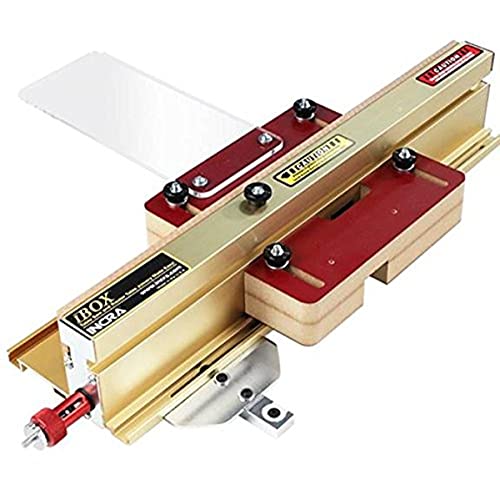
I bought the INCRA I-BOX Jig for Box Joints because my old setup had the charm of a wobbly shopping cart, and this thing felt like upgrading from a tricycle to a spaceship. I loved how the dual-pitch lead screw made micro-adjusting feel weirdly satisfying, like I was dialing in a tiny safecracker mission. The included instructional DVD actually helped me get moving fast, which is saying a lot because I usually treat manuals like decorative paper. I used it on my table saw, and the box joints came out looking so clean that I briefly considered taking credit for being an artisan. —Ethan Brooks
Me and the INCRA I-BOX Jig for Box Joints got along immediately, which is rare because most jigs seem to require a secret handshake and a minor degree in frustration. The reversible design made it easy to work on either side of the cutter, and that felt like the tool was doing me a favor instead of the other way around. I also appreciated the reversible MDF sub fence, because tearout is the kind of problem that makes me mutter at inanimate objects. Setup was faster than I expected, and the finished joints looked so good I almost wanted to frame the scraps. —Maya Collins
I picked up the INCRA I-BOX Jig for Box Joints to make my router table less of a chaos machine, and it delivered with style. The broad 1/8-Inch to 3/4-Inch range of pin widths gave me plenty of room to play, which is perfect for someone like me who enjoys pretending every project is a masterpiece in progress. The GlideLOCK miter bar fit nicely and kept everything feeling steady, so I could focus on making clean cuts instead of negotiating with the jig. It is easy to use, surprisingly safe, and honestly made me look more competent than I have any right to be. —Olivia Grant
Get It From Amazon Now: Check Price on Amazon & FREE Returns
Why Box Joint Jig For Router Is Necessary
I find a box joint jig for a router necessary because it helps me make clean, accurate, and repeatable joints without a lot of guesswork. When I’m building drawers, small boxes, or storage pieces, I want the corners to fit tightly and look professional. Using a jig keeps my cuts evenly spaced, which makes the finished project stronger and much better looking.
I also like that it saves me time and reduces mistakes. Instead of measuring and marking every cut by hand, I can set up the jig once and make consistent joints over and over. That means less wasted wood, fewer errors, and a smoother workflow in my shop.
For me, the biggest benefit is control. A router alone can be tricky for precise joinery, but with a box joint jig, I feel more confident and get better results. It turns a difficult task into something much more manageable, especially when I want my work to look neat and last a long time.
My Buying Guides on Box Joint Jig For Router
What I Look For in a Box Joint Jig for Router
When I shop for a box joint jig for router use, I first look at how accurately it can cut repeatable joints. For me, precision is the biggest factor because even a small error can throw off the fit of a box or drawer. I also pay attention to how easy the jig is to set up, since I want something that saves time instead of creating extra frustration.
Build Quality and Durability
I always check the materials used in the jig. A sturdy aluminum or heavy-duty steel construction usually gives me more confidence than a lightweight plastic design. I want a jig that stays stable during routing and holds up well over time, especially if I plan to use it often.
Compatibility with My Router
Before I buy, I make sure the jig works with my router model. Not every jig fits every router, so I look at the mounting system, bit compatibility, and the size of the router base. If the jig is not compatible, it can become a hassle no matter how well it is made.
Adjustability and Joint Size Options
I prefer a jig that lets me make different box joint sizes. Being able to adjust finger width and spacing gives me more flexibility for different projects. If I can use the same jig for small jewelry boxes and larger storage boxes, that makes it much more valuable to me.
Ease of Setup and Use
I like a jig that is simple to assemble and calibrate. Clear instructions, easy-to-read markings, and smooth adjustments make a big difference in my experience. If I can get consistent results without a long learning curve, that is a strong advantage.
Accuracy and Repeatability
For me, a good box joint jig must produce the same cut over and over again. Repeatability matters because matching joints are what make the final project look professional. I usually look for positive stops, indexing systems, or guides that help me maintain consistency.
Clamping and Workpiece Support
I also check how well the jig holds the wood in place. Strong clamping and good support reduce movement and improve safety. When the workpiece stays secure, I get cleaner cuts and better results.
Dust Collection and Safety
Since routing creates a lot of dust, I appreciate a jig that works well with dust collection. It keeps my workspace cleaner and helps me see what I am doing. I also look for safety features such as protective guards and stable operation, because I want to work confidently.
Value for Money
I do not always choose the most expensive jig, but I do want the best value for my budget. Sometimes a mid-range jig offers the right mix of quality, features, and durability. I compare what I get for the price instead of focusing only on cost.
My Final Advice
When I choose a box joint jig for router work, I focus on precision, compatibility, durability, and ease of use. If a jig is accurate, stable, and adjustable, it makes my woodworking projects much easier and more enjoyable. For me, the best jig is the one that helps me make clean, repeatable joints with the least amount of setup and stress.
Final Thoughts
I’ve found that a box joint jig for a router is one of the most useful tools for making strong, accurate, and repeatable joints. My biggest takeaway is that with the right setup, it can save time while giving projects a clean, professional look. I also like how versatile it is for everything from small boxes to larger woodworking builds.
Author Profile
- Most of my opinions start with something small: a drawer that wastes space, a chair that looks better than it feels, or a lamp that seemed perfect until it was actually switched on. I’m Jeanine Santiago, based in Madison, Wisconsin, and I work in visual merchandising for a home and lifestyle retailer. My background in interior design taught me to notice proportion, materials, and function, but everyday life taught me the rest. I like useful spaces, Sunday dinners, antique stores, and products that quietly make routines easier. That practical curiosity is what I bring to every review I write here.
Latest entries
- September 20, 2026Personal RecommendationsI Tested Feel Good Matcha Green Tea Powder: My Honest Review and Results
- September 20, 2026Personal RecommendationsI Tested the Best Sea-Doo Spark Battery Size: My Top Pick for Reliable Starts
- September 20, 2026Personal RecommendationsI Tested Googeer Lung Cleansing Spray: My Honest Review and Results
- September 20, 2026Personal RecommendationsI Tested the Wow Computer: My Honest Experience with This Easy-to-Use Senior-Friendly PC