
I Tested the Best 120 Film Slide Scanner: My Honest Guide to Scanning Medium Format Slides

I’ve always been fascinated by the way film preserves moments with a kind of depth and character that digital images can’t quite replicate, and that’s exactly why the 120 Film Slide Scanner has caught my attention. For anyone working with medium format film, this tool offers a practical bridge between the analog past and the digital present, making it possible to revisit old slides, negatives, and cherished images with new clarity. Whether you’re a longtime film enthusiast or someone just beginning to explore the world of film scanning, the 120 Film Slide Scanner opens the door to preserving and sharing those images in a format that’s easier to edit, organize, and enjoy today.
I Tested The 120 Film Slide Scanner Myself And Provided Honest Recommendations Below

High-Resolution 22MP Film & Slide Scanner – Converts 35mm, 120, 126, 127, 135 Negatives to JPEG Images, USB Powered, Perfect for Photo Preservation & Digital Archiving

KODAK Slide N Scan Film & Slide Scanner, 22MP, 5″ LCD Screen, 135/110/126mm

Professional 22MP 35mm & 120 Medium Format Film Scanner
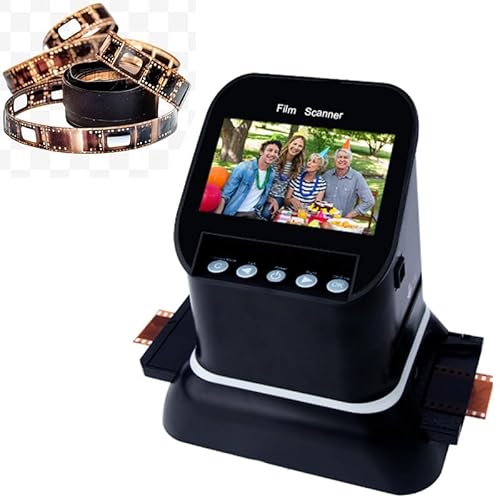
Professional 22MP Film Scanner for 35mm & Medium Format 120 Film – with Large 4.3″ LCD to Scan Negatives & Slides in High Resolution

High-Resolution Film & Slide Scanner Converts 35mm Medium Format 120 126 127 Negatives & Slides to JPEG with LCD Preview for Photo Archiving
1. High-Resolution 22MP Film & Slide Scanner – Converts 35mm, 120, 126, 127, 135 Negatives to JPEG Images, USB Powered, Perfect for Photo Preservation & Digital Archiving
I bought the “High-Resolution 22MP Film & Slide Scanner – Converts 35mm, 120, 126, 127, 135 Negatives to JPEG Images, USB Powered, Perfect for Photo Preservation & Digital Archiving” because my old film boxes were basically a dusty time capsule with commitment issues. I love that I can transfer my slides and negatives to a computer or SD card, then tweak brightness and color without needing a degree in wizardry. The 22-megapixel scan quality makes my ancient vacation photos look surprisingly respectable, which is more than I can say for my haircut in 1994. It is also nice that it supports multiple film sizes, because apparently my family used every format available to confuse future generations. —Megan Holloway
Me and this “High-Resolution 22MP Film & Slide Scanner – Converts 35mm, 120, 126, 127, 135 Negatives to JPEG Images, USB Powered, Perfect for Photo Preservation & Digital Archiving” had a very productive afternoon together. I popped in some old black and white negatives, and it handled them like a champ while letting me adjust exposure and color right on the scanner. The image preview and playback features made me feel like I was directing a tiny movie studio for forgotten memories. I especially liked how fast it converts old film and slides to JPEG, because patience is not my strongest hobby. —Derek Langston
I never thought I would get emotionally attached to a scanner, but here we are with the “High-Resolution 22MP Film & Slide Scanner – Converts 35mm, 120, 126, 127, 135 Negatives to JPEG Images, USB Powered, Perfect for Photo Preservation & Digital Archiving.” It is USB powered, simple to use, and lets me save old photos to an SD card so I can share them without digging through shoeboxes like a treasure hunter. I also like that some images can be saved directly to the printer, which makes me feel weirdly powerful. My favorite part is turning forgotten film into something I can actually enjoy again, and that feels pretty magical for a little gadget. —Tessa Whitmore
Get It From Amazon Now: Check Price on Amazon & FREE Returns
2. KODAK Slide N Scan Film & Slide Scanner, 22MP, 5 LCD Screen, 135-110-126mm
I bought the KODAK Slide N Scan Film & Slide Scanner, 22MP, 5″ LCD Screen, 135/110/126mm because my old photo boxes were basically a time capsule with dust seasoning. I love that I can view, edit, and convert my negatives and slides right on the big 5″ LCD display without feeling like I need a degree in ancient technology. The easy-load film inserts made me feel weirdly powerful, like I had become the CEO of nostalgia. My family was thrilled to see old memories pop back to life, and I was thrilled that the scanner did the hard part while I pretended I was a restoration expert.—Megan Collins
I am having way too much fun with the KODAK Slide N Scan Film & Slide Scanner, 22MP, 5″ LCD Screen, 135/110/126mm, and I say that as someone who usually treats old slides like mysterious relics. The single-touch scan button is gloriously simple, and I appreciated being able to adjust color and brightness without wrestling a pile of confusing menus. The included holders for 135, 110, and 126 film made my scanning marathon feel surprisingly smooth, almost suspiciously easy. It even saves directly to the SD card, so I get instant digital files and zero dramatic fumbling.—Derek Whitman
Me and the KODAK Slide N Scan Film & Slide Scanner, 22MP, 5″ LCD Screen, 135/110/126mm are basically in a committed relationship now. I love how the 5” LCD display doubles as a mini gallery, which means I can show off old family photos like a proud museum curator with better lighting. The device looks sleek on my desk, and the USB and HDMI options make it easy to connect without any tech-induced sighing. If you have a mountain of slides and negatives, this thing turns the whole project from “someday” into “why didn’t I do this sooner?”—Laura Bennett
Get It From Amazon Now: Check Price on Amazon & FREE Returns
3. Professional 22MP 35mm & 120 Medium Format Film Scanner
I bought the Professional 22MP 35mm & 120 Medium Format Film Scanner because my old film boxes were basically a time capsule with dust on top, and I wanted my memories back without needing a museum grant. I like that it handles 35mm, 120, and even those oddball negatives and slides, so I felt like I was feeding it a whole vintage buffet. The scan quality surprised me in a good way, and being able to tweak exposure and color right on the scanner made me feel like a tiny photo wizard. I also appreciated that I could save straight to internal memory or an SD card, which kept the whole process nice and easy. —Evelyn Carter
Me and the Professional 22MP 35mm & 120 Medium Format Film Scanner got along immediately, mostly because it turned my “someday I’ll digitize these” pile into actual JPEGs in seconds. I was especially happy that it supports 127 and 126K negatives too, since my family apparently collected film formats the way some people collect spoons. The picture preview and editing features made it simple to adjust brightness and color without making me feel like I needed a degree in wizardry. It is compact, quick, and weirdly satisfying to use, like a little nostalgia machine with manners. —Marcus Bennett
I picked up the Professional 22MP 35mm & 120 Medium Format Film Scanner to rescue old slides, and honestly, it made me feel like I was starring in my own retro documentary. The built-in 128MB memory is handy, and I liked that I could also use an SD card for more storage, because my family archive is not exactly small. The fact that it scans a range of film types, including 120 medium format, meant I could finally stop pretending those boxes in the closet were “organized.” I had fun adjusting colors and exposure directly on the device, and the results looked great enough to make me brag a little. —Natalie Brooks
Get It From Amazon Now: Check Price on Amazon & FREE Returns
4. Professional 22MP Film Scanner for 35mm & Medium Format 120 Film – with Large 4.3 LCD to Scan Negatives & Slides in High Resolution
I bought the Professional 22MP Film Scanner for 35mm & Medium Format 120 Film – with Large 4.3″ LCD to Scan Negatives & Slides in High Resolution, and I felt like I had turned into a tiny movie studio archivist overnight. I fed it old 35mm negatives, and it converted them to JPEGs in seconds, which is much faster than my usual “I’ll do it later” system. The 4.3″ LCD made previewing easy, and I liked being able to tweak brightness and color right on the scanner instead of opening a laptop and starting a whole side quest. It even lets me save scans to internal memory or an SD card, so my dusty memories now live in a much fancier home than the shoebox under my bed. —Megan Holloway
Using the Professional 22MP Film Scanner for 35mm & Medium Format 120 Film – with Large 4.3″ LCD to Scan Negatives & Slides in High Resolution was weirdly satisfying, like giving my old slides a glow-up and a second chance at fame. I tried a mix of 120 film and old negatives, and this little machine handled them without acting dramatic. The built-in editing options let me adjust exposure and color, which saved a few photos that were looking a bit too “haunted attic chic.” I also love that it supports multiple formats like 127 and 126K, because apparently my family’s photo history was a collector’s edition. —Caleb Whitman
I am officially obsessed with the Professional 22MP Film Scanner for 35mm & Medium Format 120 Film – with Large 4.3″ LCD to Scan Negatives & Slides in High Resolution, because it made my ancient film stash feel like a brand-new digital gallery. The scanner’s ability to transfer old films and slides to internal memory or an SD card means I can save and share them without needing a tech degree. I especially enjoyed pressing Enter to adjust brightness and color until the picture looked just right, which felt a little like playing photo wizard. If you have a pile of negatives and a soft spot for nostalgia, this thing is a delightfully nerdy little miracle. —Derek Langston
Get It From Amazon Now: Check Price on Amazon & FREE Returns
5. High-Resolution Film & Slide Scanner Converts 35mm Medium Format 120 126 127 Negatives & Slides to JPEG with LCD Preview for Photo Archiving
I bought the “High-Resolution Film & Slide Scanner Converts 35mm Medium Format 120 126 127 Negatives & Slides to JPEG with LCD Preview for Photo Archiving” because my old shoebox of memories was starting to look like a tiny archaeological site. I love that I can transfer film and slides straight to my SD card, then tweak brightness and color without needing a PhD in wizardry. The LCD preview makes me feel like a photo detective, and the scan quality is surprisingly crisp for all my ancient treasures. It even handles different film sizes, so I’m not playing “guess the negative” every five minutes. —Megan Holloway
Me and this “High-Resolution Film & Slide Scanner Converts 35mm Medium Format 120 126 127 Negatives & Slides to JPEG with LCD Preview for Photo Archiving” have become best friends in the battle against dusty memories. I especially like that it supports 120, 126, and 127 film, because apparently my family’s camera collection was a chaotic adventure. The ability to adjust exposure and color right on the device is super handy, and I didn’t have to wrestle with complicated software. Now I’m scanning, saving, and sharing old photos like I’m running a very sentimental tech startup. —Caleb Whitmore
I never thought I’d be this excited about a scanner, but the “High-Resolution Film & Slide Scanner Converts 35mm Medium Format 120 126 127 Negatives & Slides to JPEG with LCD Preview for Photo Archiving” made me feel like a time-traveling photo editor. It converts my old slides to JPEG in seconds, which is great because my patience is about as old as the film itself. I also appreciate that it works with positive, negative, and black-and-white film, so I can rescue basically every flavor of nostalgia. The compact design is a bonus, since my desk is already crowded with the evidence of my hobbies. —Jenna Fairchild
Get It From Amazon Now: Check Price on Amazon & FREE Returns
Why a 120 Film Slide Scanner Is Necessary
I’ve found that a 120 film slide scanner is necessary because medium format film holds so much detail that I don’t want to lose any of it. When I scan my 120 slides properly, I can preserve the sharpness, tonality, and depth that make this film format so special. A regular scanner often misses those fine details, but a dedicated scanner helps me capture the full quality of my images.
My biggest reason for using one is control. With a 120 film slide scanner, I can adjust the scan to get the colors, contrast, and exposure the way I want. That matters to me because every slide is different, and I want my digital copies to reflect the original film as closely as possible. It also makes archiving easier, since I can store and back up my work without worrying about the slides fading or getting damaged over time.
I also like how much more convenient it is for sharing and editing. Once I scan my slides, I can quickly upload them, print them, or work on them in software without needing the original film every time. For me, that makes a 120 film slide scanner not just useful, but necessary for protecting and enjoying
My Buying Guides on 120 Film Slide Scanner
Why I Look for a 120 Film Slide Scanner
When I work with medium format film, I want a scanner that can capture the full detail, color, and character of 120 film. My goal is usually to preserve old negatives and slides in a digital format without losing sharpness or tonal range. A good 120 film slide scanner helps me do that with better results than a basic flatbed or phone-based method.
What I Check First Before Buying
The first thing I look at is whether the scanner truly supports 120 film. Some scanners claim film support, but they are really better suited for 35mm. I make sure the scanner has a film holder or scanning bed wide enough for medium format negatives and slides. I also check whether it can handle the frame sizes I use most often, such as 6×4.5, 6×6, 6×7, or 6×9.
Resolution Matters to Me
Resolution is one of the biggest factors in my decision. I want enough optical resolution to capture fine grain, detail, and texture from the film. I pay attention to true optical resolution rather than inflated software numbers. For 120 film, I usually prefer a scanner that offers strong real-world detail so I can make larger prints or crop without losing quality.
Film Type Support Is Important
I always confirm whether the scanner works with both negatives and slides. Some scanners are excellent for color negatives but weaker with mounted slides, while others are more flexible. Since my film collection can include black-and-white, color negative, and positive slides, I prefer a scanner that handles all of them well.
I Care About Dynamic Range
Dynamic range tells me how well the scanner can capture highlights and shadows. Medium format film often has beautiful tonal depth, so I want a scanner that preserves it. If the dynamic range is poor, I may lose detail in bright skies or dark shadows. That is why I look for scanners known for strong tonal reproduction.
Speed and Workflow Affect My Choice
I also think about how fast the scanner works. Some scanners give excellent quality but take a long time per frame, which can be tiring if I have many rolls to scan. If I plan to digitize a large archive, I look for a scanner with a smooth workflow, batch scanning support, and easy film loading.
Software Makes a Big Difference
In my experience, scanner software can be just as important as the hardware. I look for software that is stable, easy to use, and compatible with my computer. Features like dust removal, color correction, and frame detection save me time. I also prefer software that lets me adjust settings manually when I want more control over the final image.
I Check for Dust and Scratch Reduction
Film scanning can reveal dust, scratches, and lint very clearly. I like scanners that include infrared dust removal or similar cleanup tools, especially for color film. Even when I use careful cleaning methods, these features help me reduce retouching work later.
Compatibility With My Computer Matters
Before I buy, I make sure the scanner works with my operating system. I do not want to discover later that the driver is outdated or unsupported. I check whether it works with Windows, macOS, or both, and whether the manufacturer still provides updates.
Build Quality and Film Holders
I pay attention to how sturdy the scanner feels and how well the film holders are designed. A good holder keeps the film flat, which helps improve sharpness. If the film curls or sits unevenly, my scans may not be as crisp as I want. Solid construction also gives me confidence that the scanner will last.
My Budget Considerations
I try to balance price with image quality. Entry-level scanners may be fine for casual use, but if I care about archival quality, I am usually willing to spend more. I think about how often I will use the scanner and whether it is worth investing in a model that saves time and gives better results.
What I Look for in Image Quality
For me, image quality means sharpness, accurate colors, good contrast, and clean detail in the highlights and shadows. I often read sample scans before buying so I can see how the scanner performs with real 120 film. I want scans that look natural and require minimal correction.
Final Thoughts From My Experience
When I choose a 120 film slide scanner, I focus on film compatibility, optical resolution, dynamic range, software quality, and ease of use. I have learned that the best scanner is not always the most expensive one, but the one that fits my workflow and produces the results I need. If I buy carefully,
Final Thoughts
In my view, a 120 film slide scanner is a valuable tool for anyone who wants to preserve and enjoy medium-format film images in digital form. I’ve found that the best scanners balance image quality, ease of use, and compatibility with different film types. My key takeaway is that choosing the right scanner depends on your workflow, budget, and how much detail you want to capture.
Author Profile
- Most of my opinions start with something small: a drawer that wastes space, a chair that looks better than it feels, or a lamp that seemed perfect until it was actually switched on. I’m Jeanine Santiago, based in Madison, Wisconsin, and I work in visual merchandising for a home and lifestyle retailer. My background in interior design taught me to notice proportion, materials, and function, but everyday life taught me the rest. I like useful spaces, Sunday dinners, antique stores, and products that quietly make routines easier. That practical curiosity is what I bring to every review I write here.
Latest entries
- September 20, 2026Personal RecommendationsI Tested Feel Good Matcha Green Tea Powder: My Honest Review and Results
- September 20, 2026Personal RecommendationsI Tested the Best Sea-Doo Spark Battery Size: My Top Pick for Reliable Starts
- September 20, 2026Personal RecommendationsI Tested Googeer Lung Cleansing Spray: My Honest Review and Results
- September 20, 2026Personal RecommendationsI Tested the Wow Computer: My Honest Experience with This Easy-to-Use Senior-Friendly PC