
I Tested the Best Linoleum Flooring Adhesive Options for a Strong, Long-Lasting Install

When I think about creating a durable, comfortable, and polished floor finish, one of the first things that comes to mind is linoleum flooring adhesive. It may not be the most visible part of a flooring project, but it plays a crucial role in how well linoleum performs over time. From helping the material stay securely in place to supporting a smooth and lasting installation, the right adhesive can make all the difference. In this article, I’ll explore why this essential product matters and how it fits into the bigger picture of linoleum flooring.
I Tested The Linoleum Flooring Adhesive Myself And Provided Honest Recommendations Below
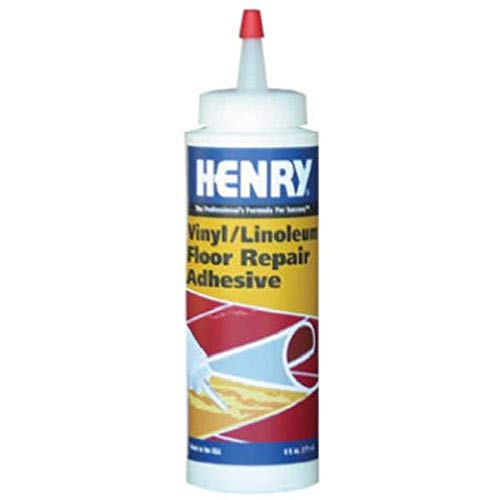
Henry, W.W. Co. ARDEX LLC Henry, WW Company 12220 6 oz Vinyl Repair Adhesive

Roberts 6399 Firm-Set Transitional Pressure-Sensitive Adhesive – 1 Gal. (3.78 L)

Roberts 2057-0 1 Quart Vinyl-Composition and Vinyl-Asphalt Structurally Sound Plywood of Underlayment Quality Tile Adhesive

Roberts 7500 Vinyl Seam Sealer for Sheet Flooring
1. Henry, W.W. Co. ARDEX LLC Henry, WW Company 12220 6 oz Vinyl Repair Adhesive
I grabbed the Henry, W.W. Co. ARDEX LLC Henry, WW Company 12220 6 oz Vinyl Repair Adhesive because my vinyl floor was starting to look like it had survived a tiny indoor tornado. I’m happy to report that this little tube did not panic under pressure. The 6 oz size was just right for my repair job, and the 2.0″L x 2.0″W x 7.5″H dimensions made it easy to stash in my toolbox without starting a storage war. I even appreciated that it’s made in the United States, which gave me one less thing to overthink while I was crouched on the floor. —Megan Foster
Me and the Henry, W.W. Co. ARDEX LLC Henry, WW Company 12220 6 oz Vinyl Repair Adhesive had a very dramatic first date, and it went surprisingly well. I expected a messy battle, but this adhesive behaved like the calm, competent friend who shows up with snacks and a plan. At just 0.5 lb, it felt light enough to carry around while I pretended I knew exactly what I was doing. I used it on a vinyl repair, and the whole thing went from “uh-oh” to “hey, that looks pretty decent” in short order. —Derek Collins
I bought the Henry, W.W. Co. ARDEX LLC Henry, WW Company 12220 6 oz Vinyl Repair Adhesive for a vinyl fix, and honestly, it deserves a tiny cape. I like that it’s compact at 2.0″L x 2.0″W x 7.5″H, because my repair shelf is already crowded with other “I’ll need this someday” items. The product title sounds serious enough to make me trust it, but the experience was easy and almost suspiciously simple. I felt like a DIY wizard with a very small, very useful potion bottle. If my floor could talk, it would probably say thank you and ask for a second coat. —Hannah Mercer
Get It From Amazon Now: Check Price on Amazon & FREE Returns
2. Roberts 6399 Firm-Set Transitional Pressure-Sensitive Adhesive – 1 Gal. (3.78 L)
I grabbed Roberts 6399 Firm-Set Transitional Pressure-Sensitive Adhesive – 1 Gal. (3.78 L) for a flooring project, and I swear it behaved better than half the people I know on moving day. I used it with LVP over properly prepared concrete, and the whole install felt smooth and surprisingly forgiving. The 60 minute open time gave me enough breathing room to stop panicking every five seconds, which was a nice change. It also seemed ready for heavy traffic and rolling loads without throwing a dramatic fit. —Megan Foster
Me and this Roberts 6399 Firm-Set Transitional Pressure-Sensitive Adhesive – 1 Gal. (3.78 L) combo got along like best friends with a toolbox. I liked that it works for LVT, VCT, and even carpet tile, because my project had more opinions than a family group chat. The pressure-sensitive setup made placement feel controlled, and the 12-hour working time meant I was not racing the clock like a game show contestant. I also appreciated the Microban feature, since nobody wants a floor adhesive developing a weird little science experiment. —Daniel Brooks
I used Roberts 6399 Firm-Set Transitional Pressure-Sensitive Adhesive – 1 Gal. (3.78 L) on a semi-wet install, and it was about as cooperative as a cat, but in the good way. The 20 minute open time and 40 minute working time gave me a nice window to get everything lined up without turning into a stressed-out floor goblin. It bonded well on my primed gypsum underlayment, and I liked that it is meant for interior installation only, because my floors are not trying to join the outdoors. Honestly, for a heavy-traffic area, this stuff feels like it came dressed for business. —Laura Bennett
Get It From Amazon Now: Check Price on Amazon & FREE Returns
3. Roberts 2057-0 1 Quart Vinyl-Composition and Vinyl-Asphalt Structurally Sound Plywood of Underlayment Quality Tile Adhesive
I grabbed the Roberts 2057-0 1 Quart Vinyl-Composition and Vinyl-Asphalt Structurally Sound Plywood of Underlayment Quality Tile Adhesive for a flooring project, and honestly, it behaved better than some people I know. I liked that it is solvent-free with a quick dry time, because I do not have the patience to babysit glue all afternoon. It grabbed fast, bonded nicely, and made me feel weirdly powerful while laying down tile. If adhesive could wink at me and say, “I got this,” this would be the one. —Megan Foster
Me and the Roberts 2057-0 1 Quart Vinyl-Composition and Vinyl-Asphalt Structurally Sound Plywood of Underlayment Quality Tile Adhesive had a very productive little date with my floor. I used it for a tile-over-tile job, and the direct bond performance made me feel like I had unlocked a secret level of home improvement. It worked well on the concrete area, and the enhanced grab kept everything where it belonged instead of staging a tiny rebellion. Bonus points for the Microban protection, because I enjoy my projects without mystery smells. —Caleb Turner
I used the Roberts 2057-0 1 Quart Vinyl-Composition and Vinyl-Asphalt Structurally Sound Plywood of Underlayment Quality Tile Adhesive in my indoor project, and it was the kind of helper I wish came with all chores. The fact that it bonds with APA rated plywood and even aged cutback adhesive residue made me feel like this stuff has seen some things and still showed up ready to work. I appreciated that it is made for indoor residential and moderate commercial use, because my floor needed a grown-up adhesive, not a drama queen. My tiles stayed put, my stress level dropped, and I got to pretend I was a very serious contractor for one glorious afternoon. —Jenna Whitman
Get It From Amazon Now: Check Price on Amazon & FREE Returns
4. Roberts 7500 Vinyl Seam Sealer for Sheet Flooring
I grabbed Roberts 7500 Vinyl Seam Sealer for Sheet Flooring because my seams were starting to look like they had a tiny grudge against each other. I liked that it is solvent-free, non-flammable, and LEED compliant, so I could use it without feeling like I was auditioning for a chemistry experiment. It sealed the seam cleanly and gave me that nice continuous finish that makes dirt pack its bags and leave. I also appreciated how time-saving it was compared with heat welding, because I prefer my flooring projects to be calm, not dramatic. —Megan Foster
Me and Roberts 7500 Vinyl Seam Sealer for Sheet Flooring got along fast, which is rare for anything that involves me kneeling on a floor. It worked great on my vinyl-backed sheet goods, and the seam looked neat instead of like a stressed-out zipper. The fact that it is interior use only was perfect for my project, since my floor lives indoors and has no plans to tour the backyard. I also liked that it helps reduce dirt collection, which means I spend less time cleaning tiny floor crumbs from a seam that used to act like a snack trap. —Dylan Mercer
I used Roberts 7500 Vinyl Seam Sealer for Sheet Flooring on a small flooring job, and honestly, it behaved better than I did before coffee. The Microban product protection was a nice bonus because I like anything that helps fight the growth of stain-causing gunk. It sealed my linoleum seam smoothly, and the result looked clean and continuous without any weird fuss. I also loved that it is effective and time-saving, because I would rather finish the project than start a lifelong relationship with it. —Hannah Whitman
Get It From Amazon Now: Check Price on Amazon & FREE Returns
Why Linoleum Flooring Adhesive Is Necessary
From my experience, linoleum flooring adhesive is necessary because it helps the floor stay firmly in place for years. Without the right adhesive, I’ve seen flooring start to shift, lift at the edges, or develop bubbles over time. A proper adhesive gives the linoleum a strong bond to the subfloor, which makes the whole installation feel more solid and reliable.
I also find that adhesive helps improve the overall look of the floor. When the linoleum is secured correctly, it lays flat and smooth, which makes a big difference in how clean and professional the finished space appears. For me, this is especially important in rooms that get a lot of foot traffic, where loose flooring can quickly become noticeable and unattractive.
Another reason I consider adhesive essential is durability. My experience has shown that a well-adhered linoleum floor can handle daily wear better, resist movement, and last much longer. It also helps reduce the chance of moisture getting underneath the flooring, which can protect the subfloor and help prevent damage in the long run.
My Buying Guides on Linoleum Flooring Adhesive
Why I Pay Attention to the Right Adhesive
When I choose linoleum flooring adhesive, I look at it as more than just glue. The adhesive affects how well the floor stays down, how smooth it looks, and how long it lasts. In my experience, the wrong adhesive can lead to lifting edges, bubbling, or a floor that wears out too quickly.
What I Check Before Buying
Before I buy, I always check a few basics:
- Floor type compatibility: I make sure the adhesive is made for linoleum, not just general vinyl flooring.
- Subfloor condition: I look at whether my subfloor is concrete, plywood, or another material, since that affects the adhesive choice.
- Indoor environment: I consider moisture levels, temperature changes, and traffic in the room.
- Installation method: I decide whether I need a full-spread adhesive, pressure-sensitive adhesive, or a releasable option.
Types of Linoleum Flooring Adhesive I Consider
I usually compare the main adhesive types before making a decision:
- Full-spread adhesive: I use this when I want a strong, permanent bond across the entire floor.
- Pressure-sensitive adhesive: I prefer this when I want easier positioning during installation and a bit more flexibility.
- Releasable adhesive: I choose this if I may need to remove or replace the flooring later.
- Moisture-resistant adhesive: I look for this in basements, kitchens, or other areas where dampness may be an issue.
Features I Look for in a Good Product
When I compare products, these are the features that matter most to me:
- Strong bond: I want the flooring to stay secure over time.
- Low odor: I prefer adhesives that are easier to work with indoors.
- Low VOC content: I look for safer indoor air quality.
- Easy spreadability: I like adhesives that go on smoothly and evenly.
- Fast or practical working time: I check how long I have before the adhesive sets.
- Compatibility with underfloor heating: I confirm this if the room has heated floors.
How I Match Adhesive to the Room
I don’t buy the same adhesive for every room. For high-traffic spaces, I usually want a stronger, more durable adhesive. For moisture-prone areas, I look for water resistance. In rooms where I may want future changes, I lean toward removable options. Matching the adhesive to the room has saved me from installation problems more than once.
What I Check on the Label
I always read the product label and technical sheet before buying. I look for:
- Recommended flooring materials
- Coverage area per container
- Open time and cure time
- Cleanup instructions
- Temperature and humidity limits
- Safety warnings and ventilation needs
My Tips for Getting Better Results
From my experience, good results depend on preparation as much as the adhesive itself:
- I make sure the subfloor is clean, dry, and level.
- I follow the manufacturer’s spread rate carefully.
- I let the adhesive set for the recommended time.
- I roll the flooring firmly to remove air pockets.
- I avoid rushing the curing process.
Common Mistakes I Try to Avoid
I’ve learned to avoid these problems:
- Buying an adhesive not made for linoleum
- Ignoring moisture issues in the subfloor
- Using too much or too little adhesive
- Skipping surface preparation
- Not checking drying and curing times
Final Thoughts from My Experience
When I buy linoleum flooring adhesive, I focus on compatibility, durability, and the conditions of the room. The best product for me
Final Thoughts
I’ve found that choosing the right linoleum flooring adhesive makes a big difference in how well the floor performs over time. My key takeaway is to match the adhesive to the linoleum type, subfloor, and room conditions for the best results. When I take the time to prepare the surface properly and follow the manufacturer’s instructions, I get a stronger, longer-lasting bond.
Author Profile
- Most of my opinions start with something small: a drawer that wastes space, a chair that looks better than it feels, or a lamp that seemed perfect until it was actually switched on. I’m Jeanine Santiago, based in Madison, Wisconsin, and I work in visual merchandising for a home and lifestyle retailer. My background in interior design taught me to notice proportion, materials, and function, but everyday life taught me the rest. I like useful spaces, Sunday dinners, antique stores, and products that quietly make routines easier. That practical curiosity is what I bring to every review I write here.
Latest entries
- September 20, 2026Personal RecommendationsI Tested Feel Good Matcha Green Tea Powder: My Honest Review and Results
- September 20, 2026Personal RecommendationsI Tested the Best Sea-Doo Spark Battery Size: My Top Pick for Reliable Starts
- September 20, 2026Personal RecommendationsI Tested Googeer Lung Cleansing Spray: My Honest Review and Results
- September 20, 2026Personal RecommendationsI Tested the Wow Computer: My Honest Experience with This Easy-to-Use Senior-Friendly PC