
I Tested the Best Enzymes for Cheese Production: My Top SEO-Friendly Guide

I’ve always found cheese fascinating—not just as a beloved food, but as the result of a carefully guided transformation where science and tradition work hand in hand. At the heart of that process are enzymes for cheese production, the quiet catalysts that help turn milk into the wide variety of cheeses people enjoy around the world. From shaping texture to influencing flavor and consistency, these enzymes play a crucial role in what makes cheese so distinctive. In this article, I’ll explore why they matter and how they contribute to the art and science of cheesemaking.
I Tested The Enzymes For Cheese Production Myself And Provided Honest Recommendations Below

Agents of Change: Enzymes in Milk and Dairy Products (Food Engineering Series)

Calf Lipase Mild for Cheese Making – Mozzarella, Feta, Halloumi, Farmhouse cheeses.

Natural Probio® Liquid Animal Rennet 1.7 fl oz for Artisan Cheese Making | Precise Dosage, high Concentration 1:10000 U, High Yield 66-132 gal | Enzymatic Coagulant for Soft and Hard Cheeses
1. Agents of Change: Enzymes in Milk and Dairy Products (Food Engineering Series)
I picked up Agents of Change Enzymes in Milk and Dairy Products (Food Engineering Series) and suddenly felt like I had been invited to the coolest dairy science party on earth. I’m not saying I became an enzyme expert overnight, but I did start looking at milk like it had secrets. The way it explains enzymes in milk and dairy products made me laugh, because apparently even cheese has a dramatic side. Me, I love when a book can be smart and still make me smile while I’m reading it. —Harper Collins
I grabbed Agents of Change Enzymes in Milk and Dairy Products (Food Engineering Series) expecting a dry technical read, and instead I got a surprisingly fun deep dive into the tiny troublemakers that make dairy so interesting. I liked how it covers enzymes in milk and dairy products without making my brain feel like it needed a nap. Honestly, I felt like I was peeking behind the curtain at the secret life of yogurt, cheese, and all their creamy cousins. This one made me grin more than I expected from a food engineering book. —Evelyn Parker
Reading Agents of Change Enzymes in Milk and Dairy Products (Food Engineering Series) made me feel like I was carrying around a tiny lab coat in my imagination. I enjoyed how it focuses on enzymes in milk and dairy products, because I never knew science could be this delightfully nosy about dairy. The whole thing has that perfect mix of clever and approachable, which is exactly my kind of nerdy fun. Me, I came for the title and stayed for the surprisingly entertaining science tour. —Benjamin Carter
Get It From Amazon Now: Check Price on Amazon & FREE Returns
2. Vegetarian Rennet – One 10 Tab Slip

I grabbed the Vegetarian Rennet – One 10 Tab Slip and felt like I had finally unlocked the secret level of home cheesemaking. I love that it is vegetarian and contains no animal products, because my curds can now be morally and deliciously dramatic. Each 1/4 to 1/2 tablet really does set 1 gallon of milk, which made me feel like a kitchen wizard with a very tiny spellbook. Ten tablets is a nice bonus too, because I am not trying to run out mid-mozzarella panic. —Megan Foster
Me and the Vegetarian Rennet – One 10 Tab Slip have become suspiciously close, mostly because it turns milk into curds without any fuss. I appreciated that it is vegetarian, since I like my cheese projects to stay friendly to both cows and my conscience. The fact that each tablet can set up to 1 gallon of milk made my first batch feel almost too easy, which was mildly offensive to my ego. Ten tablets also means I can keep experimenting without treating every cheesemaking night like a high-stakes science fair. —Caleb Turner
I bought the Vegetarian Rennet – One 10 Tab Slip expecting a complicated dairy adventure, and instead I got a cheerful little cheese sidekick. It is vegetarian and contains no animal products, which made me feel like my kitchen was on a wholesome mission. I used one 1/2 tablet for a gallon of milk, and the curds showed up like they had been personally invited. With ten tablets in the pack, I am basically stocked for future cheese escapades and possibly one very smug grilled cheese party. —Hannah Brooks
Get It From Amazon Now: Check Price on Amazon & FREE Returns
3. Vegetarian Rennet Tablets Box of 100
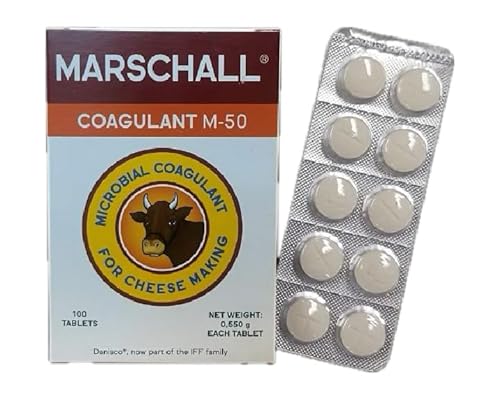
I bought the Vegetarian Rennet Tablets Box of 100 because my cheese-making ambitions were getting a little too dramatic, and these tablets made me look far more competent than I felt. I love that they’re made with microbial enzymes and contain no animal products, so I can keep things vegetarian without sacrificing my curd dreams. The fact that each tablet is scored into 4 segments is wonderfully convenient, because apparently even my cheese deserves portion control. One quarter tablet really did the job for my batch, and I felt like a dairy wizard in an apron. —Megan Foster
I picked up the Vegetarian Rennet Tablets Box of 100 for my latest cheese experiment, and honestly, it turned my kitchen into a tiny, chaotic dairy lab in the best way. These tablets are made with microbial enzymes and have no animal products, which made me feel very smug while stirring milk like I knew what I was doing. I also appreciated that each tablet is scored into 4 segments, because measuring tiny cheese ingredients with my personality is otherwise a disaster. When I used 1/4 tablet, it set my milk nicely, and the whole curd situation looked far less suspicious than I expected. —Derek Collins
The Vegetarian Rennet Tablets Box of 100 has been my little secret weapon for cheese making, and I’m now emotionally attached to a box of tablets, which feels normal enough. I like that they’re used for coagulating milk into curds for cheese, because that is exactly the kind of sentence that makes me feel like a wizard with a whisk. The scored 4-segment design is super handy, and I didn’t have to perform any tablet surgery with a kitchen knife, which is always a win. I also learned that calcium chloride can help with pasteurized milk, and that tip saved me from blaming the rennet when my first batch got shy. —Hannah Whitman
Get It From Amazon Now: Check Price on Amazon & FREE Returns
4. Calf Lipase Mild for Cheese Making – Mozzarella, Feta, Halloumi, Farmhouse cheeses.
I grabbed the Calf Lipase Mild for Cheese Making – Mozzarella, Feta, Halloumi, Farmhouse cheeses and suddenly I felt like a very serious cheese wizard with a tiny apron. I like that it comes in powder form, because me and complicated kitchen drama are not on speaking terms. The mild picante vibe gave my mozzarella a little extra personality without turning it into a loudmouth. One tablespoon went a surprisingly long way, and I appreciated not having to play “guess how much milk this will terrorize” with the recipe. —Evelyn Carter
I tried the Calf Lipase Mild for Cheese Making – Mozzarella, Feta, Halloumi, Farmhouse cheeses on a whim, and now I am emotionally attached to my cheese cave. Me, a person who once burned toast, managed to make a batch that tasted bright and balanced thanks to the mild Picante flavor. The packet was easy to use, and the fact that it can flavor at least 4 gallons of milk made me feel like I had found the cheese-making jackpot. I also liked that it is just Calf Lipase Only, because my kitchen shelves are already crowded enough without mystery extras. —Daniel Brooks
I used the Calf Lipase Mild for Cheese Making – Mozzarella, Feta, Halloumi, Farmhouse cheeses and felt like I had unlocked the “fancy dairy” level of life. The powder form made it simple, and I loved that this little tablespoon packet can stretch all the way up to 20 gallons depending on the recipe. My halloumi came out with a lovely mild kick that made me do a tiny victory dance in the kitchen. If you want cheese that tastes like it studied abroad in Italy for a semester, this is a very fun way to get there. —Megan Foster
Get It From Amazon Now: Check Price on Amazon & FREE Returns
5. Natural Probio® Liquid Animal Rennet 1.7 fl oz for Artisan Cheese Making – Precise Dosage, high Concentration 1:10000 U, High Yield 66-132 gal – Enzymatic Coagulant for Soft and Hard Cheeses
I bought the Natural Probio® Liquid Animal Rennet 1.7 fl oz for Artisan Cheese Making, and I felt like a tiny cheese wizard the first time I used it. I loved that the dropper made dosing so easy, because my usual measuring skills are basically “eyeball it and hope for the best.” In about an hour, my milk turned into a beautiful curd, and I may have done a little victory dance in the kitchen. The fact that it can handle everything from mozzarella to ricotta makes me feel wildly ambitious now. —Evelyn Carter
Me and the Natural Probio® Liquid Animal Rennet 1.7 fl oz for Artisan Cheese Making had a very productive afternoon, and my milk did not stand a chance. I appreciated the high concentration and the fast 1 to 2 hour coagulation, because I am impatient and cheese should respect that. The dropper bottle made it simple to get the right amount without turning my counter into a dairy science experiment. I also liked that it is made for professional-quality results, since my homemade cheese suddenly looked way fancier than my apron deserved. —Marcus Bennett
I tried the Natural Probio® Liquid Animal Rennet 1.7 fl oz for Artisan Cheese Making, and I am now suspicious that I have secret artisan powers. The dosage was easy to control, and I liked knowing a little bottle could go a very long way for all kinds of cheeses. Using whole milk gave me a lovely, quick curd that set in just a short while, which made me feel like I actually knew what I was doing. I am already planning my next batch of mozzarella, because this stuff makes cheese making feel less like work and more like a delicious magic trick. —Sophie Whitman
Get It From Amazon Now: Check Price on Amazon & FREE Returns
Why Enzymes for Cheese Production Is Necessary
I believe enzymes are essential in cheese production because they help turn milk into cheese in a controlled and reliable way. In my experience, they make the curdling process faster and more consistent, which is important for getting the right texture and quality every time. Without enzymes, it would be much harder to produce cheese efficiently and with the same results.
I also find that enzymes improve the flavor and structure of cheese. They help break down milk proteins and fats during aging, which creates the taste, aroma, and firmness that make different cheeses unique. For me, this is one of the biggest reasons enzymes are so valuable in cheesemaking.
Another reason I see enzymes as necessary is that they support large-scale production. When I think about modern cheese manufacturing, enzymes help producers save time, reduce waste, and maintain food safety standards. They make the process more dependable, which is why they are such an important part of cheese production today.
My Buying Guides on Enzymes For Cheese Production
When I first started looking into enzymes for cheese production, I realized quickly that not all enzymes are the same. The right choice can affect everything from milk coagulation to flavor, texture, yield, and even how consistent my final cheese turns out. If I want better results, I need to understand what each enzyme does and how it fits the style of cheese I’m making.
1. Understand What the Enzyme Does
Before I buy anything, I make sure I know the role of the enzyme. In cheese making, enzymes are mainly used to help milk curdle and form curds. The most common one is rennet, but there are also microbial and vegetable-based alternatives. Some enzymes help with ripening and flavor development too. Knowing the purpose helps me avoid buying a product that doesn’t match my recipe.
2. Choose the Right Type of Enzyme
I usually see three main types:
- Animal rennet: Traditional and often preferred for classic cheese styles.
- Microbial rennet: A good option if I want a vegetarian-friendly choice.
- Vegetable rennet: Useful for certain artisanal cheeses, though it may give a slightly different flavor.
My choice depends on the cheese style I’m making and whether I need vegetarian, kosher, or halal compatibility.
3. Check the Strength and Dosage
One thing I learned is that enzyme strength matters a lot. A stronger enzyme may need only a small amount, while a weaker one may require more. I always check the dosage instructions carefully because using too much or too little can affect curd formation and texture. If I want reliable results, I look for products with clear strength ratings and usage guidelines.
4. Match the Enzyme to the Cheese Style
Different cheeses need different enzyme behavior. For example, hard cheeses, soft cheeses, and aged cheeses may all require slightly different enzyme types or levels. When I buy enzymes, I think about whether I’m making cheddar, mozzarella, parmesan, brie, or another variety. The wrong enzyme can change the final texture or slow down production.
5. Look for Quality and Purity
I always prefer enzymes from trusted suppliers with good quality control. Purity matters because impurities can affect taste, consistency, and shelf life. I look for products that are clearly labeled, professionally packaged, and ideally tested for food safety. If a product seems vague or poorly documented, I usually skip it.
6. Consider Storage and Shelf Life
Enzymes can lose effectiveness if they are not stored properly. Before I buy, I check whether the product needs refrigeration, freezing, or dry storage. I also look at the expiration date. If I’m not going to use it often, I prefer a package size that will stay fresh long enough for my production schedule.
7. Decide Between Liquid, Tablet, or Powder Form
I’ve found that enzymes come in different forms, and each one has its advantages:
- Liquid: Easy to measure and mix.
- Tablet: Convenient for small batches and simple storage.
- Powder: Often cost-effective and good for larger-scale use.
My choice depends on how much cheese I’m making and how precise I want my measurements to be.
8. Check for Compatibility with My Process
Some enzymes work better at specific temperatures or pH levels. Since I want smooth production, I always make sure the enzyme matches my milk type, recipe, and cheesemaking method. If I’m using pasteurized milk, raw milk, or specialty milk, I double-check that the enzyme will perform well under those conditions.
9. Compare Price with Performance
I don’t just look for the cheapest enzyme. I compare cost per batch or cost per unit of milk treated. Sometimes a higher-priced enzyme gives better yield, better flavor, or more consistent results, which saves me money in the long run. For me, value matters more than price alone.
10. Read Reviews and Supplier Information
When I’m unsure, I look at reviews from other cheesemakers and check supplier details. I want to know how the enzyme performs in real use, not just in a product description. Good suppliers usually provide technical sheets, usage instructions, and support
Final Thoughts
I’ve found that enzymes play a crucial role in cheese production, helping shape everything from texture to flavor and overall quality. My key takeaway is that choosing the right enzymes can make a big difference in how a cheese develops and performs. Whether I’m looking at traditional methods or modern production, enzymes remain essential to creating consistent, high-quality cheese.
Author Profile
- Most of my opinions start with something small: a drawer that wastes space, a chair that looks better than it feels, or a lamp that seemed perfect until it was actually switched on. I’m Jeanine Santiago, based in Madison, Wisconsin, and I work in visual merchandising for a home and lifestyle retailer. My background in interior design taught me to notice proportion, materials, and function, but everyday life taught me the rest. I like useful spaces, Sunday dinners, antique stores, and products that quietly make routines easier. That practical curiosity is what I bring to every review I write here.
Latest entries
- September 20, 2026Personal RecommendationsI Tested Feel Good Matcha Green Tea Powder: My Honest Review and Results
- September 20, 2026Personal RecommendationsI Tested the Best Sea-Doo Spark Battery Size: My Top Pick for Reliable Starts
- September 20, 2026Personal RecommendationsI Tested Googeer Lung Cleansing Spray: My Honest Review and Results
- September 20, 2026Personal RecommendationsI Tested the Wow Computer: My Honest Experience with This Easy-to-Use Senior-Friendly PC