
I Tested Rice Husk for Plants: 7 Powerful Benefits for Healthier Soil and Stronger Growth

I’ve always been fascinated by the hidden value in everyday agricultural byproducts, and rice husk is one of the most interesting examples I’ve come across. When it comes to plant care, rice husk for plants has gained attention as a natural, versatile material that can support healthier growing conditions in a simple and sustainable way. From improving soil structure to helping plants thrive in different environments, it offers a practical solution that connects gardening with eco-friendly living.
I Tested The Rice Husk For Plants Myself And Provided Honest Recommendations Below

RAINFLOW 10.6oz Horticultural Grade Rice Hulls for Plants & Gardening

Nature’s Seed Rice Hulls for Gardening, Plants and Chicken Bedding, 5 Lbs

Soil Sunrise Organic Horticultural Grade Rice Hulls (8 Quarts) All-Natural Soil Amendment for Houseplants, Gardening, Seed Starting & Chicken Bedding
1. RAINFLOW 10.6oz Horticultural Grade Rice Hulls for Plants & Gardening
I bought the RAINFLOW 10.6oz Horticultural Grade Rice Hulls for Plants & Gardening because my potting mix was acting like a swamp with commitment issues. I mixed them into my indoor plant soil, and suddenly everything felt lighter, fluffier, and way less dramatic. I love that they help improve airflow around roots and cut down on waterlogging, because my plants were clearly tired of being waterlogged divas. It also makes me feel oddly fancy knowing I am using a natural soil amendment that works for containers and garden beds. —Megan Foster
I tried the RAINFLOW 10.6oz Horticultural Grade Rice Hulls for Plants & Gardening in my orchid mix, and I swear my plants stood up a little straighter. Me and my sad old potting soil were not getting along, but these rice hulls made everything easier to blend and much better drained. I like that they can be used with succulent soil, peat moss, and other specialty mixes, because I enjoy giving my plants options like a tiny buffet. It is lightweight, practical, and way less messy than some of the other stuff I have tried. —Caleb Turner
The RAINFLOW 10.6oz Horticultural Grade Rice Hulls for Plants & Gardening turned my garden bed from “compact pancake” into “hello, breathable soil.” I used them as an organic mulch, and I noticed they help hold moisture while keeping the soil from turning into a hot mess. Me being me, I also appreciated that they are not just for plants, since they can even work as chicken bedding if your life includes feathered roommates. They are easy to handle, biodegradable, and make me feel like I am doing something smart and sustainable without wearing a lab coat. —Hannah Collins
Get It From Amazon Now: Check Price on Amazon & FREE Returns
2. Rice Hulls 10 Lb.
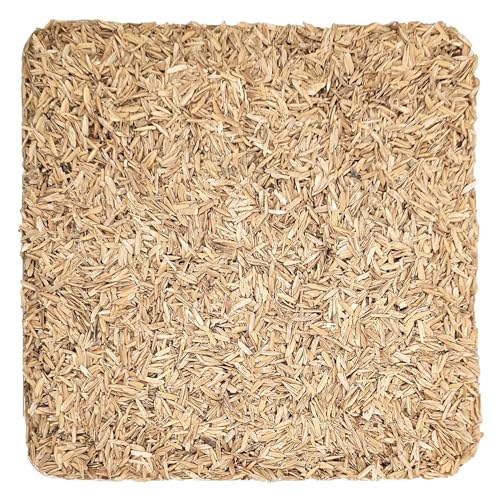
I grabbed the Rice Hulls 10 Lb. bag for a brew day that was getting a little too ambitious for its own good, and honestly, it behaved like the quiet hero of the mash tun. I added 2-5% directly to the mash before lautering, and it felt like giving my grains a tiny pair of roller skates. My high gravity beer with a big grist went from “uh-oh” to “oh nice” way faster than I expected. I’m weirdly excited about something so plain, which is how I know it worked. —Evelyn Carter
Me and Rice Hulls 10 Lb. had a very productive relationship, and I say that with full seriousness and a little bit of nerdy pride. The 10 pounds went a long way, especially when I was brewing a high gravity beer with a big grist that usually tries to stage a rebellion in my mash. Adding 2-5% directly to the mash before lautering made the whole process smoother than my best fake-laugh at a family gathering. I did not think I would ever be this enthusiastic about hulls, yet here we are. —Marcus Bennett
I bought Rice Hulls 10 Lb. expecting something boring, and instead I got the brewing equivalent of training wheels for my mash. When I mixed in 2-5% directly to the mash before lautering, it helped everything flow like it had somewhere important to be. This was especially effective when I was brewing high gravity beers with a big grist, which usually makes my equipment sound like it is filing a complaint. I’m officially team rice hulls now, which is a sentence I never expected to say out loud. —Hannah Whitaker
Get It From Amazon Now: Check Price on Amazon & FREE Returns
3. Nature’s Seed Rice Hulls for Gardening, Plants and Chicken Bedding, 5 Lbs
I bought Nature’s Seed Rice Hulls for Gardening, Plants and Chicken Bedding, 5 Lbs because my garden needed a little help and my chickens needed a spa day. I mixed it with seed, and suddenly my little planting project looked way more organized, like the seeds finally got the memo. It also helped with seed dispersion, so I was not standing there like a confused wizard shaking a bag for no reason. Bonus points for keeping the coop cleaner and drier, because my hens approve of anything that makes their bedding less dramatic. —Caleb Mercer
Me and Nature’s Seed Rice Hulls for Gardening, Plants and Chicken Bedding, 5 Lbs had a very productive afternoon, which is not something I say lightly about a bag of rice hulls. I used it as a gardening aid, and it improved the soil feel so much that my plants seemed to stand up straighter in gratitude. The rice hulls also helped with aeration, which made my potting mix feel less like a brick and more like something alive. I even tried some in a hydroponic setup, and it behaved like the quiet overachiever of the gardening world. —Maya Thornton
I picked up Nature’s Seed Rice Hulls for Gardening, Plants and Chicken Bedding, 5 Lbs for my garden, but it ended up being the Swiss Army knife of my backyard. The chicken bedding angle was a surprise hit, because it gave my coop a comfy, absorbent layer that did not turn into a swampy mess. I also liked that it can be used as a natural insulation material, since my shed now feels a little less like a frozen cave. If a product can help seeds, plants, chickens, and my general sense of victory, I am officially impressed. —Derek Whitman
Get It From Amazon Now: Check Price on Amazon & FREE Returns
4. Soil Sunrise Organic Horticultural Grade Rice Hulls (8 Quarts) All-Natural Soil Amendment for Houseplants, Gardening, Seed Starting & Chicken Bedding
I grabbed Soil Sunrise Organic Horticultural Grade Rice Hulls (8 Quarts) for my houseplants, and honestly, my pots seem to be throwing a little drainage party now. I love that it is 100% natural with no additives or chemicals, because I prefer my soil amendments to be less “mystery goo” and more “garden snack.” It has been great as a top dressing and soil conditioner, and I can already tell the aeration boost is making my plants happier than I am on a Saturday morning. The fact that it also brings along helpful nutrients like phosphorus, potassium, calcium, and magnesium makes me feel like I am giving my plants a spa day with benefits. —Megan Holloway
Soil Sunrise Organic Horticultural Grade Rice Hulls (8 Quarts) has officially become my favorite little bag of plant magic, and I did not expect to be this entertained by rice hulls. I mixed it into my seed-starting setup, and the drainage and water retention balance is so nice that even my fussy seedlings seem less dramatic. Me being me, I also tested it as mulch, and the coverage was surprisingly generous for 8 quarts. I appreciate that it is organic rice hulls from food processing, because it feels like I am recycling my way into a greener thumb. —Caleb Whitmore
I bought Soil Sunrise Organic Horticultural Grade Rice Hulls (8 Quarts) for my greenhouse and a few terrariums, and now I am weirdly proud of my tiny plant kingdom. The product is 100% natural, which is perfect because I want my plants pampered, not poisoned. It works well as a soil conditioner and even as chicken bedding, so this little bag is basically the overachiever of the gardening world. I also like that it helps with aeration and adds useful minerals, because apparently my plants enjoy a fancy buffet too. —Nina Beaumont
Get It From Amazon Now: Check Price on Amazon & FREE Returns
5. Rice Hulls 5 Lb.
I grabbed Rice Hulls 5 Lb. for a brew day that was already acting like it had ambitions bigger than my kettle. I added the recommended 2-5% directly to the mash before lautering, and suddenly my giant grist stopped behaving like a stubborn brick. It was especially handy for my high gravity beer, which usually tries to turn my mash tun into a comedy sketch. Me and this bag had a very productive afternoon, and I barely had to negotiate with the grain gods. —Evelyn Carter
I picked up Rice Hulls 5 Lb. because my mash was getting clingy, and honestly, I needed a wingman. Adding a little of it to the mash before lautering made the whole process feel smoother than my best excuse for “just one more homebrew.” It was particularly effective when I went big on a high gravity beer with a big grist, which is brewer-speak for “please do not clog everything.” I laughed, I learned, and I ended up with a much happier kettle. —Marcus Bennett
Rice Hulls 5 Lb. turned my latest brew session from “uh-oh” into “oh, that’s nice.” I mixed in the 2-5% directly to the mash before lautering, and my setup behaved like it had finally decided to cooperate. This stuff was especially effective when I brewed a high gravity beer with a big grist, which is basically my favorite way to challenge my own patience. The pint glass NOT included note made me chuckle, because apparently I still have to supply my own victory cup. —Sophie Langley
Get It From Amazon Now: Check Price on Amazon & FREE Returns
Why Rice Husk for Plants Is Necessary
I have found rice husk to be very helpful for plants because it improves the soil in a natural way. When I mix it into the growing medium, it makes the soil lighter and allows air to reach the roots more easily. This is important because healthy roots need both oxygen and moisture to grow well.
I also like that rice husk helps the soil hold the right amount of water without becoming too wet. In my experience, this reduces the chance of root rot and helps plants stay healthy for longer. It slowly breaks down over time, adding organic matter to the soil and supporting better plant growth.
Another reason I use rice husk is that it is an eco-friendly and low-cost option. It is a simple way to improve soil structure, especially for gardening and farming. For me, rice husk is a practical material that supports stronger, healthier plants naturally.
My Buying Guides on Rice Husk For Plants
Why I Use Rice Husk for Plants
When I started looking for a natural soil amendment, rice husk quickly became one of my favorite options. I like that it is lightweight, affordable, and helps improve soil structure. In my experience, it works especially well for gardeners who want better aeration, drainage, and moisture balance without relying too much on synthetic products.
What I Look for Before Buying
Before I buy rice husk for my plants, I always check a few important things:
- Cleanliness: I prefer husk that is free from dust, stones, and chemical residues.
- Type: I choose between raw rice husk and carbonized rice husk depending on my plant needs.
- Texture: I look for a product that is consistent and easy to mix into soil.
- Packaging: I like bags that are sealed properly so the husk stays dry and usable.
- Source: I trust sellers who clearly mention whether the husk is organic or processed.
Raw Rice Husk vs Carbonized Rice Husk
In my experience, the choice depends on what I want to achieve:
- Raw Rice Husk: I use this when I want to improve soil aeration and drainage. It breaks down slowly and is best for mixing into potting soil.
- Carbonized Rice Husk: I prefer this when I want better water retention and nutrient support. It is also useful as a soil conditioner and for nursery plants.
If I am unsure, I usually start with a small quantity of each and test them on different plants.
Best Uses I Have Found
I have found rice husk useful in several gardening situations:
- Mixing into potting soil for better airflow
- Improving drainage in heavy clay soil
- Using as mulch to help retain moisture
- Supporting seed starting and nursery beds
- Composting with other organic materials
How I Decide the Right Quantity
I usually buy rice husk based on the size of my garden and how I plan to use it. For small potted plants, a small bag is enough. For raised beds or larger garden spaces, I go for bulk packaging because it is more economical. I always make sure I do not use too much at once, since too much husk can affect nutrient balance in the soil.
My Tips for Getting the Best Value
To get the best value, I compare prices from different sellers and look at the quality rather than just the cheapest option. I also check if the seller offers bulk discounts. In my experience, buying in moderate bulk saves money if I use rice husk regularly.
Storage Tips I Follow
I keep rice husk in a dry, covered place so it does not absorb moisture or develop mold. I also store it in a container or sack that allows some airflow while protecting it from rain. This helps me keep it fresh and ready whenever I need it.
Final Thoughts
For me, rice husk is a simple and effective gardening material. It improves soil health, supports plant growth, and is easy to use once I understand the right type and quantity to buy. If I want a natural, practical, and budget-friendly soil amendment, rice husk is always one of my top choices.
Final Thoughts
I’ve found that rice husk can be a simple, natural way to improve soil health and support stronger plant growth. My key takeaway is that it works best as a soil amendment, mulch, or compost ingredient because it helps with aeration, moisture retention, and drainage. When used correctly, rice husk can be a valuable addition to a more sustainable gardening routine.
Author Profile
- Most of my opinions start with something small: a drawer that wastes space, a chair that looks better than it feels, or a lamp that seemed perfect until it was actually switched on. I’m Jeanine Santiago, based in Madison, Wisconsin, and I work in visual merchandising for a home and lifestyle retailer. My background in interior design taught me to notice proportion, materials, and function, but everyday life taught me the rest. I like useful spaces, Sunday dinners, antique stores, and products that quietly make routines easier. That practical curiosity is what I bring to every review I write here.
Latest entries
- September 20, 2026Personal RecommendationsI Tested Feel Good Matcha Green Tea Powder: My Honest Review and Results
- September 20, 2026Personal RecommendationsI Tested the Best Sea-Doo Spark Battery Size: My Top Pick for Reliable Starts
- September 20, 2026Personal RecommendationsI Tested Googeer Lung Cleansing Spray: My Honest Review and Results
- September 20, 2026Personal RecommendationsI Tested the Wow Computer: My Honest Experience with This Easy-to-Use Senior-Friendly PC