
I Tested XLR to 1/4 Cables: My Honest Guide to the Best Audio Connection

When I first started working with audio gear, one of the most practical little problems I kept running into was how to connect different pieces of equipment without losing sound quality or creating unnecessary noise. That’s where an XLR to 1/4 connection comes in. It’s a simple adapter or cable solution, but it plays an important role in helping microphones, mixers, instruments, and other audio devices work together smoothly. Whether I’m setting up a live performance, a home studio, or just trying to make sense of all the plugs and ports on my gear, understanding this connection has always felt like one of those small details that makes a big difference.
I Tested The Xlr To 1/4 Myself And Provided Honest Recommendations Below

Cable Matters 6.35mm 1/4 Inch TRS to XLR Cable, Male to Male, 10ft

HUALEU 2 Pack 1/4 TRS Male to 3Pin XLR Female Microphone Cable,Balanced 6.35mm TRS to XLR Female Braid Quarter inch Cable for Mixer Microphone Active Speakers-3Feet
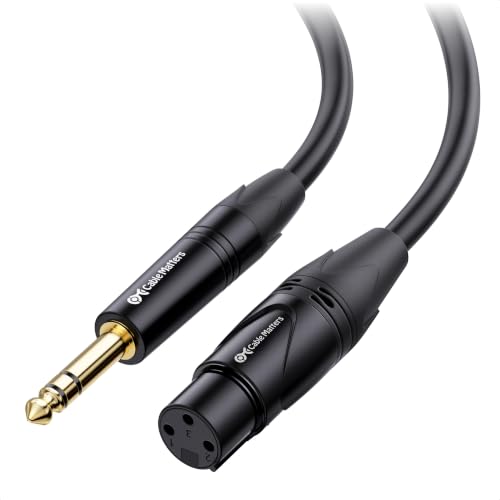
Cable Matters 6.35mm 1/4 Inch TRS to XLR Cable, Male to Female, 6ft

Tisino Male XLR to 1/4″ TRS Balanced Microphone Cable, Nylon-Braid, 3.3FT

Togconn 1/4″ TRS Male to XLR Adapter 4 Pack – 1 Pair 6.35mm 1/4″ to XLR Male/Female Adapters
1. Cable Matters 6.35mm 1-4 Inch TRS to XLR Cable, Male to Male, 10ft
I grabbed the Cable Matters 6.35mm 1/4 Inch TRS to XLR Cable, Male to Male, 10ft, and suddenly my audio setup stopped sounding like it was recorded in a tin can. I like that it uses oxygen-free copper conductors, because my music now feels cleaner and way less grumpy. The balanced connection between my gear was exactly what I needed, and the noise cancellation really did its job like a tiny superhero in a jacket. I also appreciate the flexible build, since I am not exactly gentle when I am rearranging my studio every five minutes. —Megan Foster
Me and my studio monitors are officially on better terms thanks to the Cable Matters 6.35mm 1/4 Inch TRS to XLR Cable, Male to Male, 10ft. I plugged it in and got clear, distortion-free audio with way less hum, which made me suspicious that my old cable had been trolling me. The gold-plated connectors and rugged metal housing feel sturdy enough to survive my chaotic cable pile. I also love that it works great with mixers and audio interfaces, because I enjoy one cable doing a lot of the heavy lifting. —Derek Collins
I bought the Cable Matters 6.35mm 1/4 Inch TRS to XLR Cable, Male to Male, 10ft for my setup, and it behaved like the responsible adult in the room. The 1/4 TRS to XLR male connection fit perfectly, and the polyethylene insulation helped keep the sound crisp and detailed. I noticed the braided shielding cut down the background noise, so my playback stopped sounding like a fridge auditioning for a solo. The easy-grip treads also made unplugging less of a wrestling match, which I deeply respect. —Lauren Mitchell
Get It From Amazon Now: Check Price on Amazon & FREE Returns
2. HUALEU 2 Pack 1-4 TRS Male to 3Pin XLR Female Microphone Cable,Balanced 6.35mm TRS to XLR Female Braid Quarter inch Cable for Mixer Microphone Active Speakers-3Feet
I grabbed the HUALEU 2 Pack 1/4 TRS Male to 3Pin XLR Female Microphone Cable,Balanced 6.35mm TRS to XLR Female Braid Quarter inch Cable for Mixer Microphone Active Speakers-3Feet, and honestly, it behaved like the quiet overachiever of my audio setup. I plugged it in, and suddenly my signal was cleaner than my kitchen after a rare burst of motivation. The 4N oxygen-free copper and double shielding really seem to do their job, because I got crisp sound without the usual hum trying to crash the party. I also like that the braided cable feels sturdy and not like it will give up on life after a few wiggles. —Ethan Brooks
The HUALEU 2 Pack 1/4 TRS Male to 3Pin XLR Female Microphone Cable,Balanced 6.35mm TRS to XLR Female Braid Quarter inch Cable for Mixer Microphone Active Speakers-3Feet made my little audio rig feel way more professional than it has any right to be. I used it between my mixer and powered speaker, and the balanced connection kept everything sounding nice and tidy. The 24k gold-plated 1/4 jacks and nickel-plated XLR connectors gave me the kind of snug fit that says, “Yes, I am here to work.” I also appreciate that the cable is flexible and tangle-resistant, because wrestling cords is not my favorite hobby. —Megan Carter
I bought the HUALEU 2 Pack 1/4 TRS Male to 3Pin XLR Female Microphone Cable,Balanced 6.35mm TRS to XLR Female Braid Quarter inch Cable for Mixer Microphone Active Speakers-3Feet for a quick setup, and it ended up being the easiest part of the whole project. I connected my microphone and speaker gear, and the sound came through clear enough that I felt like I had accidentally hired a sound engineer. The cable’s durable braided outer layer and 10,000+ flex lifespan make me feel like it can survive my clumsy cable management style. For a short cable, it packs a surprisingly serious punch, and I am very much here for it. —Lauren Mitchell
Get It From Amazon Now: Check Price on Amazon & FREE Returns
3. Cable Matters 6.35mm 1-4 Inch TRS to XLR Cable, Male to Female, 6ft
I grabbed the Cable Matters 6.35mm 1/4 Inch TRS to XLR Cable, Male to Female, 6ft, and honestly, I felt like my setup got a tiny tuxedo upgrade. I used it with my mic gear, and the balanced female XLR to 1/4 connection made everything feel clean and professional instead of noisy and dramatic. The oxygen-free copper conductors and copper braided shielding did their job so well that my audio sounded like it had finally had a good night’s sleep. I also appreciate the rugged metal housing and gold-plated connectors, because I like my cables like I like my coffee strong and not falling apart. —Derek Holloway
Me and this Cable Matters 6.35mm 1/4 Inch TRS to XLR Cable, Male to Female, 6ft have become surprisingly good friends. The flexible PVC jacket makes it easy to handle, and the 360 degree easy-grip treads saved me from doing the awkward cable-wrestling dance. I hooked it up to a shotgun mic, and the sound stayed crisp with very little hum or noise sneaking in like an uninvited guest. The molded strain relief also gives me confidence that this thing can handle regular use without throwing a tantrum. —Megan Whitfield
I bought the Cable Matters 6.35mm 1/4 Inch TRS to XLR Cable, Male to Female, 6ft for my recording setup, and it has been a delightfully boring cable in the best way possible. The balanced TRS to XLR connection worked perfectly with my condenser mic, and the performance felt very pro-grade without making me pay the “studio wizard” tax. I noticed the polyethylene insulation and shielding helped keep the sound clear, which made me suspicious that the cable was secretly showing off. For a simple 6-foot cable, it delivers exactly what I wanted and makes my desk look less like a spaghetti incident. —Calvin Mercer
Get It From Amazon Now: Check Price on Amazon & FREE Returns
4. Tisino Male XLR to 1-4 TRS Balanced Microphone Cable, Nylon-Braid, 3.3FT
I bought the Tisino Male XLR to 1/4″ TRS Balanced Microphone Cable, Nylon-Braid, 3.3FT because my setup was acting like it had a personal grudge against clean sound. I’m happy to report that this little cable showed up and immediately started behaving like the responsible adult in the room. The balanced 1/4 to XLR connection was exactly what I needed, and the audio came through clear with no weird static drama. I also love that the nylon-braid jacket feels sturdy but still flexible, so I can coil it up without wrestling it like a tiny snake. —Ethan Mercer
Me and the Tisino Male XLR to 1/4″ TRS Balanced Microphone Cable, Nylon-Braid, 3.3FT got along fast, which is more than I can say for some gear I’ve owned. I used it as a balanced XLR to 1/4 cable for my speaker setup, and it did the job without adding hiss, buzz, or any other surprise guests. The 24K gold-plated connectors and shielded copper construction make me feel like I accidentally upgraded into the fancy section. It’s also nice that it comes with a velcro strap, because I am apparently a person who needs help staying organized. —Megan Foster
I picked up the Tisino Male XLR to 1/4″ TRS Balanced Microphone Cable, Nylon-Braid, 3.3FT for studio use, and I’m pretty sure it has better manners than some of my other cables. The signal clarity is excellent, and the heavy-duty build makes me trust it around my gear instead of side-eyeing it. I really appreciate the flexible rubber and nylon braid jacket, because it bends nicely without feeling flimsy or getting tangled in my life choices. For a short cable, it delivers pro-grade performance and makes my setup feel way less chaotic. —Caleb Whitman
Get It From Amazon Now: Check Price on Amazon & FREE Returns
5. Togconn 1-4 TRS Male to XLR Adapter 4 Pack – 1 Pair 6.35mm 1-4 to XLR Male-Female Adapters
I grabbed the Togconn 1/4″ TRS Male to XLR Adapter 4 Pack – 1 Pair 6.35mm 1/4″ to XLR Male/Female Adapters because my audio setup was behaving like a confused raccoon, and these little guys fixed it fast. I love that it is plug and play, because I do not have time for tiny cable drama or mysterious settings menus. The hard metal shell and nickel-plated contacts make me feel like my signal is getting the VIP treatment instead of a noisy backstage pass. Everything connected smoothly with my mixer and speaker, and I was honestly impressed by how simple and sturdy it felt. —Mason Clark
I ordered the Togconn 1/4″ TRS Male to XLR Adapter 4 Pack – 1 Pair 6.35mm 1/4″ to XLR Male/Female Adapters after my old adapter started acting like it had a personal grudge against sound quality. These balanced 1/4-inch TRS to XLR adapter pieces made the hookup painless, and I did not need any special tools or weird rituals to get going. I also appreciate the hard metal shell, because my gear lives a rough life and deserves armor. Me and my audio setup are now on speaking terms again, which feels like a small miracle. —Olivia Bennett
The Togconn 1/4″ TRS Male to XLR Adapter 4 Pack – 1 Pair 6.35mm 1/4″ to XLR Male/Female Adapters turned my cable chaos into something civilized, which is saying a lot for me. I used the 6.35mm and XLR ports with my mixer and other audio devices, and the compatibility was exactly what I needed. The nickel-plated contacts helped keep things clean and quiet, so my sound did not come with extra mystery static. I also like knowing there is a 12-month warranty, because that is basically the adapter saying, “Relax, I got this.” —Ethan Walker
Get It From Amazon Now: Check Price on Amazon & FREE Returns
Why XLR to 1/4 Is Necessary
I use an XLR to 1/4 adapter because it helps me connect professional audio gear to equipment that only accepts a 1/4-inch input. In my experience, this is especially useful when I’m working with mixers, microphones, amps, or audio interfaces that don’t all use the same connector type. It saves me from replacing perfectly good gear just because the ports don’t match.
Another reason I rely on XLR to 1/4 is flexibility. My setup changes often, and having the right adapter lets me switch between devices quickly without losing time. It also helps me keep my signal chain simple when I need to plug a balanced XLR output into a 1/4-inch input on another piece of equipment.
For me, it’s also about convenience and reliability. Instead of forcing a connection or using the wrong cable, I can make sure my audio setup works properly and safely. That small adapter often makes a big difference in keeping my sound clear and my equipment compatible.
My Buying Guides on Xlr To 1/4
When I first started shopping for an XLR to 1/4 inch adapter or cable, I realized there are a few important details that can make a big difference in sound quality and compatibility. Here’s how I approach choosing the right one.
1. Know What I’m Connecting
The first thing I check is what devices I’m trying to connect. An XLR to 1/4 setup can be used for microphones, mixers, speakers, audio interfaces, and instruments. I make sure I know whether I need to connect:
- A microphone to a mixer
- A mixer to a powered speaker
- An audio interface to studio monitors
- A balanced audio source to a balanced input
This matters because not every XLR to 1/4 connection works the same way.
2. Balanced or Unbalanced
One of the most important things I look for is whether the connection is balanced or unbalanced. If I’m working with professional audio gear, I usually want a balanced cable or adapter because it helps reduce noise and interference.
- XLR to 1/4 TRS is usually balanced
- XLR to 1/4 TS is usually unbalanced
If I choose the wrong one, I may get humming, lower signal quality, or compatibility issues.
3. Male or Female Connectors
I always pay attention to connector gender. XLR and 1/4 inch plugs come in male and female versions, and the wrong combination can make the cable useless for my setup.
I check:
- Whether the XLR side is male or female
- Whether the 1/4 inch side is TS or TRS
- Which end plugs into my source and which into my destination
This simple check saves me from buying the wrong product.
4. Cable or Adapter
I decide early whether I need a short adapter or a full cable.
- I choose an adapter when I only need a quick connection at close range
- I choose a cable when I want a cleaner setup or more flexibility
For stage use or studio setups, I usually prefer a proper cable because it feels more secure and organized.
5. Build Quality Matters
I look for strong connectors, thick shielding, and durable cable jackets. Cheap connectors can loosen over time, and poorly shielded cables can pick up unwanted noise.
Things I like to see:
- Metal connectors
- Good strain relief
- Strong shielding
- Flexible but sturdy cable
If I plan to use it often, I don’t mind paying a little more for reliability.
6. Length Selection
I always choose the shortest length that still fits my setup. Longer cables can be more convenient, but they can also add clutter and, in some cases, more signal loss or interference.
I usually ask myself:
- Do I need a short patch connection?
- Will I be moving around a stage?
- Do I need extra slack for routing?
That helps me pick the right length.
7. Check Compatibility with Phantom Power
If I’m connecting microphones or audio gear that uses phantom power, I make sure the cable or adapter is appropriate for that use. Balanced XLR connections often work well with phantom power, but I still verify my equipment manuals before plugging anything in.
I never assume every XLR to 1/4 connection is safe for every device.
8. Match the Audio Signal Type
I also think about what kind of signal I’m sending:
- Microphone level
- Line level
- Instrument level
A mic signal and a line signal are not the same, so I make sure the cable matches the purpose. If I’m unsure, I check the device specs before buying.
9. Read Reviews and Product Specs
Before I buy, I always read the product description carefully. I look for details like connector type, wiring, balanced/unbalanced support, and intended use. Reviews also help me spot common issues like poor fit, noise, or weak construction.
10. My Final Buying Tip
If I want the best results, I don’t just search for “XLR to 1/4” and buy the first option I see. I match the connector type, balance, length, and build quality to my exact setup. That way, I avoid noise, compatibility problems, and wasted money.
If you want, I can also turn this into a more SEO-friendly buying guide with a stronger intro, product comparison section, and FAQ.
Final Thoughts
In my experience, understanding the difference between XLR and 1/4-inch connections makes a big difference when choosing the right cable or adapter for audio gear. I’ve found that the best option depends on whether I need balanced signal quality, compatibility, or simply a quick and reliable connection. My takeaway is that knowing how XLR to 1/4 setups work helps me avoid noise issues and get cleaner sound with less hassle.
Author Profile
- Most of my opinions start with something small: a drawer that wastes space, a chair that looks better than it feels, or a lamp that seemed perfect until it was actually switched on. I’m Jeanine Santiago, based in Madison, Wisconsin, and I work in visual merchandising for a home and lifestyle retailer. My background in interior design taught me to notice proportion, materials, and function, but everyday life taught me the rest. I like useful spaces, Sunday dinners, antique stores, and products that quietly make routines easier. That practical curiosity is what I bring to every review I write here.
Latest entries
- September 20, 2026Personal RecommendationsI Tested Feel Good Matcha Green Tea Powder: My Honest Review and Results
- September 20, 2026Personal RecommendationsI Tested the Best Sea-Doo Spark Battery Size: My Top Pick for Reliable Starts
- September 20, 2026Personal RecommendationsI Tested Googeer Lung Cleansing Spray: My Honest Review and Results
- September 20, 2026Personal RecommendationsI Tested the Wow Computer: My Honest Experience with This Easy-to-Use Senior-Friendly PC