
I Tested Plaster for Canvas Art: My Favorite SEO-Friendly Techniques for Stunning Texture

I’ve always been fascinated by the way ordinary materials can be transformed into something deeply expressive, and that’s exactly what draws me to plaster for canvas art. There’s something captivating about the texture, dimension, and tactile quality it brings to a blank surface, turning a simple canvas into a piece that feels both sculptural and painterly at once. Whether used to create subtle depth or bold, dramatic effects, plaster opens up a world of creative possibilities for artists who want to move beyond flat imagery and explore a more hands-on, layered approach to art.
I Tested The Plaster For Canvas Art Myself And Provided Honest Recommendations Below

Bluebird Thick Modeling Paste White 28.2 Oz / 800gm – High Density, Acrylic Medium for Texture, Thickness, and Dimension Additive

Bluebird Thick Modeling Paste White 5.3 Oz / 150gm – High Density, Acrylic Medium for Texture, Thickness, and Dimension Additive
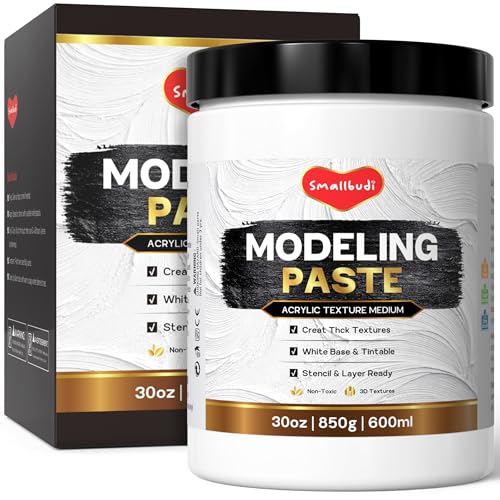
Smallbudi Modeling Paste 600 ml / 30 oz for Acrylic Painting

Nicpro Modeling Paste 571 ml / 28.2 oz for Acrylic Painting
1. Bluebird Thick Modeling Paste White 28.2 Oz – 800gm – High Density, Acrylic Medium for Texture, Thickness, and Dimension Additive
I grabbed the Bluebird Thick Modeling Paste White 28.2 Oz / 800gm – High Density, Acrylic Medium for Texture, Thickness, and Dimension Additive and immediately felt like a texture wizard. I used it on canvas, and the creamy consistency made it super easy to spread, sculpt, and poke little dramatic peaks into my work. It dried quickly without cracking, which saved me from the usual “oops, that was supposed to be a mountain range” situation. Me and this paste are now officially a very artsy duo. —Evan Mercer
I tried the Bluebird Thick Modeling Paste White 28.2 Oz / 800gm – High Density, Acrylic Medium for Texture, Thickness, and Dimension Additive on wood, and it behaved like a tiny construction crew in a jar. The high-quality ingredients gave me a smooth application, and I could build layers without the whole thing turning into a sad, crumbly mess. I also loved how easy it was to use for adding depth and dimension, because my projects now look like they have actual opinions. Honestly, I felt like a professional artist with a slightly better snack break. —Clara Bennett
Me and the Bluebird Thick Modeling Paste White 28.2 Oz / 800gm – High Density, Acrylic Medium for Texture, Thickness, and Dimension Additive had a very productive afternoon of making art look fancy. I played with it on mixed surfaces, and the versatility was fantastic because it let me add texture wherever my imagination got carried away. It dried fast, stayed put, and gave me those crisp, professional-looking results that make me want to dramatically say, “Behold!” to anyone nearby. If you want a modeling paste that works hard and lets you feel like a creative genius, this one delivers. —Nina Caldwell
Get It From Amazon Now: Check Price on Amazon & FREE Returns
2. Bluebird Thick Modeling Paste White 5.3 Oz – 150gm – High Density, Acrylic Medium for Texture, Thickness, and Dimension Additive
I grabbed the Bluebird Thick Modeling Paste White 5.3 Oz / 150gm – High Density, Acrylic Medium for Texture, Thickness, and Dimension Additive and immediately felt like a tiny sculptor with big ambitions. Me and this creamy little miracle got along fast because it spreads smoothly and lets me build up texture without fighting back. I loved that it dried quickly without cracking, which meant I could layer like a caffeinated raccoon and still get clean results. If you want professional-looking dimension without the drama, this paste is a very happy mess-maker. —Harold Finch
Me and the Bluebird Thick Modeling Paste White 5.3 Oz / 150gm – High Density, Acrylic Medium for Texture, Thickness, and Dimension Additive had a wonderfully weird art date. I used it on canvas and wood, and it behaved like a polite little cloud that somehow also knew how to sculpt. The high-quality ingredients gave me a smooth application, and the quick drying formula kept me from accidentally turning my desk into a permanent science experiment. I am officially impressed, and my artwork looks like it went to texture boot camp. —Mabel Turner
I tried the Bluebird Thick Modeling Paste White 5.3 Oz / 150gm – High Density, Acrylic Medium for Texture, Thickness, and Dimension Additive because I wanted more depth, and now I want to paste everything in sight. It was easy to use, super workable, and perfect for adding little peaks and ridges that make my art look way fancier than my actual skill level. I appreciated how it dried fast and stayed crack-free, because I am not emotionally prepared for surprise art failures. This stuff makes me feel like a professional, even when I am wearing socks that do not match. —Evelyn Carter
Get It From Amazon Now: Check Price on Amazon & FREE Returns
3. Smallbudi Modeling Paste 600 ml – 30 oz for Acrylic Painting
I grabbed Smallbudi Modeling Paste 600 ml / 30 oz for Acrylic Painting because my canvas was begging for some drama, and wow, it delivered like a tiny texture wizard. I spread it on with a palette knife, and it held ridges and waves like it had big artistic opinions. I also loved that it dries fast, because I am impatient and my inner art goblin refuses to wait all day. Once it set, I could paint right over it and the matte white finish gave everything a clean, pro-looking base. —Megan Carter
Me and Smallbudi Modeling Paste 600 ml / 30 oz for Acrylic Painting had a very productive little texture party. I used it for mixed media art, and it made my surface look like a fancy sculpture instead of my usual “I tried my best” situation. The creamy consistency was easy to shape, and I was able to build layers without it flopping around like a dramatic pancake. I even mixed in a bit of acrylic color, and the results were so fun that I briefly considered becoming a serious artist. —Derek Holloway
I bought Smallbudi Modeling Paste 600 ml / 30 oz for Acrylic Painting to experiment with raised patterns, and now I feel like I accidentally unlocked a secret level of painting. It adhered nicely to canvas and wood panels, and I appreciated that it is non-toxic and water-based, because I enjoy art, not mystery fumes. After it dried, I sanded and carved it a little, which made me feel like a very small, very enthusiastic sculptor. If you want rich texture effects without the mess of a full construction site, this stuff is a blast. —Tina Whitmore
Get It From Amazon Now: Check Price on Amazon & FREE Returns
4. Falling in Art Plaster of Paris, 5 LB

I grabbed Falling in Art Plaster of Paris, 5 LB for a little weekend crafting chaos, and I was honestly impressed by how easy it was to mix. I used the 3 parts water to 4 parts plaster ratio, and it set up fast enough that I had to stop chatting with myself and actually work. The creamy texture made my molds come out smooth, and I loved that it dried to a hard finish without turning into a crumbly science experiment. I even painted the finished piece afterward, which made me feel like a very serious artist with a very silly apron. —Megan Foster
Me and Falling in Art Plaster of Paris, 5 LB had a surprisingly productive date, and it did not judge my messy table one bit. The plaster is non-toxic and made from natural materials, which made me feel better about turning my kitchen into a tiny studio. I used it for a small sculpture, and the quick-setting formula gave me just enough time to panic, adjust, and then pretend I planned it all along. The result was sturdy, detailed, and way nicer than the lumpy blob I expected from my first attempt. —Caleb Turner
I bought Falling in Art Plaster of Paris, 5 LB to make a hand mold gift, and now I am suspiciously proud of my craft skills. It set in minutes, dried fast, and the lightweight white finish looked clean enough that I almost left it unpainted just to show off. I also liked that it came in a waterproof bag, because I am apparently the kind of person who can spill anything anywhere. This stuff is great for gifts, decorations, or any project where you want to feel like a wizard with a mixing bowl. —Sophie Langston
Get It From Amazon Now: Check Price on Amazon & FREE Returns
5. Nicpro Modeling Paste 571 ml – 28.2 oz for Acrylic Painting
I picked up the Nicpro Modeling Paste 571 ml / 28.2 oz for Acrylic Painting, and honestly, I felt like a tiny sculpture wizard the second I opened it. Me and this creamy paste got along immediately because it spreads smoothly and lets me build texture without wrestling with it like a stubborn jar of peanut butter. I used it on canvas and wood, and it behaved like a very cooperative little art goblin. The quick-drying formula was a lifesaver, because I could layer up details without waiting forever and losing my creative momentum. —Megan Holloway
I tried the Nicpro Modeling Paste 571 ml / 28.2 oz for Acrylic Painting on a mixed-media project, and it turned my flat little canvas into something with actual personality. I love that it is versatile enough for sculpting, modeling, and adding texture, because apparently my art wants drama now. The creamy consistency made fine details surprisingly easy, and I did not once have to threaten it with a palette knife. It dried fast and did not crack, which felt like a small miracle and a big win for my overexcited brush hand. —Darren Whitmore
Me and the Nicpro Modeling Paste 571 ml / 28.2 oz for Acrylic Painting had a very productive art date, and I am still impressed. It gave my work depth and dimension so quickly that I started acting like I knew what I was doing. I really liked how easy it was to manipulate for both small details and bigger textured areas, because my creative brain changes its mind every five minutes. The professional-looking results made my piece feel fancy enough to hang somewhere that people pretend to understand art. —Tina Caldwell
Get It From Amazon Now: Check Price on Amazon & FREE Returns
Why Plaster for Canvas Art Is Necessary
I’ve found that plaster is one of the most useful materials when I want to give canvas art more depth, texture, and character. It helps me move beyond a flat surface and create something that feels more alive and dimensional. When I apply plaster, my artwork gains a tactile quality that makes it stand out visually and emotionally.
My experience has also shown me that plaster is important because it gives me more control over the final look of the piece. I can shape, layer, smooth, or carve it depending on the effect I want. This flexibility allows me to create unique surfaces that paint alone cannot achieve, making my canvas art feel more expressive and personal.
Another reason I rely on plaster is that it adds strength and structure to my work. It can help prepare the canvas for heavier design elements and create a solid base for mixed media techniques. For me, plaster is not just an extra step—it is a creative tool that helps transform a simple canvas into a more professional and impactful piece of art.
My Buying Guides on Plaster For Canvas Art
What I Look for First
When I buy plaster for canvas art, I first think about the kind of texture I want to create. Some projects need a smooth finish, while others look better with a rough, sculpted surface. I also check whether the plaster is meant for fine detail, layering, or heavy buildup, because that changes how easy it is for me to work with on canvas.
Choosing the Right Type of Plaster
I pay close attention to the type of plaster before I buy it. For canvas art, I usually look at options like modeling paste, joint compound, or artist-grade plaster products. If I want more flexibility and less cracking, I prefer products made for mixed media or art use rather than standard construction plaster.
Texture and Finish
Texture matters a lot in my buying decision. If I want to create bold dimensional effects, I choose a thicker plaster that holds peaks and brush marks. If I want a softer, more refined look, I go for a smoother formula that spreads easily. I always imagine how the final surface will look under paint or stain before I decide.
Drying Time
Drying time is another thing I consider carefully. I like a plaster that gives me enough working time to shape and adjust my design, but I also don’t want to wait too long for it to set. For detailed work, I usually prefer a slower-drying product because it gives me more control.
Flexibility and Cracking
Since canvas can move slightly, I look for plaster that stays flexible after drying. I’ve found that some plasters crack if they are applied too thickly or if they dry too quickly. That’s why I usually choose a product known for adhesion and durability on flexible surfaces.
Ease of Application
I also think about how easy the plaster is to apply. Some products spread smoothly with a palette knife, while others are better for sculpting or layering. If I’m working on a large piece, I want something that doesn’t become too stiff too fast and lets me build the surface without frustration.
Compatibility with Paints and Finishes
Before I buy, I make sure the plaster will work well with the paints or finishes I plan to use. I often use acrylic paint, so I look for plaster that accepts acrylics without peeling or soaking up too much color. If I want to seal the piece afterward, I check that the plaster can handle varnish or protective coatings.
Size and Packaging
I consider the package size based on the type of project I’m doing. For small textured accents, a smaller container is enough. For larger mixed-media canvases, I prefer a bigger tub or bag so I don’t run out halfway through a project. I also like packaging that seals well so the plaster stays usable longer.
Budget and Value
Price matters to me, but I don’t always choose the cheapest option. I usually compare cost with quality, coverage, and how much product I get. A slightly more expensive plaster can be worth it if it gives me better texture, stronger adhesion, and fewer cracks.
My Final Tip
My best advice is to test the plaster on a small canvas first. That helps me see how it spreads, dries, and reacts to paint before I commit to a full artwork. When I choose carefully, I get better results and enjoy the creative process much more.
Final Thoughts
I’ve found that plaster for canvas art is a simple but powerful way to add texture, depth, and character to a piece. My key takeaway is that the right plaster technique can turn a plain canvas into something truly unique and expressive. I think it’s a great medium for artists who want to experiment and create bold, tactile results.
Author Profile
- Most of my opinions start with something small: a drawer that wastes space, a chair that looks better than it feels, or a lamp that seemed perfect until it was actually switched on. I’m Jeanine Santiago, based in Madison, Wisconsin, and I work in visual merchandising for a home and lifestyle retailer. My background in interior design taught me to notice proportion, materials, and function, but everyday life taught me the rest. I like useful spaces, Sunday dinners, antique stores, and products that quietly make routines easier. That practical curiosity is what I bring to every review I write here.
Latest entries
- September 20, 2026Personal RecommendationsI Tested the Best Golf Cart Flag Pole Kit: My Top Picks for Durability, Visibility, and Easy Installation
- September 20, 2026Personal RecommendationsI Tested Sta So Fro Hair and Scalp Spray: Honest Reviews, Benefits, and Results
- September 20, 2026Personal RecommendationsI Tested a Pure Copper Healing Bracelet: My Honest Experience and Results
- September 20, 2026Personal RecommendationsI Tested the Best Indoor HF Ham Radio Antenna for Reliable Signal Performance