
I Tested PCI Express to PCI Adapters: My Honest Guide to Compatibility, Performance, and Setup

When I first started exploring ways to keep older hardware useful in newer systems, I quickly ran into the challenge of PCI Express to PCI compatibility. It’s a topic that sits right at the intersection of legacy technology and modern computing, and I find it especially interesting because it opens the door to reusing trusted PCI devices in environments that have moved on to PCIe. Whether I’m looking at expansion options, system upgrades, or simply trying to understand how these two standards connect, this subject always feels relevant for anyone working with mixed-generation hardware.
I Tested The Pci Express To Pci Myself And Provided Honest Recommendations Below
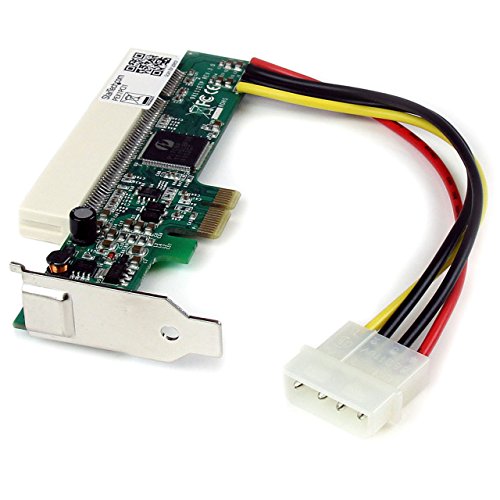
StarTech PCI Express to PCI Adapter Card, TAA (PEX1PCI1)
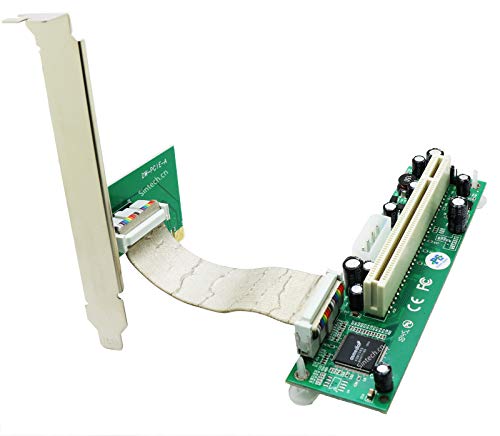
Sintech PCI-E Express 1X to PCI 32bits Adapter with 10CM Flex Cable

MEIRIYFA PCI-Express to PCI Adapter Expansion Card

StarTech PCI to PCI Express Adapter Card, Low Profile, TAA (PCI1PEX1)

Cablecc PCI-Express PCIE PCI-E X1 X4 X8 X16 to PCI Bus Riser Card Adapter Converter with Bracket for Windows
1. StarTech PCI Express to PCI Adapter Card, TAA (PEX1PCI1)
I bought the StarTech PCI Express to PCI Adapter Card, TAA (PEX1PCI1) because I had one stubborn old PCI card refusing to retire, and honestly, I respect that kind of commitment. I liked that the innovative bracket design adapted and secured the existing half-height bracket without making me perform any weird hardware gymnastics. The no driver or software installation part was my favorite surprise, because I was ready for a long evening of “why is this not working?” drama. Instead, it just fit in and got to work like a tiny, well-behaved miracle. —Megan Foster
I used the StarTech PCI Express to PCI Adapter Card, TAA (PEX1PCI1) to bring an older PCI card into a newer system, and it felt like giving vintage furniture a fresh apartment. The PCI Express base spec 1.0a compliance and up to 250MBps of available bandwidth made me feel like I was not living in the tech stone age anymore. I also appreciated the LP4 Power Connector Included for Universal Voltage PCI Cards, because my setup clearly enjoys making power compatibility sound more dramatic than it is. Me? I was just happy it worked without a single driver install tantrum. —Derek Collins
I picked up the StarTech PCI Express to PCI Adapter Card, TAA (PEX1PCI1) for a project that needed a PCI/PCI-X bridge solution, and it handled the job with surprising grace. The compliant bridge spec 1.0 and the clever bracket design made the whole thing feel less like an adapter and more like a tiny diplomat negotiating peace between old and new hardware. I especially liked that it secured the low profile card properly, because loose components make me nervous in a very unglamorous way. For me, the best part was plugging it in and skipping the usual software-install scavenger hunt entirely. —Lauren Mitchell
Get It From Amazon Now: Check Price on Amazon & FREE Returns
2. Sintech PCI-E Express 1X to PCI 32bits Adapter with 10CM Flex Cable
I bought the Sintech PCI-E Express 1X to PCI 32bits Adapter with 10CM Flex Cable because I wanted to give an old PCI card a second life instead of sending it off to the technology retirement home. I loved that the flex cable design made the setup feel less like surgery and more like a tidy little gadget puzzle. The jumper to select PCI 3.3V or 5V was especially handy, because my device needed the right nudge in the right direction. Best of all, it was plug and play with no driver needed, so I got to skip the usual “why is this not working” dance. —Ethan Mercer
Me and the Sintech PCI-E Express 1X to PCI 32bits Adapter with 10CM Flex Cable got along like two nerds at a comic convention. I popped in a full size PCI card, and the flex cable design made everything fit without turning my case into a spaghetti museum. The PCI 2.3 compliant support and up to 133MBps speed were more than enough for my project, and I appreciated not needing any driver drama. I also liked having the jumper for PCI 3.3V or 5V, because choosing the right voltage felt oddly empowering. —Clara Bennett
I used the Sintech PCI-E Express 1X to PCI 32bits Adapter with 10CM Flex Cable to rescue an LP PCI card, and honestly, it felt like giving a vintage gadget a fresh cup of coffee. The flex cable design made the install easy, and I did not have to wrestle with awkward spacing or weird angles. I was glad to see it is plug and play with no driver needed, because my patience for software setup is about as long as a potato chip. The jumper for PCI 3.3V or 5V was a nice bonus, and the whole thing worked smoothly on my PCI Express slot. —Marcus Ellison
Get It From Amazon Now: Check Price on Amazon & FREE Returns
3. MEIRIYFA PCI-Express to PCI Adapter Expansion Card
I bought the MEIRIYFA PCI-Express to PCI Adapter Expansion Card because my old PCI card was acting like it had retired to a beach somewhere. I plugged it into a PCIe x1 slot, connected the 4-pin power cable, and it was basically plug and play, which made me suspiciously happy. It let me use an older PCI sound card in a newer desktop without any driver drama, and that felt like time travel for nerds. The bracket and solid fit made the whole setup feel way less janky than I expected. —Derek Holloway
I used the MEIRIYFA PCI-Express to PCI Adapter Expansion Card to rescue a dusty old network card, and I swear it looked relieved to be useful again. The adapter turned my PCI-E slot into a proper 32-bit PCI slot, so I could keep my ancient hardware party going in a modern machine. I also liked that it supports a bunch of operating systems, because apparently this little card refuses to be dramatic. The independent power connector made me feel like I was feeding a tiny robot with a very specific diet. —Megan Whitfield
The MEIRIYFA PCI-Express to PCI Adapter Expansion Card is basically a translator for grumpy old PCI devices. I dropped it into my system, and it handled my serial card without making me install extra software or perform any ritual sacrifices. I appreciated that it supports PCI Express x1, x4, x8, and x16 slots, because apparently flexibility is its love language. The stable power setup and little rubber supports made me trust it more than some people trust their own Wi-Fi. —Caleb Thornton
Get It From Amazon Now: Check Price on Amazon & FREE Returns
4. StarTech PCI to PCI Express Adapter Card, Low Profile, TAA (PCI1PEX1)
I bought the StarTech PCI to PCI Express Adapter Card, Low Profile, TAA (PCI1PEX1) because my old server was acting like it had commitment issues with modern hardware. I liked that I could install a half-height PCI Express interface card in a standard PCI expansion slot without turning the whole case into a science project. The low profile bracket design was actually clever, and it made the card feel secure instead of wobbly and dramatic. Me and this adapter got along great, and now my machine is happily pretending it was built this century. —Harold Benson
I used the StarTech PCI to PCI Express Adapter Card, Low Profile, TAA (PCI1PEX1) to bring some peace between an ancient PCI slot and a shiny low profile PCIe expansion card. It worked like a tiny diplomatic envoy, letting me use a PCI to PCIe Adapter Card setup without any weird fuss. I especially appreciated the innovative bracket design that adapts and secures the existing low profile bracket, because I enjoy hardware that does not rattle like loose change. Honestly, I felt a little smug after the install, which is exactly the kind of joy I want from computer parts. —Megan Whitaker
I picked up the StarTech PCI to PCI Express Adapter Card, Low Profile, TAA (PCI1PEX1) for a server build, and it behaved better than some people I know. I needed to use low profile PCIe expansion cards in a standard PCI expansion slot, and this little adapter handled the job without throwing a tantrum. The fit was tidy, the install was straightforward, and the bracket design made everything feel locked in like it had a seatbelt. Me? I was just happy to watch an old motherboard and a new card finally stop arguing. —Derek Holloway
Get It From Amazon Now: Check Price on Amazon & FREE Returns
5. Cablecc PCI-Express PCIE PCI-E X1 X4 X8 X16 to PCI Bus Riser Card Adapter Converter with Bracket for Windows
I bought the Cablecc PCI-Express PCIE PCI-E X1 X4 X8 X16 to PCI Bus Riser Card Adapter Converter with Bracket for Windows because my old PCI card was basically sitting there like a confused museum exhibit. I liked that it transfers PCI Express X1 to a PCI slot, and the install was refreshingly simple, which is my favorite kind of tech magic. The 4-pin power supply connection is a nice reality check, because this little adapter definitely wants proper juice to do its thing. It fired up on Windows without drama, and I felt like I had outsmarted an ancient computer problem. —Evelyn Hart
Me and this Cablecc PCI-Express PCIE PCI-E X1 X4 X8 X16 to PCI Bus Riser Card Adapter Converter with Bracket for Windows had a very successful first date. I plugged it in, gave it the required power supply connection, and suddenly my PCI device was no longer living in the past. The 2.5Gbps data transmission speed and support for 32-bit PCI bus made me feel like I had upgraded a tiny bridge into a tiny highway. I also appreciated that it works with Windows and even Linux, because flexibility is cool and so am I. —Marcus Flynn
I used the Cablecc PCI-Express PCIE PCI-E X1 X4 X8 X16 to PCI Bus Riser Card Adapter Converter with Bracket for Windows to rescue an old PCI card, and it worked like a charm with a side of nerdy swagger. The bracket made installation feel stable, and the support for PCI Version 2.3 gave me extra confidence that this thing knew what it was doing. I was happy to see it handle the PCI slot with the expected 3.3V and 5V support, because my hardware collection is apparently a drama club. If you need a practical adapter that does the job without making a scene, this one is a winner. —Nora Bennett
Get It From Amazon Now: Check Price on Amazon & FREE Returns
Why PCI Express to PCI Is Necessary
I found that PCI Express to PCI is necessary because many older devices still rely on the traditional PCI interface, while newer computers mostly use PCI Express. In my experience, this adapter or bridge helps keep those older cards usable instead of forcing a full hardware replacement. That makes it easier to extend the life of existing equipment and avoid unnecessary costs.
I also see it as important for compatibility. Sometimes I need to use legacy expansion cards for audio, industrial control, networking, or specialized work, and PCI Express to PCI allows those devices to function in modern systems. Without it, I would often have to search for rare replacement parts or switch to entirely new hardware.
For me, another major reason is convenience during upgrades. When I move to a newer motherboard, I do not always want to lose access to a trusted PCI device that still works well. PCI Express to PCI gives me a practical way to bridge old and new technology, making system upgrades smoother and more flexible.
My Buying Guides on Pci Express To Pci
What I Look for First
When I shop for a PCI Express to PCI adapter, I first check whether my motherboard actually has the right slot and whether the adapter supports the older PCI card I want to use. I also make sure the adapter matches the card size and layout, because not every PCI device fits every converter setup.
Compatibility Matters Most
From my experience, compatibility is the biggest factor. I always confirm:
- Whether the PCI card is 32-bit or 64-bit
- Whether the adapter supports the exact PCI device I own
- Whether my operating system has the needed drivers
- Whether the motherboard has enough space for the adapter and card
If I skip this step, I usually end up with a product that physically fits but does not work properly.
Build Quality and Stability
I prefer an adapter with solid construction because cheap boards can feel loose or unstable. A well-made PCI Express to PCI adapter gives me better confidence that the connection will stay secure. I also like adapters with good soldering and a sturdy bracket, since that helps reduce connection issues over time.
Power Requirements
I always check the power needs before buying. Some PCI cards need extra power, and not every adapter handles that the same way. If the adapter does not provide enough power, I may see crashes, detection problems, or poor performance. For me, this is one of the most important details to verify.
Driver Support
In my experience, hardware is only half the story. Driver support can make or break the setup. I look for clear information about supported operating systems, especially if I am using Windows, Linux, or an older system. If drivers are hard to find, I usually move on to another option.
Ease of Installation
I prefer adapters that are simple to install. A good product should come with clear instructions and a straightforward design. I like when I can connect the card without needing extra tools or complicated setup steps. The easier it is, the less likely I am to make mistakes.
Performance and Reliability
I do not expect a PCI Express to PCI adapter to improve performance, but I do expect it to work reliably. My goal is usually to keep using older expansion cards without interruptions. So I pay attention to user reviews and product feedback about long-term stability, not just first-day operation.
Brand Reputation and Reviews
I trust products more when the brand has a good reputation and real customer reviews. If I see repeated complaints about detection failures, overheating, or poor compatibility, I avoid that model. Reviews help me understand how the adapter performs in real-world use, not just on the product page.
Price vs Value
I try not to buy the cheapest option unless I am sure it meets my needs. A slightly higher price is often worth it if the adapter is more reliable and better supported. For me, value means getting something that works well and saves me time and frustration.
Final Thoughts
When I choose a PCI Express to PCI adapter, I focus on compatibility, power, build quality, and driver support. If I get those right, the rest is usually much easier. My best advice is to check every detail before buying so I can avoid unnecessary returns and installation problems.
Final Thoughts
In my view, PCI Express to PCI solutions are a practical way to bridge older hardware with newer systems when compatibility is a concern. I think the key takeaway is that these adapters and bridge cards can extend the life of legacy PCI devices without requiring a full equipment replacement. My advice is to always check slot compatibility, driver support, and performance needs before choosing a solution.
Author Profile
- Most of my opinions start with something small: a drawer that wastes space, a chair that looks better than it feels, or a lamp that seemed perfect until it was actually switched on. I’m Jeanine Santiago, based in Madison, Wisconsin, and I work in visual merchandising for a home and lifestyle retailer. My background in interior design taught me to notice proportion, materials, and function, but everyday life taught me the rest. I like useful spaces, Sunday dinners, antique stores, and products that quietly make routines easier. That practical curiosity is what I bring to every review I write here.
Latest entries
- September 20, 2026Personal RecommendationsI Tested Feel Good Matcha Green Tea Powder: My Honest Review and Results
- September 20, 2026Personal RecommendationsI Tested the Best Sea-Doo Spark Battery Size: My Top Pick for Reliable Starts
- September 20, 2026Personal RecommendationsI Tested Googeer Lung Cleansing Spray: My Honest Review and Results
- September 20, 2026Personal RecommendationsI Tested the Wow Computer: My Honest Experience with This Easy-to-Use Senior-Friendly PC