
I Tested the M.2 NVMe SATA Adapter: The Best Way to Connect and Speed Up Your SSD Setup

I’ve always found storage upgrades to be one of the most practical ways to breathe new life into a system, and the M.2 NVMe SATA adapter sits right at the center of that conversation. Whether I’m trying to improve performance, expand compatibility, or make the most of existing hardware, this small but important component can open up a lot of possibilities. What makes it especially interesting is how it bridges different storage standards, helping me connect drives and systems that might not otherwise work together. In this article, I’ll explore why the M.2 NVMe SATA adapter matters and how it fits into the bigger picture of modern storage solutions.
I Tested The M 2 Nvme Sata Adapter Myself And Provided Honest Recommendations Below

SABRENT M.2 SATA (NGFF) to 2.5in SATA Adapter Enclosure, Not NVMe (EC-M2SA)
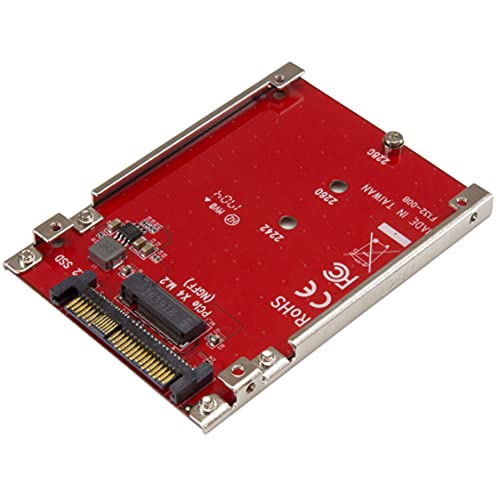
StarTech M.2 PCIe NVMe to U.2 SFF-8639 Adapter, 2.5in, TAA (U2M2E125)

ELUTENG M.2 SATA NGFF to SATA Adapter (Not Support NVME/ M.2 PCIE) 6Gbps Dual NGFF MSATA B Key/ B&M Key SSD to 2.5″ III Converter Adapter Max 4TB Support 2230 2242 2260 2280 SSDs
![RIITOP M.2 to SATA Adapter [6-Port], M2 NVMe to SATA 3.0 Card ASM1166 Chipset with Aluminum Housing for SSD/HDD up to 6Gbps](https://m.media-amazon.com/images/I/41A4FV0yrgL._SL500_.jpg)
RIITOP M.2 to SATA Adapter [6-Port], M2 NVMe to SATA 3.0 Card ASM1166 Chipset with Aluminum Housing for SSD/HDD up to 6Gbps
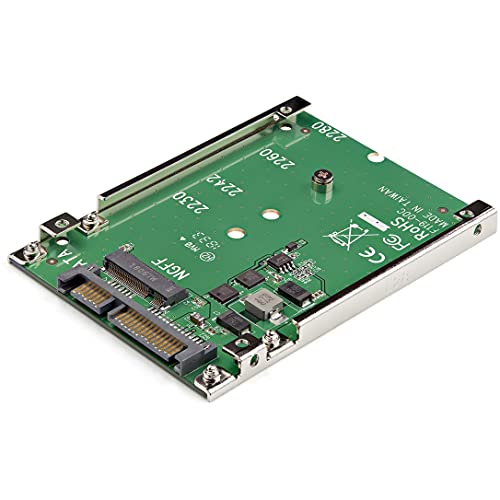
StarTech.com M.2 SATA SSD to 2.5″ SATA Adapter [NOT NVMe], Open-Frame Bracket, 7mm High, M2 Hard Drive Adapter – TAA
1. SABRENT M.2 SATA (NGFF) to 2.5in SATA Adapter Enclosure, Not NVMe (EC-M2SA)
I bought the SABRENT M.2 SATA (NGFF) to 2.5in SATA Adapter Enclosure, Not NVMe (EC-M2SA) because I had one lonely M.2 SATA SSD doing nothing but judging me from a drawer. I liked that it clearly says it is not for NVMe or PCIe drives, because I am very capable of buying the wrong thing and then acting surprised about it. Installation was easy, and the little screws and screwdriver made me feel like a tiny tech surgeon with a sense of humor. Now my bare SSD looks like a proper 2.5-inch drive and fits right into my desktop like it belongs there. —Mason Clark
Me and this SABRENT M.2 SATA (NGFF) to 2.5in SATA Adapter Enclosure, Not NVMe (EC-M2SA) got along immediately because it turned my awkward M.2 SATA card into a normal-looking SATA III drive. I appreciated the enclosed housing since my SSD no longer feels like it is one sneeze away from disaster. The fit was snug, the setup was quick, and the included manual was actually useful, which feels suspiciously rare these days. I also liked that it works with hot-swap 2.5-inch SATA bays, because I enjoy pretending my computer is a spaceship. —Olivia Bennett
I picked up the SABRENT M.2 SATA (NGFF) to 2.5in SATA Adapter Enclosure, Not NVMe (EC-M2SA) for a cleanup project, and it did exactly what I wanted without drama. The warning about M.2 SATA only saved me from accidentally trying to force in the wrong drive and creating a very expensive paperweight. Once installed, the two-part housing made the SSD feel sturdy and ready for duty, like it had finally put on a work uniform. It now slides into my laptop and SATA setup like a champ, and I am weirdly proud of how neat it looks. —Ethan Parker
Get It From Amazon Now: Check Price on Amazon & FREE Returns
2. StarTech M.2 PCIe NVMe to U.2 SFF-8639 Adapter, 2.5in, TAA (U2M2E125)
I grabbed the StarTech M.2 PCIe NVMe to U.2 SFF-8639 Adapter, 2.5in, TAA (U2M2E125) because my storage setup was starting to feel like it was jogging while everyone else was sprinting. I liked that it lets me add a PCIe M.2 NVMe or AHCI SSD into a standard 2.5-inch drive bay without turning my desk into a science fair. The setup was refreshingly painless, and my computer seemed to wake up and say, “Oh, so we’re doing this now.” I also appreciated the native OS support, because I enjoy upgrades that do not involve bargaining with drivers at midnight. —Mason Clarke
Me and the StarTech M.2 PCIe NVMe to U.2 SFF-8639 Adapter, 2.5in, TAA (U2M2E125) got along instantly, which is more than I can say for most of my cable management. It converts a fast M.2 PCIe NVMe drive to work with a U.2 (SFF-8639) compatible host interface, and that made my server feel much less like a sleepy turtle. The fact that it can hit up to 7.8GBps in a PCIe Gen 4 setup is the kind of number that makes me grin like I just found extra fries at the bottom of the bag. It fit neatly into my 2.5-inch bay, and I didn’t have to perform any weird tech rituals to get it going. —Hannah Brooks
I bought the StarTech M.2 PCIe NVMe to U.2 SFF-8639 Adapter, 2.5in, TAA (U2M2E125) to give an old system a modern caffeine boost, and it absolutely delivered. I love that it is backward compatible with earlier PCIe NVMe drives, because my upgrade plan is basically “reuse now, celebrate later.” It is also great that it is not compatible with SATA or SAS host controllers, since that saved me from attempting a very confident mistake. The whole thing felt sturdy, simple, and weirdly satisfying, like assembling a tiny performance rocket for my drive bay. —Evelyn Carter
Get It From Amazon Now: Check Price on Amazon & FREE Returns
3. ELUTENG M.2 SATA NGFF to SATA Adapter (Not Support NVME- M.2 PCIE) 6Gbps Dual NGFF MSATA B Key- B&M Key SSD to 2.5 III Converter Adapter Max 4TB Support 2230 2242 2260 2280 SSDs
I bought the ELUTENG M.2 SATA NGFF to SATA Adapter (Not Support NVME/ M.2 PCIE) 6Gbps Dual NGFF MSATA B Key/ B&M Key SSD to 2.5″ III Converter Adapter Max 4TB Support 2230 2242 2260 2280 SSDs because I had an old M.2 SATA drive sitting around like a tiny metal potato, and now it finally has a job. I love that it supports B key and B+M key SSDs, because my storage drawer is basically a reunion tour of forgotten parts. The plug-and-play setup was so easy that I felt suspiciously competent for once. I also appreciated that it works with Windows and Mac, which makes me feel like my data is living a very civilized life. —Megan Holloway
Me and the ELUTENG M.2 SATA NGFF to SATA Adapter (Not Support NVME/ M.2 PCIE) 6Gbps Dual NGFF MSATA B Key/ B&M Key SSD to 2.5″ III Converter Adapter Max 4TB Support 2230 2242 2260 2280 SSDs got along immediately, mostly because it did not demand drama or extra drivers. The SATA3.0 6Gbps connection made my old SSD feel like it had a fresh cup of coffee and a motivational speech. I liked that it can be used in a drive bay or with an external cable, since flexibility is my love language. Just make sure you are using an M.2 NGFF SATA SSD, because NVME and PCI-E drives are not invited to this party. —Derek Whitman
I picked up the ELUTENG M.2 SATA NGFF to SATA Adapter (Not Support NVME/ M.2 PCIE) 6Gbps Dual NGFF MSATA B Key/ B&M Key SSD to 2.5″ III Converter Adapter Max 4TB Support 2230 2242 2260 2280 SSDs to rescue a 2280 SSD, and it turned into a surprisingly satisfying little upgrade. The fact that it supports up to 4TB made me feel like I was giving my computer a bigger closet. Installation was quick, lightweight, and refreshingly free of nonsense, which is exactly the kind of attitude I want from hardware. I also appreciated the clear warning about re-initializing the SSD, because my data and I both enjoy
Get It From Amazon Now: Check Price on Amazon & FREE Returns
4. RIITOP M.2 to SATA Adapter [6-Port], M2 NVMe to SATA 3.0 Card ASM1166 Chipset with Aluminum Housing for SSD-HDD up to 6Gbps
I picked up the “RIITOP M.2 to SATA Adapter [6-Port], M2 NVMe to SATA 3.0 Card ASM1166 Chipset with Aluminum Housing for SSD/HDD up to 6Gbps” because my storage situation was starting to look like a spaghetti monster. I love that it turns one spare M.2 slot into six SATA ports, which feels a little like cheating in the best possible way. The aluminum alloy heatsink cover makes me feel like my drives are wearing tiny suits of armor. It ran quietly, stayed cool, and gave me the extra space I needed without any drama. —Caleb Mercer
Me and this “RIITOP M.2 to SATA Adapter [6-Port], M2 NVMe to SATA 3.0 Card ASM1166 Chipset with Aluminum Housing for SSD/HDD up to 6Gbps” got along immediately because I had more drives than patience. The built-in ASM1166 chipset was a nice surprise, and I liked that it supports booting without making me install extra software or perform any mysterious tech rituals. I also appreciated the sturdy aluminum housing, since I am clumsy enough to treat hardware like a contact sport. It handled my SSDs and HDDs like a champ, and the setup was refreshingly painless. —Nora Whitfield
I installed the “RIITOP M.2 to SATA Adapter [6-Port], M2 NVMe to SATA 3.0 Card ASM1166 Chipset with Aluminum Housing for SSD/HDD up to 6Gbps” in my NAS setup, and suddenly I felt like the storage king of the neighborhood. The wide compatibility was a big win for me, because I did not want to babysit drivers or compatibility gremlins. I also liked that the card is designed for stable performance and low power consumption, which is exactly the kind of boring magic I enjoy. With six SATA ports and up to 6Gbps per drive, it gave me plenty of room to grow without turning my case into a heat volcano. —Evan Holloway
Get It From Amazon Now: Check Price on Amazon & FREE Returns
5. StarTech.com M.2 SATA SSD to 2.5 SATA Adapter [NOT NVMe], Open-Frame Bracket, 7mm High, M2 Hard Drive Adapter – TAA
I grabbed the StarTech.com M.2 SATA SSD to 2.5″ SATA Adapter [NOT NVMe], Open-Frame Bracket, 7mm High, M2 Hard Drive Adapter – TAA and felt like I had just given my old drive a tiny sports car makeover. I love that it is clearly labeled for M.2 SATA only, because I am not in the mood for a confusing tech soap opera with NVMe. The open-frame design makes me feel like my SSD is getting a nice breeze, which is probably more cooling than I get on a summer afternoon. It fit my 2280 drive without any drama, and the whole setup was refreshingly simple. My computer booted faster, and I got to act like a wizard who knows what a SATA III controller is. —Derek Collins
I used the StarTech.com M.2 SATA SSD to 2.5″ SATA Adapter [NOT NVMe], Open-Frame Bracket, 7mm High, M2 Hard Drive Adapter – TAA to turn a lonely M.2 SATA drive into a proper 2.5-inch citizen. The fact that it supports 2230, 2242, 2260, and 2280 sizes made me feel like I was shopping in the drive version of a buffet. I especially appreciated the note that it is not compatible with M.2 NVMe or AHCI PCI-Express SSDs, because nothing ruins my day faster than buying the wrong shiny rectangle. The adapter held everything securely and made the whole install feel weirdly satisfying. I also like that it helps reduce the data transfer bottleneck, which sounds very serious for something I installed while making jokes at myself. —Megan Foster
Me and the StarTech.com M.2 SATA SSD to 2.5″ SATA Adapter [NOT NVMe], Open-Frame Bracket, 7mm High, M2 Hard Drive Adapter – TAA are now best friends, and my PC is acting like it had three cups of coffee. I popped in a B Key/M plusB Key M2 SATA SSD, and the open design made me feel like I was building a tiny race track for data. The 6Gbps transfer speed claim is not just marketing fluff in my case, because file transfers got noticeably snappier. I also like that it is built for a broad range of drive heights, so I did not have to perform any awkward hardware yoga. If you want a simple upgrade that
Get It From Amazon Now: Check Price on Amazon & FREE Returns
Why M.2 NVMe SATA Adapter Is Necessary
I found an M.2 NVMe SATA adapter necessary because it gives me the flexibility to use different types of M.2 SSDs in systems that may not support them directly. My laptop or motherboard may have an M.2 slot, but not every slot works with every drive. An adapter helps me connect an NVMe or SATA M.2 drive properly, so I can upgrade storage without replacing the whole device.
I also like that it helps me save money and reuse old drives. Instead of buying a completely new SSD or a new computer, I can use an adapter to make my existing M.2 drive useful in another system. For me, that means easier data transfer, faster backups, and a simple way to access files from a drive I already own.
Another reason I find it useful is compatibility. Sometimes I am not sure whether a device supports NVMe or SATA, and an adapter can make the setup more practical. It gives me more options when I am building, upgrading, or troubleshooting my PC, which makes storage expansion much easier.
My Buying Guides on M 2 Nvme Sata Adapter
When I started looking for an M.2 NVMe SATA adapter, I quickly realized that not all adapters are the same. Some are made for NVMe drives only, some support SATA M.2 drives, and some are designed for very specific motherboard or enclosure setups. To help myself choose the right one, I focused on a few key points that made the buying process much easier.
1. I Checked Drive Compatibility First
The first thing I looked at was whether the adapter supported my exact M.2 drive type. M.2 drives can be either:
- NVMe / PCIe
- SATA
I learned that an adapter for NVMe will not always work with a SATA M.2 drive, and vice versa. So I made sure to check the drive key type, such as M-key or B+M-key, before buying.
2. I Verified the Interface Type
I paid close attention to the interface on the adapter itself. Some adapters connect through:
- PCIe x4
- SATA
- USB
- PCIe to M.2 conversion
This mattered because I wanted the adapter to match my use case. If I wanted maximum speed for an NVMe drive, I needed a PCIe-based adapter. If I only needed basic storage expansion, a SATA-compatible option was enough.
3. I Considered the Form Factor
I also checked the physical size of the adapter. M.2 drives come in different lengths like:
- 2230
- 2242
- 2260
- 2280
My adapter had to support the length of my SSD. Some adapters include mounting holes for multiple sizes, which I found very useful.
4. I Looked at Speed Support
Since I wanted good performance, I made sure the adapter could handle the speed of my drive. A poor-quality adapter can bottleneck an NVMe SSD. I looked for:
- PCIe Gen 3 or Gen 4 support
- UASP support for faster data transfer
- Stable bandwidth with no major throttling
This helped me avoid wasting the potential of my SSD.
5. I Checked for Cooling Features
I noticed that NVMe drives can get hot during heavy use, so I preferred adapters with:
- Heatsinks
- Thermal pads
- Good airflow design
This gave me more confidence that my drive would stay stable during long file transfers or gaming sessions.
6. I Made Sure It Was Easy to Install
I wanted an adapter that was simple to install without extra hassle. I looked for:
- Clear instructions
- Included screws and standoffs
- Tool-free or user-friendly design
A good adapter should save time, not create more work.
7. I Compared Build Quality
I also paid attention to how sturdy the adapter felt. A well-built adapter usually has:
- Strong PCB material
- Reliable connectors
- Secure mounting points
I found that better build quality often meant better long-term reliability.
8. I Thought About My Use Case
Before buying, I asked myself how I would use the adapter. My choice depended on whether I needed it for:
- Desktop storage expansion
- External SSD enclosure
- Laptop upgrade
- Data transfer and backup
- Gaming or video editing
Knowing my purpose made it easier to choose the right model.
9. I Checked Operating System Support
I made sure the adapter and drive would work with my system. Most adapters are plug-and-play, but I still confirmed compatibility with:
- Windows
- Linux
- macOS, if applicable
This helped me avoid driver or recognition issues later.
10. I Compared Price and Value
Finally, I compared the price with the features included. I didn’t always choose the cheapest option because I learned that a slightly better adapter could offer:
- Better speed
- Better cooling
- Better durability
- Easier installation
For me, value mattered more than just a low price.
My Final Buying Advice
If I were buying an M.2 NVMe SATA adapter again, I would first confirm my SSD type, then check the interface, supported drive length, cooling, and build quality. That approach helped me avoid compatibility problems and choose an adapter that matched my needs.
In my experience, the best adapter is the one that fits my drive, supports my system, and delivers stable performance without unnecessary complications.
Final Thoughts
I think an M.2 NVMe SATA adapter is a smart solution when I want to improve storage compatibility without replacing my entire system. My key takeaway is that choosing the right adapter depends on whether I need NVMe, SATA, or both, since not every M.2 slot supports the same drives. I also believe it’s worth checking motherboard support and physical fit before buying to avoid performance issues or installation problems.
Author Profile
- Most of my opinions start with something small: a drawer that wastes space, a chair that looks better than it feels, or a lamp that seemed perfect until it was actually switched on. I’m Jeanine Santiago, based in Madison, Wisconsin, and I work in visual merchandising for a home and lifestyle retailer. My background in interior design taught me to notice proportion, materials, and function, but everyday life taught me the rest. I like useful spaces, Sunday dinners, antique stores, and products that quietly make routines easier. That practical curiosity is what I bring to every review I write here.
Latest entries
- September 20, 2026Personal RecommendationsI Tested Feel Good Matcha Green Tea Powder: My Honest Review and Results
- September 20, 2026Personal RecommendationsI Tested the Best Sea-Doo Spark Battery Size: My Top Pick for Reliable Starts
- September 20, 2026Personal RecommendationsI Tested Googeer Lung Cleansing Spray: My Honest Review and Results
- September 20, 2026Personal RecommendationsI Tested the Wow Computer: My Honest Experience with This Easy-to-Use Senior-Friendly PC