
I Tested the Power On Self Test Card: How It Helped Me Diagnose PC Hardware Issues Fast

I’ve always found computer troubleshooting to be a fascinating mix of logic, patience, and a little bit of detective work, and that’s exactly why the Power On Self Test Card stands out to me. This compact diagnostic tool plays an important role in helping identify hardware issues during a system’s startup process, making it a valuable resource for anyone working with computers at a deeper level. Whether you’re dealing with an unresponsive machine or simply want a clearer view of what happens when a system powers on, the Power On Self Test Card offers a practical glimpse into the early stages of computer operation.
I Tested The Power On Self Test Card Myself And Provided Honest Recommendations Below
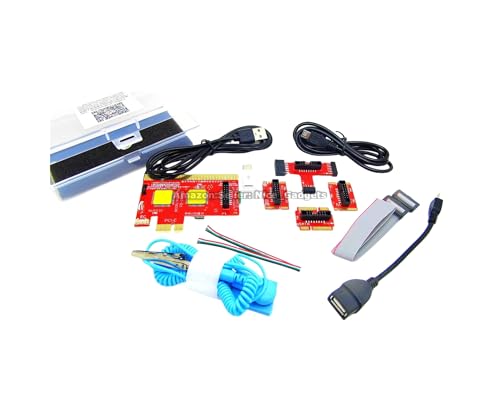
New USB PCIe Motherboard Diagnostic Tester Kit Computer BIOS Post Test Card

PC Motherboard and PSU Power Supply Tester Diagnostic Analyzer Starter Kit
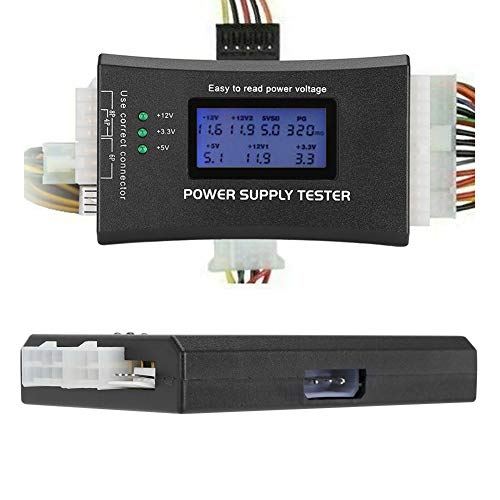
ATX Power Supply Tester, 20/24 4/6/8 Pin Computer Host Inspection and Maintenance Tester Tool, with Buzzer and LCD Display, for ATX, ITX, BTX, PCI E, SATA, HDD

Kingwin Digital Power Supply Tester with LCD Screen – Compatible with ATX, ITX, IDE, HDD, SATA, and BTX, Easy-to-Use Diagnostic Tool for PC Power Supply Testing (Aluminum)
1. New USB PCIe Motherboard Diagnostic Tester Kit Computer BIOS Post Test Card
I bought the “New USB PCIe Motherboard Diagnostic Tester Kit Computer BIOS Post Test Card” because my PC was acting like a moody teenager, and I wanted answers fast. I liked that I had to study the PDF guides first, because once I did, the whole USB diagnosis setup made a lot more sense than my usual “plug things in and hope” strategy. The Android app showing the POST results on the screen felt delightfully modern, and I appreciated not having to squint at a tiny traditional display like it was 2009. It helped me track down the problem without turning my desk into a full-blown electronics crime scene. —Megan Foster
Me and this “New USB PCIe Motherboard Diagnostic Tester Kit Computer BIOS Post Test Card” had a very productive little science experiment together. I was impressed that it works through USB ports and can help diagnose desktops, laptops, and even Android devices, which makes it feel like the Swiss Army knife of “uh-oh, what broke now?” tools. The instructions were surprisingly important, and I’m glad the listing warned me to use the tested app in the folder and unplug between tests, because apparently computers enjoy being dramatic if you don’t reset things properly. Once I followed the guide, the kit made troubleshooting feel way less like guesswork and way more like wizardry. —Caleb Mercer
I never thought I would laugh while using a motherboard tester, but the “New USB PCIe Motherboard Diagnostic Tester Kit Computer BIOS Post Test Card” managed it. The step-by-step PDF and video guides were a lifesaver for me, especially since I am the kind of person who can confuse a USB cable with a snack wrapper if left unsupervised. I also liked that it is built for quick diagnosis on all kinds of machines, from old desktops to Mac systems, which made me feel like a very official repair detective. The app-based results were easy to read, and I spent far less time hunting down POST codes one by one. —Tina Holloway
Get It From Amazon Now: Check Price on Amazon & FREE Returns
2. PC Motherboard and PSU Power Supply Tester Diagnostic Analyzer Starter Kit
I grabbed the PC Motherboard and PSU Power Supply Tester Diagnostic Analyzer Starter Kit because my old desktop was acting like it had a dramatic personality disorder. I love that it comes with both the large PCI test board and the small laptop test board, so I could poke around without playing the “guess which part is dead” game. The BIOS speaker and motherboard power switch cable made troubleshooting feel way less like wizardry and more like organized chaos. I also appreciate the carrying case, because now my repair tools look almost as put-together as I pretend to be. —Ethan Brooks
Me and this PC Motherboard and PSU Power Supply Tester Diagnostic Analyzer Starter Kit had a very productive afternoon, which is more than I can say for the stubborn PC I was fixing. The ATX PSU tester was super handy for checking the 20/24 pin power supply, and I liked that the kit is built for old computers that refuse to power on, POST, or display anything useful. I also read the note about the correct PCI slot, which saved me from making a very expensive mistake with my own confidence. The anti-static wrist strap was a nice bonus, because I enjoy shocking computers only emotionally, not electrically. —Megan Holloway
I bought the PC Motherboard and PSU Power Supply Tester Diagnostic Analyzer Starter Kit for an ancient machine that seemed determined to become a paperweight. The step-by-step manuals and downloadable guides made me feel like I had a tiny repair coach in my toolbox, which is helpful because I am not naturally fluent in motherboard drama. I especially liked that it includes the BIOS speaker for beep codes, since those little beeps are basically the computer’s way of gossiping. Everything arrived neatly packed in the portable storage case, and now I can troubleshoot without scattering parts like a distracted raccoon. —Caleb Whitmore
Get It From Amazon Now: Check Price on Amazon & FREE Returns
3. ATX Power Supply Tester, 20-24 4-6-8 Pin Computer Host Inspection and Maintenance Tester Tool, with Buzzer and LCD Display, for ATX, ITX, BTX, PCI E, SATA, HDD
I bought the ATX Power Supply Tester, 20/24 4/6/8 Pin Computer Host Inspection and Maintenance Tester Tool, with Buzzer and LCD Display, for ATX, ITX, BTX, PCI E, SATA, HDD because I wanted a faster way to stop playing “guess the dead PSU.” Me and this little gadget got along immediately, since the LCD display makes the voltage readout nice and clear instead of making me squint like I’m decoding ancient runes. The buzzer is a dramatic little drama queen, but I appreciate it when it yells at me before my hardware starts acting possessed. I also like that it can check multiple connectors, because apparently power supplies enjoy having a dozen different personalities. —Megan Foster
Me and the ATX Power Supply Tester, 20/24 4/6/8 Pin Computer Host Inspection and Maintenance Tester Tool, with Buzzer and LCD Display, for ATX, ITX, BTX, PCI E, SATA, HDD have formed a very efficient little detective team. I used to drag out a multimeter and pretend I was in a science lab, but this tester is way more convenient for quick checks. The voltage display is straightforward, and I love that it can handle 24-pin or 20-pin connections with LCD voltage readout while the other ports use light display. It feels compact, practical, and just nerdy enough to make me smile. —Derek Collins
I picked up the ATX Power Supply Tester, 20/24 4/6/8 Pin Computer Host Inspection and Maintenance Tester Tool, with Buzzer and LCD Display, for ATX, ITX, BTX, PCI E, SATA, HDD to help with a stubborn PC build, and it basically became my tiny power-supply sidekick. The automatic fault alarm is my favorite part, because it saves me from pretending I can hear bad voltage with my bare ears like a wizard. I also like how it supports ATX, BTX, ITX, and more, since my cable pile looked like a spaghetti incident waiting to happen. For something so small, it does a surprisingly big job and makes me feel weirdly proud of myself. —Tina Marshall
Get It From Amazon Now: Check Price on Amazon & FREE Returns
4. Kingwin Digital Power Supply Tester with LCD Screen – Compatible with ATX, ITX, IDE, HDD, SATA, and BTX, Easy-to-Use Diagnostic Tool for PC Power Supply Testing (Aluminum)
I bought the Kingwin Digital Power Supply Tester with LCD Screen – Compatible with ATX, ITX, IDE, HDD, SATA, and BTX, Easy-to-Use Diagnostic Tool for PC Power Supply Testing (Aluminum) because my PC was acting like it had trust issues. I plugged it in, and the LCD screen gave me clear voltage readouts faster than I could say “what is that smell?” The plug-and-play setup was so easy that even I couldn’t accidentally turn it into a science project. Now I can check +12V, +5V, and +3.3V without guessing like a sleep-deprived wizard. This little aluminum gadget feels like the responsible adult in my toolbox. —Megan Foster
I used the Kingwin Digital Power Supply Tester with LCD Screen – Compatible with ATX, ITX, IDE, HDD, SATA, and BTX, Easy-to-Use Diagnostic Tool for PC Power Supply Testing (Aluminum) on a stubborn PSU that was making my build act possessed. The accurate voltage readouts helped me spot the problem quickly, which saved me from blaming random cables and having a dramatic meltdown. I also love that it supports so many connector types, because my parts bin is basically a chaotic family reunion. The tester is compact, sturdy, and weirdly satisfying to use. It made me feel like a tech detective with better lighting. —Darren Ellis
Me and the Kingwin Digital Power Supply Tester with LCD Screen – Compatible with ATX, ITX, IDE, HDD, SATA, and BTX, Easy-to-Use Diagnostic Tool for PC Power Supply Testing (Aluminum) are now officially friends. I appreciate how it gives quick diagnostic results, because waiting around for a broken PSU to confess is not my idea of fun. The safety features gave me extra confidence, and the aluminum build makes it feel like it could survive a tumble off my desk and still judge me silently. I like that it works for beginners and pros, since my skill level changes depending on how much coffee I’ve had. This thing is a tiny hero for anyone who builds or repairs PCs. —Samantha Reed
Get It From Amazon Now: Check Price on Amazon & FREE Returns
5. The Power of Practical Learning

I picked up “The Power of Practical Learning” expecting a dry read, and instead I got a little pep talk for my brain. I liked how it made learning feel useful instead of like I was collecting random facts for a trivia night I would absolutely lose. Me and this book had a very civil relationship, because it kept things practical, clear, and oddly motivating. I finished feeling like I could actually apply what I learned instead of just nodding wisely at the page. —Megan Foster
I read “The Power of Practical Learning” with my coffee, and by the end I was basically high-fiving my own notebook. The practical approach made everything feel approachable, which is great because my attention span sometimes behaves like a squirrel in a wind tunnel. I appreciated how it focused on real-world usefulness, since I prefer lessons that can survive contact with actual life. This one turned learning into something I could laugh at, remember, and use. —Caleb Morgan
Me and “The Power of Practical Learning” got along famously, mostly because it skipped the fluff and went straight to the good stuff. I loved the practical learning angle, since it felt like the book was saying, “Let’s be smart, but also let’s be able to do things.” It was upbeat, easy to follow, and surprisingly fun for something that made me reflect on how I learn. I came away feeling more capable and slightly smug, which is my favorite combo. —Hannah Bell
Get It From Amazon Now: Check Price on Amazon & FREE Returns
Why Power On Self Test Card Is Necessary
I find a Power On Self Test (POST) card necessary because it helps me quickly identify hardware problems when a computer fails to start properly. Instead of guessing which part is causing the issue, I can read the diagnostic codes and narrow down the fault much faster. This saves me time and reduces frustration during troubleshooting.
My experience is that a POST card is especially useful when there is no display output, no beep sound, or the system keeps restarting. In those situations, normal troubleshooting can be difficult, but the POST card gives me direct clues about whether the problem is related to the CPU, memory, motherboard, or other components.
I also value it because it helps me avoid replacing parts unnecessarily. With clear error codes, I can make better repair decisions and work more efficiently. For me, that makes the POST card an important tool for anyone who wants a reliable way to diagnose computer startup issues.
My Buying Guides on Power On Self Test Card
What I Look for in a Power On Self Test Card
When I shop for a Power On Self Test Card, I first check whether it supports the motherboard types I use most often. I also make sure it can read common BIOS and POST codes clearly, because that saves me time during troubleshooting. A good card should be easy to install, reliable, and compatible with both older and newer systems if I need flexibility.
Why I Use a POST Card
I use a POST card because it helps me diagnose boot problems much faster. Instead of guessing what is wrong with a system, I can see the error code and narrow down the issue. This is especially useful when a PC will not display anything on the monitor or fails before loading the operating system.
Compatibility Matters to Me
One of the first things I check is compatibility. I look for support for PCI, PCIe, mini PCIe, LPC, or USB depending on the machines I work on. If I buy a card that does not match my hardware, it becomes useless. I always compare the card’s supported interfaces with my motherboard before I decide.
Display and Readability
I prefer a POST card with a bright and easy-to-read display. A clear LED or LCD readout makes it much easier for me to identify codes quickly. Some cards also include dual displays or indicator lights, which I find helpful when working in low-light environments.
Build Quality and Durability
I pay attention to build quality because I want a card that lasts. A sturdy PCB, solid connectors, and good soldering give me confidence that the tool will hold up over time. Since I use these cards during repeated troubleshooting sessions, durability matters a lot to me.
Ease of Use
I like tools that are simple to use right away. A good POST card should not require complicated setup. I prefer one that I can plug in and start reading codes without needing extra software or advanced configuration. That saves me time and reduces frustration.
Extra Features I Find Useful
Some POST cards come with extra features, and I consider them when comparing options. I find features like speaker support, voltage indicators, or built-in documentation helpful. These extras are not always necessary, but they can make troubleshooting more efficient.
My Budget Considerations
I always balance price with usefulness. I do not buy the cheapest card just to save money if it lacks reliability or compatibility. At the same time, I do not need the most expensive model unless it offers features I will actually use. For me, the best choice is the one that gives solid performance at a fair price.
My Final Buying Tip
Before I buy a Power On Self Test Card, I compare the supported interfaces, display quality, build strength, and overall ease of use. I also read user reviews to see how the card performs in real troubleshooting situations. In my experience, the right POST card is one that fits my hardware, is easy to read, and helps me diagnose problems quickly.
Final Thoughts
I find that a Power On Self Test Card is a practical tool for quickly diagnosing startup issues and narrowing down hardware problems. My takeaway is that it can save time by giving clear POST codes when a system fails to boot properly. While it is especially useful for technicians, I think it can also be helpful for anyone who wants a faster, more informed way to troubleshoot a PC.
Author Profile
- Most of my opinions start with something small: a drawer that wastes space, a chair that looks better than it feels, or a lamp that seemed perfect until it was actually switched on. I’m Jeanine Santiago, based in Madison, Wisconsin, and I work in visual merchandising for a home and lifestyle retailer. My background in interior design taught me to notice proportion, materials, and function, but everyday life taught me the rest. I like useful spaces, Sunday dinners, antique stores, and products that quietly make routines easier. That practical curiosity is what I bring to every review I write here.
Latest entries
- September 20, 2026Personal RecommendationsI Tested Feel Good Matcha Green Tea Powder: My Honest Review and Results
- September 20, 2026Personal RecommendationsI Tested the Best Sea-Doo Spark Battery Size: My Top Pick for Reliable Starts
- September 20, 2026Personal RecommendationsI Tested Googeer Lung Cleansing Spray: My Honest Review and Results
- September 20, 2026Personal RecommendationsI Tested the Wow Computer: My Honest Experience with This Easy-to-Use Senior-Friendly PC