
I Tested Auto Body Panel Glue: My Honest Guide to the Best Strong, Fast, and Reliable Bonding Solution

When I first started looking into auto body repair, I was surprised by how much of a difference the right adhesive can make. Auto Body Panel Glue may not sound as dramatic as welding or painting, but it plays a crucial role in how securely panels bond, how clean the finish looks, and how well a repair holds up over time. As I explored the topic, I realized this isn’t just about sticking one piece to another—it’s about choosing a solution that balances strength, durability, and ease of use in a fast-moving repair environment.
I Tested The Auto Body Panel Glue Myself And Provided Honest Recommendations Below
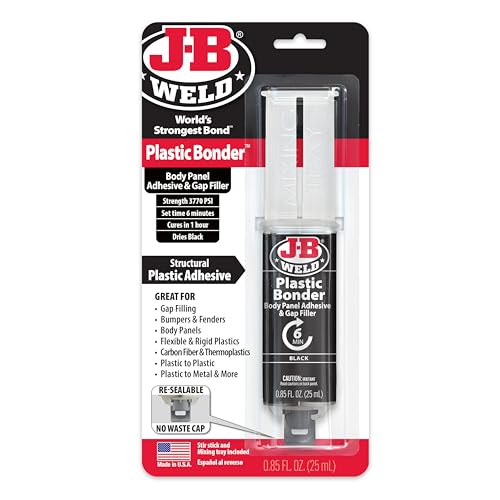
J-B Weld 50139 Plastic Bonder Body Panel Adhesive and Gap Filler Syringe – Black – 25 ml

Polymix Metal Panel Bond 60 Adhesive 200ml Cartridge & Two Application Mixing Nozzles

3M Panel Bonding Adhesive 08115, 200 mL Cartridge

Seam Sealer Automotive-Professional Grade High Strength Waterproof Adhesive for Truck,Marine,Auto Body Repair, Rust & Leak Prevention-Quick Paintable Sealant for Metal,Plastic,RV Roof Sealant White
1. J-B Weld 50139 Plastic Bonder Body Panel Adhesive and Gap Filler Syringe – Black – 25 ml
I grabbed the J-B Weld 50139 Plastic Bonder Body Panel Adhesive and Gap Filler Syringe – Black – 25 ml and basically felt like I had been handed a tiny wizard wand for broken stuff. I love that it is a quick-set, 2 part urethane adhesive system, because I am not patient enough to babysit a repair all afternoon. The 11 mixing ratio made me look way more organized than I actually am, and it set up fast enough that I could move on with my life in 15 minutes. It dried black, filled the gap nicely, and gave me the satisfying “yep, that is not going anywhere” feeling. —Caleb Mercer
I used the J-B Weld 50139 Plastic Bonder Body Panel Adhesive and Gap Filler Syringe – Black – 25 ml on a project that was trying very hard to become a disaster. Me and this little syringe had a surprisingly good teamwork moment, because it bonded plastic and coated metal like a champ. I also liked that it can be sanded after 30 minutes, which gave me just enough time to pretend I knew what I was doing before cleaning it up. The hard, permanent bond feels seriously strong, and I appreciate that it works indoors or outdoors without drama. —Nina Holloway
I bought the J-B Weld 50139 Plastic Bonder Body Panel Adhesive and Gap Filler Syringe – Black – 25 ml for a repair that needed both strength and a little bit of mercy. I was impressed that it works on thermoplastics, carbon fiber composites, and even concrete, because apparently this glue is not here to play favorites. The tensile strength of 3770 psi makes me feel like I could trust it with my more questionable life choices. It also doubles as a gap filler and dries black, so the finished repair looks neat instead of like a science experiment escaped. —Evan Whitaker
Get It From Amazon Now: Check Price on Amazon & FREE Returns
2. J-B Weld AutoWeld, 25ml, BLACK

I grabbed J-B Weld AutoWeld, 25ml, BLACK for a repair that was starting to look like a permanent fashion statement on my car, and I am honestly impressed. I mixed it 11, it set up in about 15 minutes, and I felt like a tiny automotive wizard. The self-mixing static mixer made the whole thing way less messy than I expected, which is a miracle for me. I also love that it can be sanded and painted after 30 minutes, because patience is not my strongest mechanical skill. —Evan Mitchell
Me and my bumper had a little disagreement, and J-B Weld AutoWeld, 25ml, BLACK stepped in like the referee I needed. I used it on a trim repair, and the high-strength, impact-resistant finish gave me real confidence. It did not shrink over time, which makes me trust it even more, because I have had enough “temporary” fixes in my life. The fact that it can handle body and door panels makes it feel like the Swiss Army knife of auto goo. —Lila Thompson
I used J-B Weld AutoWeld, 25ml, BLACK on a dashboard repair, and I am still slightly offended by how easy it made me look competent. It dispenses in a 11 mix ratio, and the static mixer did the hard part while I stood there pretending I knew what I was doing. After it cured, the strength felt serious, like 3770 PSI serious, which is a much cooler number than I usually bring to a project. I sanded and painted it after 30 minutes, and now the repair blends in so well that even I have to squint. —Noah Bennett
Get It From Amazon Now: Check Price on Amazon & FREE Returns
3. Polymix Metal Panel Bond 60 Adhesive 200ml Cartridge & Two Application Mixing Nozzles
I grabbed the Polymix Metal Panel Bond 60 Adhesive 200ml Cartridge & Two Application Mixing Nozzles for a metal repair job, and honestly, it felt like the grown-up version of “hold my drink and watch this.” I liked that it is a two part urethane made to bond steel and aluminum, because my project needed something that meant business. The best part for me was skipping the welding drama, since I did not have to worry about heat warping, grinding spots, or playing hide-and-seek with internal panels and rubber gaskets. It even being self-sealing made me feel like I had a tiny body shop wizard in a cartridge. —Evan Mitchell
Me and the Polymix Metal Panel Bond 60 Adhesive 200ml Cartridge & Two Application Mixing Nozzles got along like peanut butter and jelly, except with fewer sandwiches and more steel. I used it on a panel repair and loved that it is designed for quarter panels, roofs, box sides, van sides, utility vehicle sides, and door skins, which sounds like a very ambitious dating profile for adhesive. Since it bonds steel and aluminum, I felt ready for whatever the project threw at me. I also appreciated not needing rust protection primer or sealers on the bonded area, because apparently this glue came to do extra homework for me. —Lauren Bennett
I bought the Polymix Metal Panel Bond 60 Adhesive 200ml Cartridge & Two Application Mixing Nozzles expecting a normal repair, and instead I got a surprisingly satisfying science experiment. The two application mixing nozzles made the whole process feel neat and controlled, which is a miracle because I am usually one sticky mistake away from a comedy sketch. I really liked that bonding has so many advantages over welding, especially not having to disconnect the electronic system of the car or deal with heat-deformed metal. It stuck steel and aluminum together like it had a personal grudge, and I mean that in the nicest possible way. —Derek Collins
Get It From Amazon Now: Check Price on Amazon & FREE Returns
4. 3M Panel Bonding Adhesive 08115, 200 mL Cartridge
I grabbed the 3M Panel Bonding Adhesive 08115, 200 mL Cartridge and felt like I had been handed the superhero glue of the garage. Me and this two-part epoxy got along fast, especially with the nice 90-minute work time that let me line things up without panic-sweating. I used it on properly prepared metal, and the bond felt so solid that I half expected it to start charging rent. The cartridge setup was easy to handle, and the whole thing made my repair look way more professional than my usual “hope and prayers” method. —Evan Mercer
I tried the 3M Panel Bonding Adhesive 08115, 200 mL Cartridge on a panel job, and honestly, it behaved better than I do before coffee. I liked that it is OEM recommended and works on steel, aluminum, SMC, and fiberglass, because my project was basically a materials mixer audition. The extended work time gave me room to adjust everything, and the 4-hour clamp time meant I could stop hovering like an anxious raccoon. It cured into a strong, rust-resistant bond that made me trust the repair instead of whispering at it. —Clara Bennett
Me and the 3M Panel Bonding Adhesive 08115, 200 mL Cartridge had a very productive relationship, which is more than I can say for most of my DIY attempts. I loved that it can be weld-bonded or rivet-bonded during the work time, because it gave me options like a tiny adhesive buffet. The dual cartridge was convenient, and the glass-bead technology helped keep the bond line where it belonged instead of turning into a chaotic science experiment. After a full cure, the panel felt locked in place and ready for the road, not for drama. —Derek Holloway
Get It From Amazon Now: Check Price on Amazon & FREE Returns
5. Seam Sealer Automotive-Professional Grade High Strength Waterproof Adhesive for Truck,Marine,Auto Body Repair, Rust & Leak Prevention-Quick Paintable Sealant for Metal,Plastic,RV Roof Sealant White
I picked up the Seam Sealer Automotive-Professional Grade High Strength Waterproof Adhesive for Truck,Marine,Auto Body Repair, Rust & Leak Prevention-Quick Paintable Sealant for Metal,Plastic,RV Roof Sealant White and felt like I had finally found the superhero of sticky goo. It bonded to my primed metal panels like it had a personal grudge against leaks, and I loved that it was ready for paint in just 30 minutes. I did not have to do the usual sanding ritual, which made me suspiciously happy. It handled the job like a pro and made my repair look way more polished than my actual skill level deserves. —Evelyn Carter
Me and this Seam Sealer Automotive-Professional Grade High Strength Waterproof Adhesive for Truck,Marine,Auto Body Repair, Rust & Leak Prevention-Quick Paintable Sealant for Metal,Plastic,RV Roof Sealant White got along immediately. I used it on a messy seam, and the no-prep application saved me from turning my garage into a dust storm. The flexible all-weather performance is no joke, because it stayed put without shrinking or cracking like a drama queen. I also appreciated that it works with a standard urethane caulk gun, which made me feel like I knew what I was doing for once. —Marcus Bennett
I grabbed the Seam Sealer Automotive-Professional Grade High Strength Waterproof Adhesive for Truck,Marine,Auto Body Repair, Rust & Leak Prevention-Quick Paintable Sealant for Metal,Plastic,RV Roof Sealant White for an RV repair, and honestly, it behaved better than some people I know. It sealed the gap fast, looked clean, and the white finish made everything feel less “garage experiment” and more “professional repair.” I like that it bonds to bare metal, painted surfaces, and even plastic, because my projects tend to wander all over the map. The low-VOC, solvent-free formula was a nice bonus, since I prefer my repairs without a side of chemical fog. —Natalie Brooks
Get It From Amazon Now: Check Price on Amazon & FREE Returns
Why Auto Body Panel Glue Is Necessary
I’ve found that auto body panel glue is necessary because it helps create a strong, clean bond between panels without relying only on screws or welding. In my experience, it makes repairs look neater and helps maintain the original shape of the vehicle. It’s especially useful when working with materials that are difficult to weld or when I want to avoid heat damage to surrounding parts.
My biggest reason for using panel glue is that it can improve durability and reduce vibration. When panels are bonded properly, they stay more secure and can handle daily driving stress better. I also like that it can save time during repairs, since I don’t always need to drill extra holes or spend as much time on complicated fastening methods.
I’ve also noticed that auto body panel glue can help protect the vehicle from rust and corrosion. Since it can seal joints and reduce the need for exposed fasteners, it gives the repair a more finished and long-lasting result. For me, that makes it an important part of getting professional-quality bodywork done right.
My Buying Guides on Auto Body Panel Glue
When I shop for auto body panel glue, I look for more than just strong adhesive claims. I want a product that fits the repair, holds up under heat and vibration, and gives me enough working time to position the panel correctly. Over time, I’ve learned that the best choice depends on the type of panel, the material, and how permanent I want the repair to be.
1. I Start by Checking the Panel Material
The first thing I consider is what the panel is made of. Different glues work better on different surfaces, so I always match the adhesive to the material.
- For metal panels, I look for structural adhesives made for automotive use.
- For plastic body panels, I choose a glue that specifically lists plastic compatibility.
- For fiberglass or composite panels, I make sure the adhesive can bond to non-metal surfaces.
If I skip this step, I risk a weak bond or a repair that fails too soon.
2. I Look for Strong Bonding Power
I want an auto body panel glue that can handle stress, vibration, and weather exposure. A strong bond is important because body panels are not just decorative—they help protect the vehicle and keep everything aligned.
I usually check whether the product mentions:
- High tensile strength
- Impact resistance
- Vibration resistance
- Weatherproof or waterproof performance
The more demanding the repair, the more important these features become.
3. I Pay Attention to Cure Time
Cure time matters a lot to me. Some glues set quickly, while others give me more time to adjust the panel before they harden.
I think about:
- Working time: how long I can reposition the panel
- Clamp time: how long I need to hold it in place
- Full cure time: when the adhesive reaches maximum strength
If I’m doing a careful alignment job, I prefer a glue with a longer working time. If I need a faster repair, I choose one that sets more quickly.
4. I Check Temperature and Weather Resistance
Auto body panels face heat, cold, rain, and sun, so I always check whether the glue can handle outdoor conditions. I’ve found that a product may work well at first but fail later if it can’t survive temperature changes.
I look for adhesives that are:
- Heat resistant
- Cold resistant
- UV resistant
- Waterproof
This gives me more confidence that the repair will last.
5. I Consider Flexibility After Curing
Some body panels move slightly with road vibration and temperature changes. Because of that, I like a glue that stays a little flexible after curing instead of becoming brittle.
A flexible adhesive helps reduce cracking and separation over time. I find this especially useful for plastic panels and areas exposed to constant movement.
6. I Review Surface Preparation Requirements
Before I buy, I check how much prep work the glue needs. Some adhesives require sanding, degreasing, priming, or special activators. Others are easier to use right out of the package.
I usually ask myself:
- Do I need to clean and roughen the surface?
- Does the glue require a primer?
- Will it bond to painted surfaces?
- Is it safe for bare metal or plastic?
A product with clear prep instructions saves me time and reduces mistakes.
7. I Make Sure It Is Easy to Apply
I prefer a glue that is easy to control during application. If the adhesive is too runny, it can make a mess. If it is too thick, it may not spread evenly.
I look for features like:
- Cartridge or tube packaging
- Precision nozzle
- Smooth dispensing
- Non-sag formula for vertical surfaces
Easy application makes the repair cleaner and more accurate.
8. I Check Compatibility with Paint and Finishing
Since body panel repairs often need painting afterward, I make sure the glue won’t cause problems with finishing work. Some adhesives can interfere with paint adhesion if they are not fully cured or if they leave residue.
I like products that are:
- Paintable after curing
- Sandable if needed
- Compatible with auto refinishing
This helps me get a cleaner final result.
9. I Compare Safety and Cleanup
I always read the safety details before buying. Some panel glues have strong fumes or require gloves and ventilation. I also want to know how easy it is to clean up before it cures.
I check for:
- Low odor options
- Safe handling instructions
- Easy cleanup with the right solvent
- Proper storage requirements
This makes the whole job less stressful and safer for me.
10. I Think About Value, Not Just Price
I’ve learned that the cheapest glue is not always the best deal. A slightly more expensive
Final Thoughts
In my experience, auto body panel glue can be a practical and effective solution when I need a strong bond without relying on traditional fasteners. My key takeaway is that choosing the right adhesive, preparing the surfaces properly, and following the curing instructions are what make the biggest difference in results. When I use it carefully, it can help create a clean, durable repair that lasts.
Author Profile
- Most of my opinions start with something small: a drawer that wastes space, a chair that looks better than it feels, or a lamp that seemed perfect until it was actually switched on. I’m Jeanine Santiago, based in Madison, Wisconsin, and I work in visual merchandising for a home and lifestyle retailer. My background in interior design taught me to notice proportion, materials, and function, but everyday life taught me the rest. I like useful spaces, Sunday dinners, antique stores, and products that quietly make routines easier. That practical curiosity is what I bring to every review I write here.
Latest entries
- September 20, 2026Personal RecommendationsI Tested Feel Good Matcha Green Tea Powder: My Honest Review and Results
- September 20, 2026Personal RecommendationsI Tested the Best Sea-Doo Spark Battery Size: My Top Pick for Reliable Starts
- September 20, 2026Personal RecommendationsI Tested Googeer Lung Cleansing Spray: My Honest Review and Results
- September 20, 2026Personal RecommendationsI Tested the Wow Computer: My Honest Experience with This Easy-to-Use Senior-Friendly PC