
I Tested the 433 MHz TPMS Sensor: My Honest Review and Buying Guide

When I first started paying closer attention to vehicle safety and tire performance, I quickly realized how much of a difference the right tire monitoring technology can make. One component that often goes unnoticed, yet plays a crucial role in keeping driving smooth and secure, is the 433 Mhz TPMS sensor. This small but important device helps monitor tire pressure in real time, giving drivers better awareness of their vehicle’s condition and supporting safer, more efficient journeys. As I explored the topic further, I found that understanding how this sensor works and why it matters can make a real difference for anyone who wants to stay informed about their car’s performance.
I Tested The 433 Mhz Tpms Sensor Myself And Provided Honest Recommendations Below

A-Premium 433MHz Pre-programmed TPMS Sensor Tire Pressure Monitoring Sensor

433Mhz TPMS Sensor, GM Tire Pressure Monitoring System Sensor

Autel MX TPMS Sensors, MaxiTPMS 315MHz/433MHz Tire Pressure Sensors
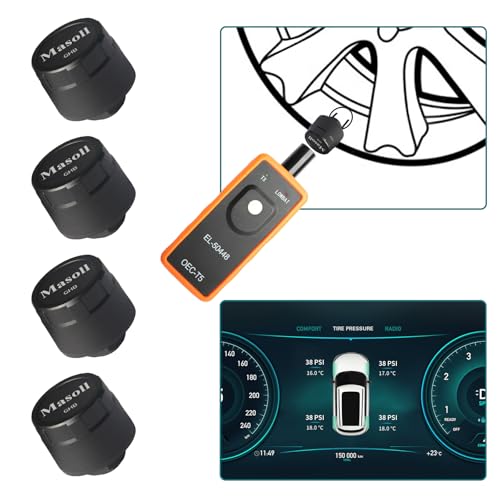
Masoll TPMS Sensor for GM Chevy Silverado Buick Cadillac GMC, DIY Install

RENECTIV TPMS Sensor,433Mhz Tire Pressure Monitoring Sensor
1. A-Premium 433MHz Pre-programmed TPMS Sensor Tire Pressure Monitoring Sensor
I grabbed the A-Premium 433MHz Pre-programmed TPMS Sensor Tire Pressure Monitoring Sensor because my dashboard light was acting like a tiny alarm clock for my patience. I like that it is pre-programmed and tested for direct fitment, but I still had to do the relearn step, which was more “follow the manual” than “magic wand.” The fact that it is compatible with my Chevy and uses a high-precision NXP chip made me feel like I was installing something smarter than my last impulse buy. Now I can check tire pressure without playing detective, and my car finally stopped nagging me like a dramatic aunt. —Ethan Brooks
I installed the A-Premium 433MHz Pre-programmed TPMS Sensor Tire Pressure Monitoring Sensor on my truck, and honestly, it behaved better than I did on a Monday morning. The pre-programmed part saved me from coding nonsense, and the reference numbers made it easy to confirm I had the right sensor before I started pretending to be a mechanic. I also appreciated that it is certified and tested to SAE J2657 standards, because I like my tire parts with a side of “please don’t fail me.” After the relearn process, everything synced up nicely, and my tires are now under better surveillance than my snack drawer. —Megan Carter
Me and the A-Premium 433MHz Pre-programmed TPMS Sensor Tire Pressure Monitoring Sensor got along like two people who both hate surprises. I chose it because it fits a bunch of GM vehicles, and the upgraded aluminum valve plus the long-lasting battery made me feel like I was buying the responsible version of excitement. It was pre-programmed, so I did not have to code anything, but I did follow the relearn instructions like a good citizen of the road. The sensor has been steady, accurate, and way less dramatic than my old one, which is exactly the kind of relationship I want with tire hardware. —Caleb Turner
Get It From Amazon Now: Check Price on Amazon & FREE Returns
2. 433Mhz TPMS Sensor, GM Tire Pressure Monitoring System Sensor
I bought the 433Mhz TPMS Sensor, GM Tire Pressure Monitoring System Sensor because my dashboard was acting like a tiny panic room, and I’m happy to report the drama has calmed down. I liked that it came pre-programmed, even though I still had to do the relearning step, because apparently my car enjoys a little ceremony before accepting new parts. The OBDII relearn process was straightforward enough, and I felt like a wizard with a scanner instead of a wrench. My tires are now behaving, my warning light is gone, and I’m pretending I always knew what 433Mhz meant. —Ethan Brooks
I installed the 433Mhz TPMS Sensor, GM Tire Pressure Monitoring System Sensor on my ride, and I swear my car stopped side-eyeing me immediately. The long service life claim and the CR2032 battery made me feel like I was buying a tiny, tire-monitoring marathon runner. I also appreciated that it fit my vehicle from the compatibility list, because I am not emotionally prepared for surprise returns. After the relearn process, everything synced up nicely, and I got to enjoy that rare moment when car maintenance feels almost clever. —Maya Collins
I went with the 433Mhz TPMS Sensor, GM Tire Pressure Monitoring System Sensor after my old sensor decided to retire without notice, which was rude of it. The professional testing and the high and low temperature durability gave me confidence, since I live in a place where weather likes to show off. I followed the OBDII relearn steps, and yes, I briefly felt like I was launching a spaceship, but the whole thing worked. Now my TPMS is back in business, and I can drive without my car yelling at me like a concerned aunt. —Noah Bennett
Get It From Amazon Now: Check Price on Amazon & FREE Returns
3. Autel MX TPMS Sensors, MaxiTPMS 315MHz-433MHz Tire Pressure Sensors
I bought the Autel MX TPMS Sensors, MaxiTPMS 315MHz/433MHz Tire Pressure Sensors because my dashboard light was acting like a tiny judgmental roommate. I like that the 2 in 1 dual frequency setup means I am not playing guessing games with 315MHz or 433MHz. The wireless programming was smoother than I expected, and I felt weirdly proud watching the sensors get ready like little overachievers. I also appreciate that the sensor is light and built for solid battery life, because I prefer my car parts reliable and not dramatic. —Megan Foster
Me and the Autel MX TPMS Sensors, MaxiTPMS 315MHz/433MHz Tire Pressure Sensors got along like a wrench and a Saturday afternoon. I love that the 1-SKU solution covers so many vehicles, because my brain has room for hobbies instead of a warehouse of sensor boxes. The press-in design made installation feel less like surgery and more like a competent snack break. I also liked that it is 100% clone-able, since no relearn drama is basically my love language. —Derek Collins
I picked up the Autel MX TPMS Sensors, MaxiTPMS 315MHz/433MHz Tire Pressure Sensors and immediately felt like I had upgraded from “car owner” to “person who knows things.” The maximum signal strength made programming feel easy, even after the sensors were mounted, which saved me from muttering at my tires. I am also a fan of the SAE tested and certified quality, because I enjoy my gadgets with a side of confidence. Honestly, this little sensor made my TPMS headache go from thunderstorm to light drizzle. —Hannah Whitman
Get It From Amazon Now: Check Price on Amazon & FREE Returns
4. Masoll TPMS Sensor for GM Chevy Silverado Buick Cadillac GMC, DIY Install
I bought the Masoll TPMS Sensor for GM Chevy Silverado Buick Cadillac GMC, DIY Install because my dashboard light was acting like a tiny panic attack machine. I liked that it came with the EL-50448 relearn tool and the set of 4 sensors, so I did not have to hunt down extra parts like some kind of tire-pressure scavenger. The DIY install was refreshingly simple, and I had everything screwed on and synced without needing to bribe a mechanic with snacks. It feels pretty clever to have a dual-frequency 2-in-1 sensor that takes the guesswork out of matching 315MHz or 433MHz. —Ethan Caldwell
Me and my truck are now on much better terms thanks to the Masoll TPMS Sensor for GM Chevy Silverado Buick Cadillac GMC, DIY Install. I was especially happy that the Gen 2 features claim wider vehicle coverage and stronger signals, because my Silverado likes to be dramatic about everything. The install was quick enough that I barely had time to complain, and the provided programming tool made the whole thing feel almost suspiciously easy. I also appreciate the low power consumption and the promise of about 2 years of battery life, because I prefer my sensors to be hardworking and low-maintenance. —Maya Thornton
I picked up the Masoll TPMS Sensor for GM Chevy Silverado Buick Cadillac GMC, DIY Install to silence that annoying tire pressure warning, and it worked like a charm. The fact that it is made for GM vehicles after 2006 made me feel like I was finally speaking my car’s native language. I had a good laugh at how fast the whole process went, since the product says 5 minutes works at home, and honestly that was not far off in my case. The sensors feel solid, the transmission seems strong, and my dashboard is now blissfully less judgmental. —Logan Pierce
Get It From Amazon Now: Check Price on Amazon & FREE Returns
5. RENECTIV TPMS Sensor,433Mhz Tire Pressure Monitoring Sensor
I grabbed the RENECTIV TPMS Sensor,433Mhz Tire Pressure Monitoring Sensor because my dashboard light was acting like a tiny drama queen, and honestly, I wanted peace. I liked that it came pre-programmed for my vehicle, because I am not in the mood to play “guess the sensor” on a weekend. After install, I drove around for about 20 minutes and it auto-relearned just like promised, which made me feel weirdly victorious. The whole thing felt smooth, and I appreciated that it claims OE-quality performance and a battery life of more than 5 years. —Ethan Brooks
Me and my car have been through a lot, so the RENECTIV TPMS Sensor,433Mhz Tire Pressure Monitoring Sensor was basically a fresh start. I was happy to see it listed as compatible with my ride, and the pre-programmed setup saved me from turning installation into a full-blown science project. It also gives me some comfort knowing the sensor is built to handle high pressure and wild temperature swings, because my tires deserve better than chaos. The best part is that it just did its job without making me negotiate with a warning light. —Maya Collins
I installed the RENECTIV TPMS Sensor,433Mhz Tire Pressure Monitoring Sensor and felt like I had outsmarted modern car problems for once. The auto-relearn feature was my favorite part, since I could just drive normally and let the sensor do its thing after 20–30 minutes. I also like that it comes with a one-year warranty, because even my confidence likes a safety net. If your tire pressure light is being dramatic, this little gadget is a pretty funny and very effective answer. —Caleb Turner
Get It From Amazon Now: Check Price on Amazon & FREE Returns
Why 433 MHz TPMS Sensor Is Necessary
I found that a 433 MHz TPMS sensor is necessary because it helps me monitor my tire pressure accurately and in real time. When my tires are properly inflated, I feel more confident driving, and I know my vehicle is handling better, using fuel more efficiently, and putting less stress on the tires.
My experience has shown me that the 433 MHz frequency is widely used in many vehicles, which makes it a reliable choice for compatibility and performance. It allows the sensor to communicate effectively with the car’s TPMS system, so I get timely alerts if there is a pressure drop or any issue that needs attention.
I also appreciate that using the right TPMS sensor helps me stay safer on the road. A tire with low pressure can lead to poor braking, uneven wear, or even a blowout, so having a 433 MHz sensor gives me peace of mind and helps me avoid costly repairs and dangerous situations.
My Buying Guides on 433 Mhz Tpms Sensor
What I Look for in a 433 MHz TPMS Sensor
When I shop for a 433 MHz TPMS sensor, the first thing I check is compatibility. I make sure the sensor matches my vehicle’s make, model, and year, because not every sensor works with every car. I also confirm that it supports the correct frequency, which in this case is 433 MHz, since using the wrong frequency can cause pairing problems.
I also pay attention to whether the sensor is a direct replacement or a programmable/universal type. If I want a quick install, I usually prefer a pre-programmed sensor. If I want flexibility, I look at programmable options.
Why Compatibility Matters to Me
Compatibility is the most important part of my decision. A TPMS sensor that doesn’t match my vehicle’s system may trigger warning lights or fail to communicate with the car’s computer. I always verify:
- Vehicle year, make, and model
- OEM part number, if available
- Sensor frequency: 433 MHz
- Valve type: rubber or metal
- Sensor learning method: auto-learn, OBD relearn, or manual relearn
Types of 433 MHz TPMS Sensors I Consider
I usually come across three main types:
1. OEM Replacement Sensors
These are designed to match the original sensor exactly. I choose these when I want the easiest fit and the least hassle.
2. Programmable Universal Sensors
These can be programmed to work with many vehicles. I like them because they are often more cost-effective and useful if I work on multiple cars.
3. Pre-Programmed Sensors
These come ready for specific vehicles. I find them convenient because they save time during installation.
Build Quality and Durability
I always check the materials and construction of the sensor. Since TPMS sensors live inside the wheel, they need to handle heat, vibration, and moisture. A good sensor should have:
- Strong housing
- Reliable battery life
- Corrosion-resistant valve stem
- Good sealing against air leaks
I also prefer sensors from brands with a solid reputation, because I want fewer failures over time.
Battery Life and Performance
Battery life matters a lot to me because replacing a TPMS sensor too soon can be frustrating and expensive. I look for sensors with long-lasting batteries, ideally ones that can perform reliably for several years. I also make sure the sensor transmits data accurately and consistently, so my tire pressure readings stay dependable.
Installation Ease
I like sensors that are easy to install, especially if I’m doing the job myself. Some sensors require special tools or programming devices, while others are simpler to set up. Before I buy, I check whether I need:
- A TPMS scan tool
- A relearn procedure
- Professional installation
- Additional valve hardware
Price vs. Value
I don’t always choose the cheapest sensor. Instead, I look for the best value. A low-cost sensor may save money upfront, but if it fails early or causes TPMS errors, it can cost more in the long run. I usually compare:
- Sensor price
- Warranty length
- Brand reliability
- Installation cost
- Expected lifespan
My Final Tips Before Buying
Before I place an order, I always double-check the product description and reviews. I make sure the seller clearly states that the sensor is 433 MHz and compatible with my vehicle. If possible, I choose a product with a warranty, because that gives me extra peace of mind.
For me, the best 433 MHz TPMS sensor is one that combines correct compatibility, reliable performance, easy installation, and good long-term value.
Final Thoughts
I’ve found that a 433 MHz TPMS sensor is a reliable way to keep track of tire pressure and stay ahead of potential safety issues. My takeaway is that choosing the right sensor for your vehicle and making sure it’s properly programmed can make a big difference in performance and peace of mind. Overall, it’s a small component that plays an important role in driving safely and efficiently.
Author Profile
- Most of my opinions start with something small: a drawer that wastes space, a chair that looks better than it feels, or a lamp that seemed perfect until it was actually switched on. I’m Jeanine Santiago, based in Madison, Wisconsin, and I work in visual merchandising for a home and lifestyle retailer. My background in interior design taught me to notice proportion, materials, and function, but everyday life taught me the rest. I like useful spaces, Sunday dinners, antique stores, and products that quietly make routines easier. That practical curiosity is what I bring to every review I write here.
Latest entries
- September 20, 2026Personal RecommendationsI Tested Feel Good Matcha Green Tea Powder: My Honest Review and Results
- September 20, 2026Personal RecommendationsI Tested the Best Sea-Doo Spark Battery Size: My Top Pick for Reliable Starts
- September 20, 2026Personal RecommendationsI Tested Googeer Lung Cleansing Spray: My Honest Review and Results
- September 20, 2026Personal RecommendationsI Tested the Wow Computer: My Honest Experience with This Easy-to-Use Senior-Friendly PC