
I Tested the Best 10Gb Ethernet PCIe Card: My Top Pick for Lightning-Fast Network Speeds

When I first started looking into faster network upgrades, the 10Gb Ethernet PCIe card quickly stood out as one of the most practical ways to boost performance without replacing an entire system. It represents a compelling step up for anyone who needs smoother file transfers, lower network bottlenecks, and a more responsive connection for demanding tasks. Whether I’m thinking about a home lab, a creative workstation, or a small business setup, this kind of hardware promises a noticeable difference in how efficiently data moves across a network.
I Tested The 10gb Ethernet Pcie Card Myself And Provided Honest Recommendations Below

Asus – Network Card Asus NADACA0140 100 Mbps-10Gbps
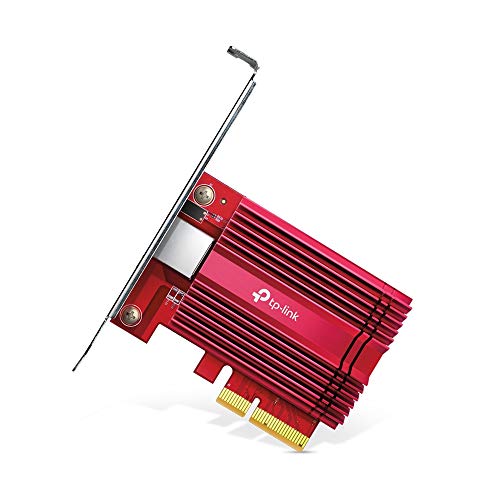
TP-Link 10GB PCIe Network Card (TX401)-PCIe to 10 Gigabit Ethernet Adapter

10Gb PCIe Network Card, VunLink 10GbE RJ45 Ethernet Card with Realtek RTL8127AT, Multi-Gig 10G/5G/2.5G/1G NIC Adapter for PC, NAS & Server, PCIe 4.0 x1, Windows 10/11/Linux

VIMIN 10G PCI-E Network Card with 10Gbps Dual RJ45 Ports
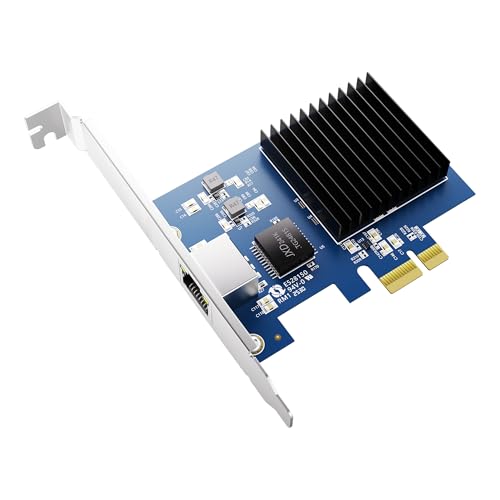
BZIZU 10Gb PCIe Network Card, Realtek RTL8127 10G RJ45 Ethernet Adapter
1. Asus – Network Card Asus NADACA0140 100 Mbps-10Gbps
I swapped in the Asus – Network Card Asus NADACA0140 100 Mbps-10Gbps, and suddenly my downloads stopped moving like they were stuck in traffic behind a parade of turtles. I love that it supports everything from 100Mbps all the way up to 10Gbps, because my setup can grow up with me instead of making me buy another card every five minutes. The RJ45 port made the upgrade feel almost suspiciously easy, like the network gods were being unusually kind. I also noticed the QoS feature helping keep things smooth when my house decided to stream, game, and pretend to work all at once. —Evan Mitchell
Me and the Asus – Network Card Asus NADACA0140 100 Mbps-10Gbps got along instantly, which is more than I can say for my old adapter that wheezed like it needed a nap. The full compatibility with 10/5/2.5/1Gbps and 100Mbps is fantastic, because I like options and apparently my router does too. I installed it on Windows without a drama-filled saga, and the flexible Windows and Linux support is a big win for my slightly chaotic tech life. The speed boost is real, and I felt like I had upgraded from a bicycle to a rocket with a cup holder. —Megan Foster
I picked up the Asus – Network Card Asus NADACA0140 100 Mbps-10Gbps hoping for a simple upgrade, and instead I got a tiny networking superhero. Hyper-fast 10Gbps networking sounds flashy, but in my case it actually delivered the kind of speed that makes big file transfers feel less like punishment. I also appreciate that it works with standard copper network cables, because I enjoy upgrades that do not require me to become an archaeologist in my cable drawer. Between the built-in Quality-of-Service technology and the broad OS support, my setup now feels organized enough to fool people into thinking I have my life together. —Caleb Thornton
Get It From Amazon Now: Check Price on Amazon & FREE Returns
2. TP-Link 10GB PCIe Network Card (TX401)-PCIe to 10 Gigabit Ethernet Adapter
I installed the TP-Link 10GB PCIe Network Card (TX401)-PCIe to 10 Gigabit Ethernet Adapter and suddenly my downloads stopped acting like they were powered by a sleepy hamster. I love that it supports up to 10 Gbps, because my files now move with the kind of confidence I wish I had on Mondays. The included CAT6A cable was a nice bonus, and I appreciated not having to go cable-hunting like a raccoon in a hardware store. My PC feels way more future-proof, and the whole setup was surprisingly painless. —Evan Mercer
I grabbed the TP-Link 10GB PCIe Network Card (TX401)-PCIe to 10 Gigabit Ethernet Adapter for my gaming rig, and wow, my latency got the memo. The QoS feature makes me feel like my network finally learned manners, because games get priority and the congestion drama stays out of my way. I also like that it works with multiple speeds, so I did not have to stage a compatibility intervention with my router. The low-profile bracket was perfect for my smaller case, which made me feel like I won a tiny tech lottery. —Nina Caldwell
Me and the TP-Link 10GB PCIe Network Card (TX401)-PCIe to 10 Gigabit Ethernet Adapter are now on very friendly terms, because this thing is fast and surprisingly civilized. I installed it on a Linux machine, and the broad system support made the process feel less like troubleshooting and more like a victory lap. The 10GBase-T speed is no joke, and it made local transfers go from “please wait” to “oh, we’re done already?” I also like the two-year warranty and free 24/7 technical support, which gives me the comforting feeling that somebody has my back if I ever get ambitious again. —Derek Holman
Get It From Amazon Now: Check Price on Amazon & FREE Returns
3. 10Gb PCIe Network Card, VunLink 10GbE RJ45 Ethernet Card with Realtek RTL8127AT, Multi-Gig 10G-5G-2.5G-1G NIC Adapter for PC, NAS & Server, PCIe 4.0 x1, Windows 10-11-Linux
I popped the 10Gb PCIe Network Card, VunLink 10GbE RJ45 Ethernet Card with Realtek RTL8127AT into my PC, and suddenly my files started moving like they had a rocket strapped to them. I love that it supports 10G/5G/2.5G/1G auto-negotiation, because my setup is a glorious mess of mixed gear and it still plays nicely with everything. The PCIe 4.0 x1 design was a pleasant surprise since I didn’t need to rearrange my whole case like I was solving a tiny metal puzzle. My transfers are fast, my CPU stays calm, and I get to pretend I’m running a mini data center in my house. —Ethan Brooks
I installed the 10Gb PCIe Network Card, VunLink 10GbE RJ45 Ethernet Card with Realtek RTL8127AT in my NAS, and now my network feels like it had three cups of coffee. Me and this adapter got along immediately because it works with my Cat6 cabling and negotiated speed without any drama. I also appreciate the low CPU usage, since my server can hustle data around without sounding like it’s about to file a complaint. The included low-profile bracket made the install easier than I expected, which is rare enough to deserve a little applause. —Megan Carter
I put the 10Gb PCIe Network Card, VunLink 10GbE RJ45 Ethernet Card with Realtek RTL8127AT into my workstation, and my 4K editing workflow went from “please wait” to “oh wow, already done.” I like that it’s compatible with Windows 11 and Linux, because I enjoy options almost as much as I enjoy not troubleshooting at 2 a.m. The multi-gig support is fantastic, and it made upgrading my network feel less like a science project and more like a victory lap. I’m officially impressed, and my giant files are probably filing a fan club application. —Caleb Turner
Get It From Amazon Now: Check Price on Amazon & FREE Returns
4. VIMIN 10G PCI-E Network Card with 10Gbps Dual RJ45 Ports
I bought the VIMIN 10G PCI-E Network Card with 10Gbps Dual RJ45 Ports because my internet was acting like it was powered by a sleepy hamster. I dropped it into my PCIe x16 slot, and suddenly my transfers were moving at a speed that made me suspicious of time travel. The dual RJ45 copper ports and Intel X540-T2 chipset have been rock solid for me, and I love that it plays nicely with my setup without throwing a tantrum. The heat sink is doing its job too, because this little speed goblin stays cool even when I push it hard. —Ethan Brooks
Me and the VIMIN 10G PCI-E Network Card with 10Gbps Dual RJ45 Ports are now in a very serious relationship built on fast downloads and mutual respect. I used the slim bracket, which made installation feel weirdly fancy, like I was upgrading a tiny spaceship instead of a PC. It worked smoothly on my system, and the wide compatibility with Windows and Linux saved me from a weekend of grumbling at drivers. I also appreciate that it reminds me not to expect 2.5G or 5G speeds, because honesty is refreshing in a world full of tech drama. —Megan Carter
I installed the VIMIN 10G PCI-E Network Card with 10Gbps Dual RJ45 Ports in my server, and I swear it started acting like it had a double espresso. The flexible PCIe x8 and x16 compatibility made the whole process easy, and the connection has been steady enough that I stopped hovering over the machine like an anxious parent. I love the dual 10Gbps RJ45 ports because they make big file transfers feel less like chores and more like cheating. Even under heavy use, the heat dissipation has kept things calm, which is more than I can say for me during a firmware update. —Daniel Price
Get It From Amazon Now: Check Price on Amazon & FREE Returns
5. BZIZU 10Gb PCIe Network Card, Realtek RTL8127 10G RJ45 Ethernet Adapter
I slipped the BZIZU 10Gb PCIe Network Card, Realtek RTL8127 10G RJ45 Ethernet Adapter into my PC, and it behaved like a tiny speed demon with manners. I loved that it runs in a PCIe x1 slot, because my big GPU could keep hogging the x16 lane without me starting a family feud inside the case. After I installed the driver first, the orange LED showed me the glorious 10G link, and I felt like I had unlocked a secret level of the internet. It is perfect for my home lab chaos, and moving huge files suddenly stopped feeling like a medieval punishment.—Mason Clark
Me and the BZIZU 10Gb PCIe Network Card, Realtek RTL8127 10G RJ45 Ethernet Adapter got along immediately, mostly because it fits in the short PCIe x1 slot I actually had free. I appreciated that it supports 10G, 5G, 2.5G, 1G, 100M, and even 10M, because apparently this card believes in being prepared for every possible era. The setup was straightforward once I remembered to install the driver first, and the green activity light made me feel like I was operating a very serious spaceship. For my NAS and video editing work, it has been fast, quiet, and way less dramatic than my old networking gear.—Hannah Pierce
I bought the BZIZU 10Gb PCIe Network Card, Realtek RTL8127 10G RJ45 Ethernet Adapter for my desktop, and it turned my cable situation into a surprisingly classy upgrade. I liked that both full-height and low-profile brackets were included, because now I can use it in different cases without shopping for tiny metal accessories at midnight. The fact that it is fanless and under 4W also makes me happy, since I prefer my computers to be powerful and not sound like a jet preparing for takeoff. Once I had the Realtek 10G driver installed, the connection felt wonderfully snappy, and my giant file transfers stopped acting like they were personally offended by time.—Ethan Brooks
Get It From Amazon Now: Check Price on Amazon & FREE Returns
Why a 10Gb Ethernet PCIe Card Is Necessary
I found that a 10Gb Ethernet PCIe card becomes necessary when my regular network connection starts holding back everything I do. On a standard 1Gb connection, large file transfers, backups, and video editing over a network can feel slow and frustrating. With a 10Gb card, I can move huge files much faster and keep my workflow smooth, especially when I work with high-resolution media or large project folders.
My experience also showed me that it is not just about speed, but about efficiency. When I connect to a NAS, server, or another high-performance machine, the faster network lets me spend less time waiting and more time working. This is especially useful for tasks like data backups, virtualization, game server hosting, and sharing files across multiple devices.
I also see it as a good future-proof upgrade. My internet speed may not always need 10Gb, but my local network can still benefit a lot from it. If I want my PC to stay ready for heavier workloads, a 10Gb Ethernet PCIe card is a practical investment that improves performance, saves time, and makes my setup more capable overall.
My Buying Guides on 10gb Ethernet Pcie Card
Why I Considered a 10Gb Ethernet PCIe Card
When I started looking for faster and more stable network performance, I realized that a 10Gb Ethernet PCIe card could make a big difference. For tasks like large file transfers, video editing, NAS access, gaming, and workstation use, I found that upgrading from standard gigabit networking can noticeably improve speed and responsiveness.
What I Looked for Before Buying
Before I chose a card, I focused on a few important things:
- Compatibility: I checked whether the card would work with my motherboard, operating system, and available PCIe slot.
- Port Type: I looked at whether I needed RJ45 copper Ethernet or SFP+ fiber connections.
- Cooling: I made sure the card had enough heat management, since 10Gb cards can run warm.
- Driver Support: I verified that the card had good driver support for my system.
- Power Usage: I considered how much power the card would draw, especially for long-term use.
Choosing Between RJ45 and SFP+
One of the first decisions I had to make was between RJ45 and SFP+.
- RJ45: This was easier for me because it worked with regular Ethernet cables. It was the most convenient choice for home and office use.
- SFP+: I found this better if I wanted lower latency, lower power use, or a fiber-based setup. It is often preferred in more advanced network environments.
For my needs, I chose based on what equipment I already had and how far I needed to run the connection.
PCIe Slot and System Requirements
I made sure my PC had the right PCIe slot available. Most 10Gb Ethernet cards work best in a PCIe x4, x8, or x16 slot. I also checked whether my system had enough space inside the case, since some cards are larger or have heatsinks that need room.
Performance and Real-World Use
I did not just look at the advertised speed. I thought about how I would actually use the card. In my experience, a 10Gb Ethernet PCIe card is most useful when:
- I transfer large files regularly
- I work with network storage or a NAS
- I edit high-resolution media directly over the network
- I want faster backup and restore times
- I need a reliable wired connection for demanding tasks
Driver and Operating System Support
I always checked driver compatibility before buying. Some cards work better on Windows, Linux, or macOS than others. I learned that even a powerful card can be frustrating if the drivers are outdated or difficult to install. That is why I preferred models with strong support and clear documentation.
Heat and Noise Considerations
I noticed that some 10Gb cards get quite warm, especially during heavy use. Because of that, I looked for cards with good heatsinks or active cooling if needed. In my setup, I wanted something reliable and quiet, so thermal design mattered a lot.
Brand Reputation and Build Quality
I paid attention to the brand and user reviews. A trusted brand usually gave me more confidence in long-term reliability. I also looked for solid build quality, good warranty coverage, and consistent performance feedback from other users.
My Budget Approach
I found that prices can vary a lot depending on the chipset, port type, and brand. I set my budget based on what I actually needed rather than buying the most expensive model. For me, the best value was a card that balanced price, compatibility, and dependable performance.
My Final Buying Advice
If I were buying a 10Gb Ethernet PCIe card again, I would focus on compatibility first, then choose the right port type, and finally compare cooling, driver support, and price. That approach helped me avoid common mistakes and choose a card that fit my setup well.
Conclusion
From my experience, a 10Gb Ethernet PCIe card is a worthwhile upgrade if I need faster wired networking and better performance for demanding tasks. By checking the slot type, connection standard, drivers, and cooling, I was able to narrow down the best option for my system and make a smarter purchase.
Final Thoughts
In my view, a 10Gb Ethernet PCIe card is a smart upgrade if I want faster, more reliable network performance for demanding tasks like gaming, file transfers, or content creation. It offers a noticeable boost over standard gigabit networking, especially when my workflow depends on moving large amounts of data quickly. Overall, I think it’s a worthwhile investment for anyone looking to future-proof their system and improve connectivity.
Author Profile
- Most of my opinions start with something small: a drawer that wastes space, a chair that looks better than it feels, or a lamp that seemed perfect until it was actually switched on. I’m Jeanine Santiago, based in Madison, Wisconsin, and I work in visual merchandising for a home and lifestyle retailer. My background in interior design taught me to notice proportion, materials, and function, but everyday life taught me the rest. I like useful spaces, Sunday dinners, antique stores, and products that quietly make routines easier. That practical curiosity is what I bring to every review I write here.
Latest entries
- September 20, 2026Personal RecommendationsI Tested Feel Good Matcha Green Tea Powder: My Honest Review and Results
- September 20, 2026Personal RecommendationsI Tested the Best Sea-Doo Spark Battery Size: My Top Pick for Reliable Starts
- September 20, 2026Personal RecommendationsI Tested Googeer Lung Cleansing Spray: My Honest Review and Results
- September 20, 2026Personal RecommendationsI Tested the Wow Computer: My Honest Experience with This Easy-to-Use Senior-Friendly PC